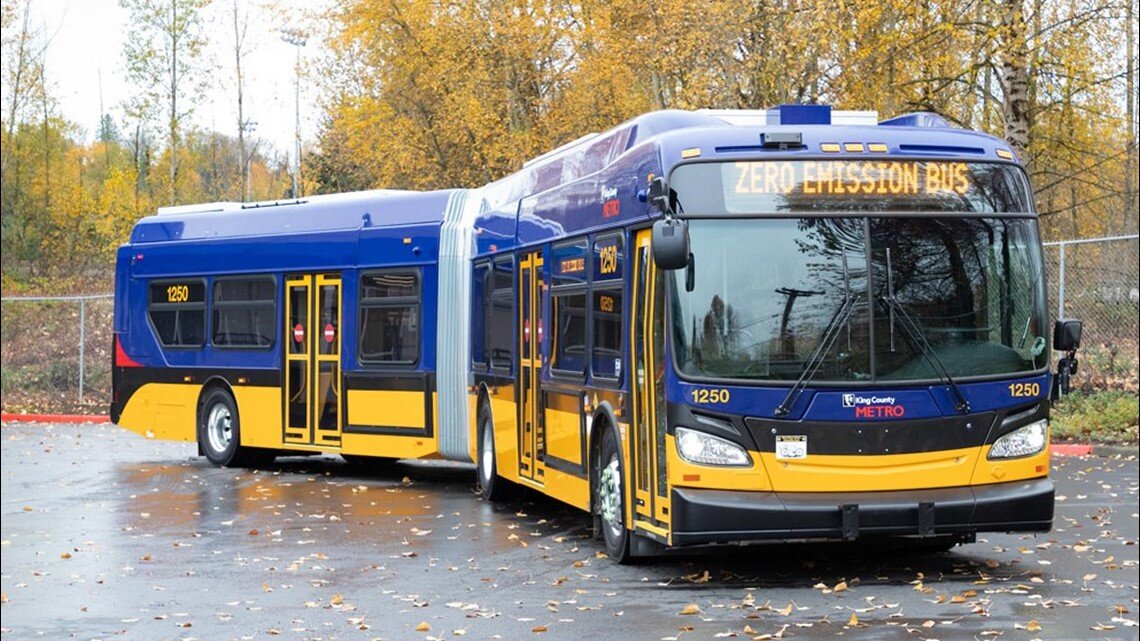
Police arrested a man late Monday night for punching a Sound Transit bus driver in downtown Seattle after the driver refused to let him board the vehicle.
According to the Seattle Police Department, officers responded to reports of a bus driver being assaulted near Third Avenue and Stewart Street around 10:50 p.m. When they arrived, they found a 64-year-old bus driver suffering from facial injuries.
Officers determined that a 25-year-old man attempted to board the bus, but the driver refused entry after recognizing him from previous incidents on other buses. The driver activated the protective barrier to block the suspect from entering.
The suspect became angry and punched the driver in the face, then walked off the bus while continuing to yell at him. He returned to the bus and punched the driver a second time before finally leaving and walking away from the scene.
According to police, an analyst in the Real Time Crime Center reviewed surveillance video and captured the assault on camera, then sent images of the suspect to officers in the field, who identified the man and arrested him near Third Avenue and Columbia Street.
The suspect was arrested for third-degree assault and booked into King County Jail.
The incident highlights ongoing safety concerns for public transit operators who face verbal and physical abuse from passengers. Bus drivers serve as the front line of public transportation, often dealing with difficult situations while trying to maintain safe conditions for all riders.
The driver’s recognition of the suspect from previous incidents suggests a pattern of problematic behavior on Sound Transit buses. Transit agencies maintain records of individuals who have caused disturbances or violated conduct policies.
The protective barrier the driver activated represents safety equipment installed on many transit vehicles specifically to shield operators from assault. These barriers became more common following attacks on drivers in recent years.
The suspect’s decision to leave the bus and then return to assault the driver a second time demonstrates escalating aggression and deliberate intent to harm. The second punch occurred after he had already left the situation, showing the attack was not simply an impulsive reaction.
The Real Time Crime Center’s role proved crucial in quickly identifying and apprehending the suspect. This facility allows analysts to monitor surveillance feeds from across the city and provide real-time intelligence to officers responding to crimes.
The surveillance video captured the assault clearly enough for analysts to send usable images to patrol officers. This technology enables faster identification of suspects compared to traditional investigation methods that might take days or weeks.
The arrest near Third Avenue and Columbia Street, just a few blocks from the assault location, suggests the suspect remained in the downtown area after the attack. Quick police response prevented him from leaving the vicinity before apprehension.
Third-degree assault in Washington involves causing bodily harm to another person. The charge is a class C felony carrying potential penalties of up to five years in prison and $10,000 in fines.
The 64-year-old driver’s age raises additional concerns about vulnerability to assault. Older workers may be more susceptible to serious injuries from physical attacks compared to younger individuals.
Facial injuries can range from bruising and swelling to broken bones, depending on the force of the blows. The driver may require medical treatment beyond initial assessment by responding officers.
Transit operators face difficult decisions about denying entry to individuals who have caused problems previously. While they have authority to refuse service for safety reasons, such decisions can trigger violent reactions from people who feel wronged.
The late-night timing, around 10:50 p.m., places the incident during hours when downtown Seattle sees fewer pedestrians but transit remains active serving workers, residents, and nightlife patrons. Late-night routes can present particular safety challenges.