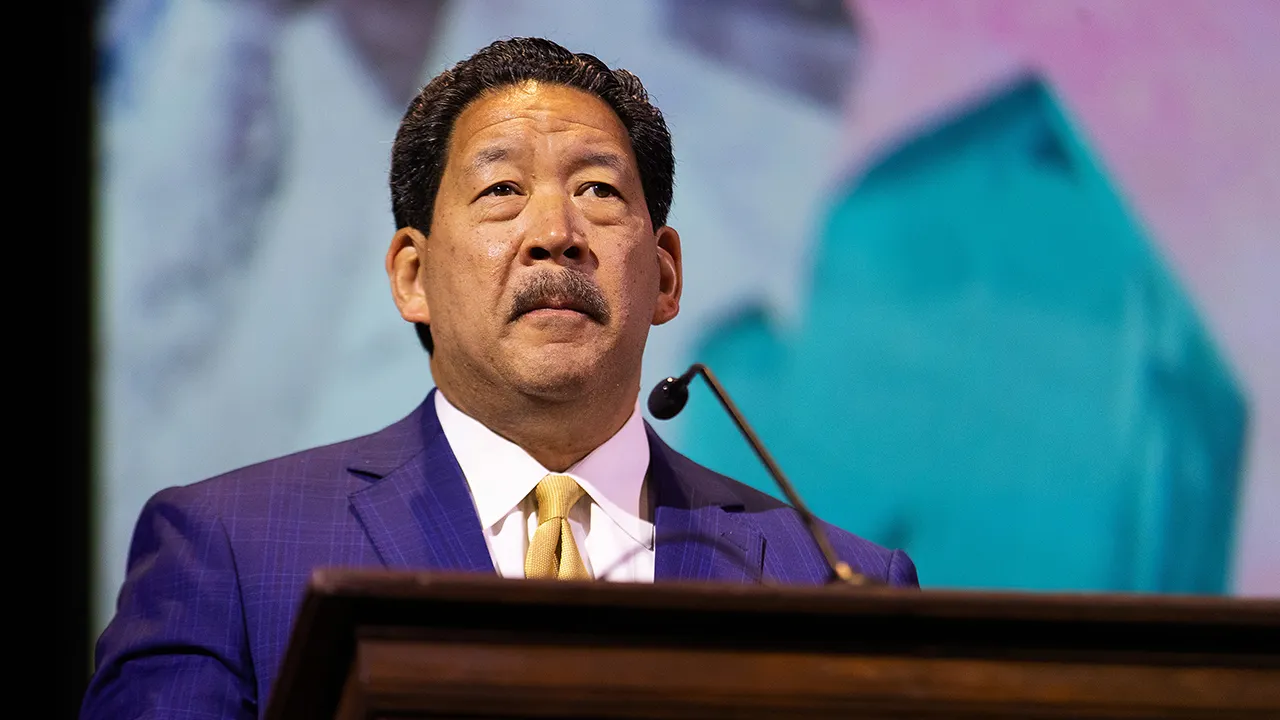
Mayor Bruce Harrell introduced legislation Wednesday that would bar law enforcement personnel from wearing face coverings while on duty, requiring all officers to prominently display agency identification badges and emblems during enforcement operations in Seattle.
The mayor’s office released details of the proposed ordinance Wednesday, describing restrictions on face coverings including masks, garments, helmets, headgear, or any items obscuring facial features such as balaclavas, tactical masks, neck gaiters, and ski masks.
Rising use of masks and plainclothes operations has resulted in numerous nationwide arrests of civilians impersonating federal immigration authorities, creating genuine public safety risks for communities, city officials stated.
Should the city council approve the measure, Seattle would become Washington state’s first municipality and among the nation’s first major cities to enact such restrictions on law enforcement face coverings.
“Federal law enforcement officials operating in Seattle are not above the laws of our city. The Trump administration’s tactic of using masked, unidentified agents to carry out their inhumane deportation agenda with impunity not only erodes accountability but also sows fear in our communities and creates a dangerous possibility for copycat actors. In the face of Trump’s tyrannical militarization of American cities, this ordinance is a concrete step we can take to uphold our local values and protect our immigrant and refugee communities from these unjust actions. My administration remains committed to using every tool at our disposal to protect the safety and dignity of our residents from federal overreach,” Harrell declared.
The ordinance includes exemptions for medical or surgical masks worn to prevent disease transmission and respirators providing protection against toxic substances or environmental dangers.
Law enforcement officers or agencies violating the ordinance would face civil penalties of $5,000, city officials indicated. The Office for Civil Rights would assume enforcement responsibilities.
“Accountability is not punishment, it is a promise kept,” stated Derrick Wheeler-Smith, Director of the Seattle Office for Civil Rights. “This legislation strengthens civil rights by ensuring that masked or unidentified federal agents, and those pretending to be, are seen, documented, and addressed rather than swept aside. By holding every officer and agency to the same standard, we protect the rights of our immigrant and refugee neighbors and affirm a simple truth: justice is not selective, it is shared.”
The legislation follows two Executive Orders the mayor signed earlier this month on preparedness and coordination in the event of unilateral troop deployment to Seattle and protecting immigrant and refugee communities from unjust immigration enforcement actions. The second order reaffirms that the City has no role in civil immigration enforcement, which remains solely federal government responsibility.
Additionally, the Seattle Police Department is currently creating protocols for officers dispatched to emergency calls where masked or unidentified individuals are conducting detentions.
“Our officers’ appearance will be consistent when someone calls 911 for help and Seattle police officers are dispatched. They will show up ready to serve the public with their faces uncovered and their SPD badge and name proudly displayed,” Seattle Police Chief Shon Barnes stated. “At our core, we are peace officers, and our goal is to protect people and keep the peace.”
“For our client communities to truly feel welcome, it is essential to have protections in place that promote trust and safety for all,” stated Malou Chavez, Executive Director of the Northwest Immigrant Rights Project. “This legislation is an example of the City of Seattle’s leadership seeking to protect all communities, and we hope that other jurisdictions follow suit.”
The City is also drafting separate legislation to ban federal immigration enforcement from staging operations or conducting activities on city-owned properties. The measure seeks to prevent federal immigration agencies from utilizing municipal spaces including parking lots for operational staging, a tactic documented in cities such as Chicago, officials noted.
Since the beginning of Trump’s second term, Seattle has advanced multiple legal and legislative steps to protect residents from his administration’s actions and funding cuts. Efforts include passing legislation that strengthens local protections for people seeking gender-affirming and reproductive health care; a lawsuit over DEI and gender ideology Executive Orders and unlawful conditioning of funds; a lawsuit challenging threats to cities with sanctuary policies; and a lawsuit over frozen counterterrorism funds through the Securing the Cities program.
Additionally, Mayor Harrell’s 2026 proposed budget includes a $27.6 million investment plan to safeguard essential services threatened by federal funding cuts, including shelter, rental assistance, and food access programs, and a 70% increase in funding for immigrant and refugee services including legal supports, Know Your Rights trainings, and workforce development.
The proposed face covering prohibition representing Mayor Harrell’s direct challenge to federal immigration enforcement tactics, with the local ordinance attempting to impose municipal regulations on federal agents whose operations the Trump administration has intensified across sanctuary cities.
The mandatory visible identification through emblems and badges creating accountability infrastructure preventing anonymous enforcement, with the transparency requirement enabling community members to document interactions and file complaints against specific officers rather than unidentifiable masked personnel.
The comprehensive list specifying balaclavas, tactical masks, gaiters, and ski masks demonstrating the ordinance’s attempt to close potential loopholes, with the detailed enumeration preventing law enforcement from claiming alternative face coverings fall outside the prohibition’s scope.
The civilian impersonation problem providing public safety rationale beyond immigration policy concerns, with the ordinance framing face covering restrictions as protecting residents from criminals exploiting masked enforcement tactics to commit crimes under false authority.
The pioneering status as Washington’s first and among the nation’s first major cities positioning Seattle as progressive municipal governance leader, with the ordinance potentially inspiring similar legislation in Portland, San Francisco, Los Angeles, and other liberal urban centers resisting Trump administration immigration policies.
Mayor Harrell’s statement that “federal law enforcement officials operating in Seattle are not above the laws of our city” asserts municipal sovereignty challenging federal supremacy, with the declaration setting up potential constitutional confrontation over whether local regulations can constrain federal agents’ operational methods.
The reference to “Trump administration’s tactic of using masked, unidentified agents” invoking 2020 Portland protests when unmarked federal officers detained demonstrators in unmarked vehicles, with the historical precedent validating progressive concerns about anonymous federal operations in sanctuary cities.
The characterization of deportations as “inhumane agenda with impunity” frames immigration enforcement as human rights violation rather than lawful federal function, with Harrell’s language mobilizing Seattle’s progressive base while potentially provoking Trump administration retaliation.
The “tyrannical militarization of American cities” rhetoric elevates the dispute beyond policy disagreement to accusations of authoritarianism, with the mayor positioning Seattle as democratic resistance against what he characterizes as federal overreach threatening constitutional governance.
The commitment to “protect our immigrant and refugee communities from these unjust actions” reinforces Seattle’s sanctuary city identity, with Harrell emphasizing that municipal government prioritizes protecting undocumented residents over cooperating with federal immigration enforcement.
The medical mask and respirator exceptions acknowledge legitimate officer safety needs, with the carve-outs ensuring the ordinance doesn’t prevent disease prevention during pandemics or hazardous materials incidents requiring protective equipment.
The $5,000 civil penalty creates financial deterrent for individual officers, with the substantial fine amount potentially affecting personal finances while avoiding criminal sanctions that would face stronger legal challenges and practical enforcement obstacles.
The Office for Civil Rights enforcement designation places oversight with agency specializing in discrimination rather than police internal affairs, with the institutional choice signaling that mask violations constitute civil liberties infringements rather than mere administrative policy breaches.
Director Derrick Wheeler-Smith’s “accountability is not punishment, it is a promise kept” framing attempts to position enforcement as rights protection rather than punitive action, with the language emphasizing that transparency requirements serve community interests rather than targeting law enforcement personnel.
The emphasis on protecting “immigrant and refugee neighbors” and ensuring “justice is not selective, it is shared” articulates values-driven governance, with Wheeler-Smith’s statement connecting the face covering ban to broader civil rights principles beyond immediate immigration enforcement context.
The two earlier Executive Orders on troop deployment preparedness and immigration enforcement protection demonstrating Harrell’s systematic resistance strategy, with the face covering ordinance representing the latest in series of coordinated municipal actions challenging Trump administration policies.
The reaffirmation that Seattle has “no role in civil immigration enforcement” restating sanctuary city principles, with the declaration emphasizing that municipal resources won’t support federal deportation operations regardless of White House pressure or threats to withhold funding.
The Seattle Police Department protocol development for masked detainer situations creates procedures for scenarios where SPD officers encounter federal agents or impersonators conducting immigration arrests, with the guidelines potentially including demanding identification credentials or intervening to protect community members.
Chief Shon Barnes’ commitment that SPD officers will display “faces uncovered and their SPD badge and name proudly displayed” contrasts Seattle police transparency with alleged federal anonymity, with the police chief positioning SPD as accountable community-oriented force distinct from what progressives characterize as militarized federal operations.
Malou Chavez’s Northwest Immigrant Rights Project endorsement provides immigrant advocacy organization validation, with the support demonstrating that community groups serving undocumented populations view the ordinance as meaningful protection rather than merely symbolic gesture.
The companion ordinance banning federal immigration staging on city property extends Seattle’s resistance beyond officer identification to operational space denial, with the property access prohibition potentially complicating ICE logistics for raids and deportations requiring staging areas near target locations.
The Chicago reference indicates Seattle officials researched other cities’ resistance strategies, with the citation suggesting coordinated progressive urban movement to constrain federal immigration enforcement through overlapping local regulatory obstacles.
The multiple legal challenges including DEI Executive Orders, sanctuary city threats, and counterterrorism funding freezes demonstrating Seattle’s multi-front litigation strategy, with the lawsuits attempting to use federal courts to block Trump administration policies affecting the city.
The $27.6 million investment plan safeguarding services threatened by federal cuts demonstrates fiscal commitment backing political rhetoric, with the budget allocation attempting to replace withdrawn federal funding ensuring that shelter, rental assistance, and food programs continue despite Trump administration retaliation against sanctuary cities.
The 70% immigrant and refugee services funding increase represents substantial resource expansion, with the investment in legal support, Know Your Rights training, and workforce development demonstrating that Seattle backs sanctuary city declarations with concrete financial commitments rather than merely making symbolic statements.