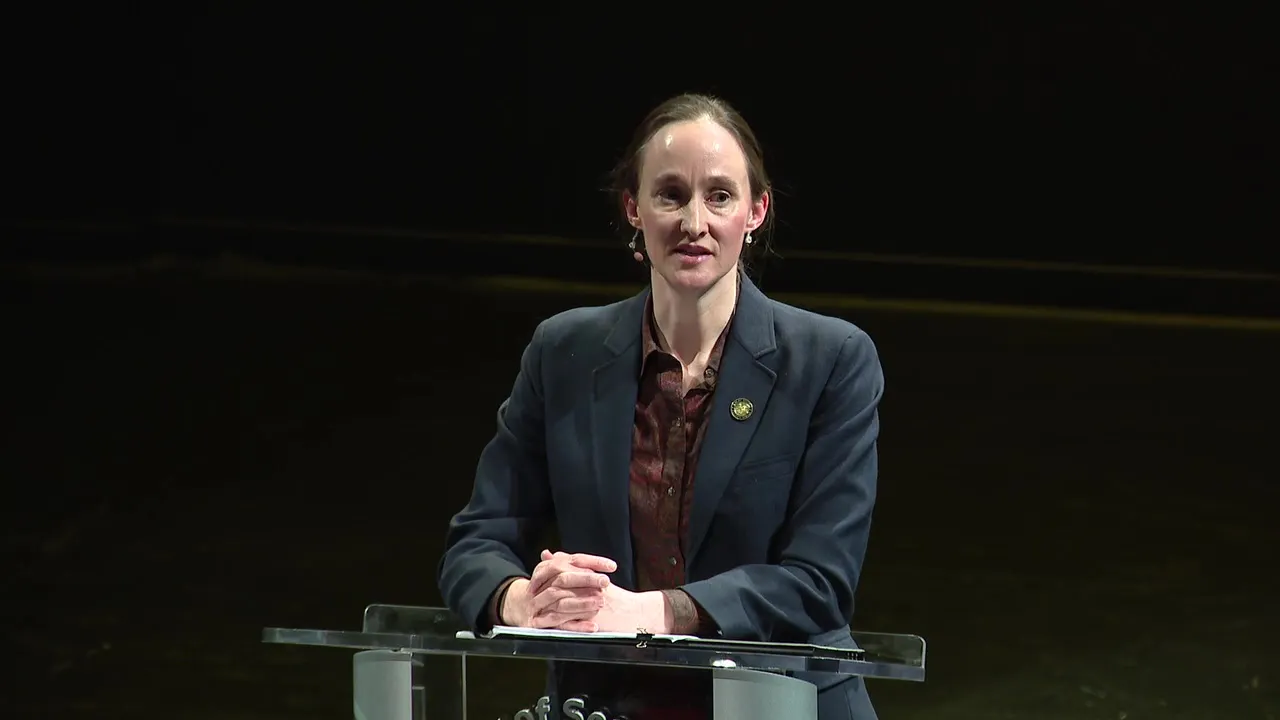
Seattle Mayor Katie Wilson used her first State of the City address Tuesday to outline an agenda focused on affordability, public safety, and homelessness, striking an optimistic tone while acknowledging the city’s challenges.
Speaking at the Langston Hughes Performing Arts Institute, Wilson addressed recent gun violence, including the fatal shootings of two teenagers in Rainier Beach last month. Her office will convene a panel of local and national experts to develop a strategy tailored to Seattle’s neighborhoods. The city is implementing an intensive stabilization plan through the end of the school year to reduce conflict and prevent retaliation, though Wilson emphasized officials must address root causes rather than simply react to incidents.
On homelessness, Wilson outlined a more measured approach to encampment removals, saying the city lacks enough shelter or services to meet current needs. Removals would be prioritized based on safety concerns and neighborhood impacts with the goal of bringing more people indoors. “That means conducting early outreach to people living on site before any posting of a removal and allowing flexibility when housing placements are imminent,” she said. Her administration plans to introduce legislation in coming weeks to fund shelter expansion and streamline shelter construction, including adding 1,000 new shelter units this year and identifying land for additional tiny house villages.
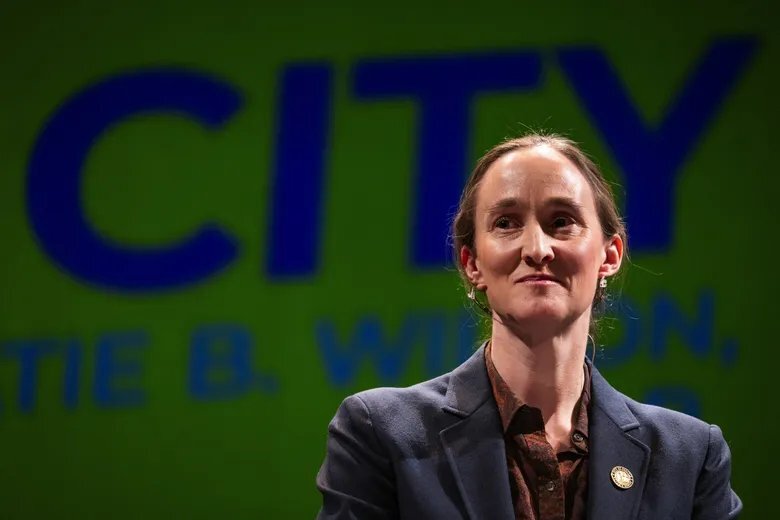
Affordability dominated the address, with proposals spanning housing, child care, food, and small business support. Wilson said some regulations are unnecessarily costly to comply with and pledged to work more closely with employers. On housing, the city will pursue zoning changes to allow more density, make it easier and cheaper to build backyard cottages, provide down payment assistance, and partner with community land trusts. Wilson pointed to $115 million raised this spring for social housing, more than twice initial forecasts, calling it a powerful tool to expand affordable housing options.
Wilson also addressed the city’s controversial surveillance camera network. Though she previously opposed expanded surveillance over concerns about potential misuse, including immigration enforcement, she said she wants more time to weigh the arguments. “I know this is a contentious issue and I want to get it right and not rush to a particular deadline,” she said. Jon Scholes, president and CEO of the Downtown Seattle Association, said the cameras are an important crime-solving tool.
Wilson acknowledged many proposals will require funding as the city faces a projected budget shortfall but did not outline specific price tags. “I think there’s a lot more to be gained by starting that conversation by looking at what we need and where we want to be and then figuring out how to get there,” she said.