Microsoft is expanding its roster of in-house artificial intelligence models, releasing a new speech-to-text system and making two existing models broadly available to developers for the first time, as the company works to reduce its dependence on OpenAI and strengthen its competitive position against Google, Amazon, and others.
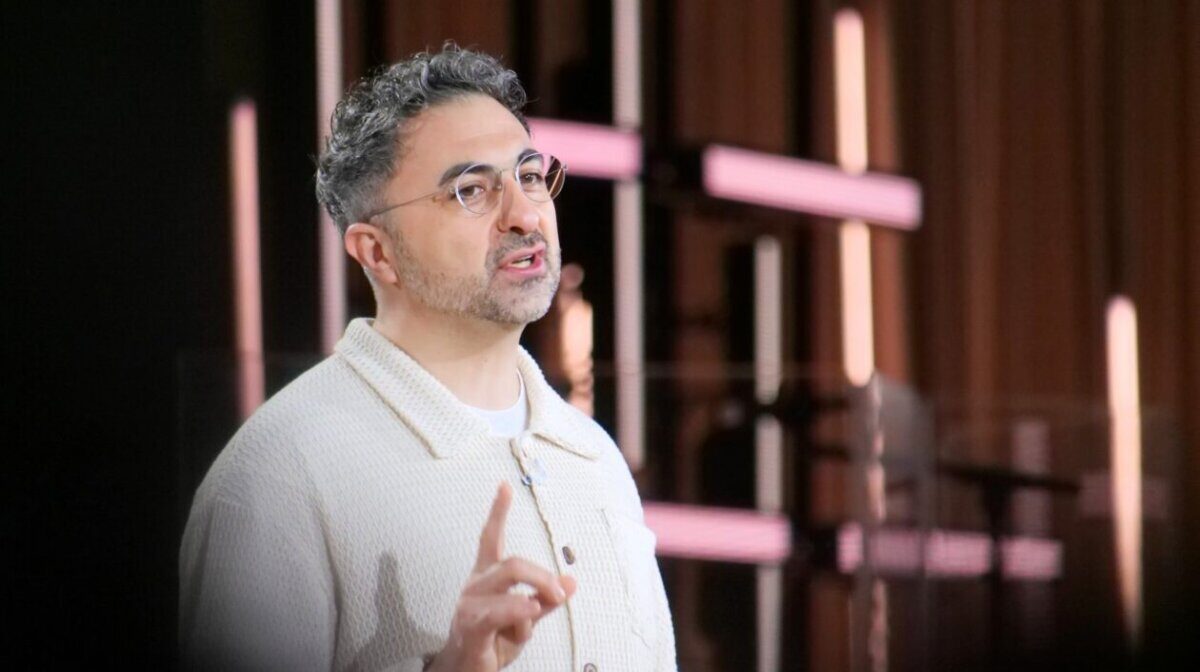
The company announced MAI-Transcribe-1 on Thursday, a speech-to-text model Microsoft says is the most accurate currently available and runs at half the GPU cost of comparable state-of-the-art models. Microsoft AI CEO Mustafa Suleiman told VentureBeat the model was built by a team of just 10 people. Alongside the new transcription tool, Microsoft released its existing MAI-Voice-1 and MAI-Image-2 models for broad commercial use for the first time. All three are available through the Microsoft Foundry developer platform and MAI Playground.
MAI-Transcribe-1 is designed to perform in noisy real-world environments such as call centres and conference rooms, and Microsoft is testing integrations with Copilot and Teams. The company says it offers the best price-to-performance ratio among large cloud providers in this category, competing directly with OpenAI’s Whisper and Google’s Gemini on the FLEURS benchmark. Suleiman described the model in a blog post as “not just the most accurate but also lightning fast.”
MAI-Voice-1 generates natural-sounding speech and now allows developers to create custom voices from short audio samples. MAI-Image-2 ranks in the top three on the Arena.ai image generation leaderboard and is being rolled out across Bing and PowerPoint.
The releases represent Microsoft’s first major model launch since a March reorganisation announced by CEO Satya Nadella, in which Suleiman stepped back from day-to-day oversight of Copilot to focus on frontier model development and superintelligence research. Suleiman told The Verge that Microsoft plans to eventually develop a frontier large language model capable of operating completely independently if needed. Microsoft recently bolstered that effort by hiring former Allen Institute CEO Ali Farhadi and other senior AI researchers from the Seattle-based institute.