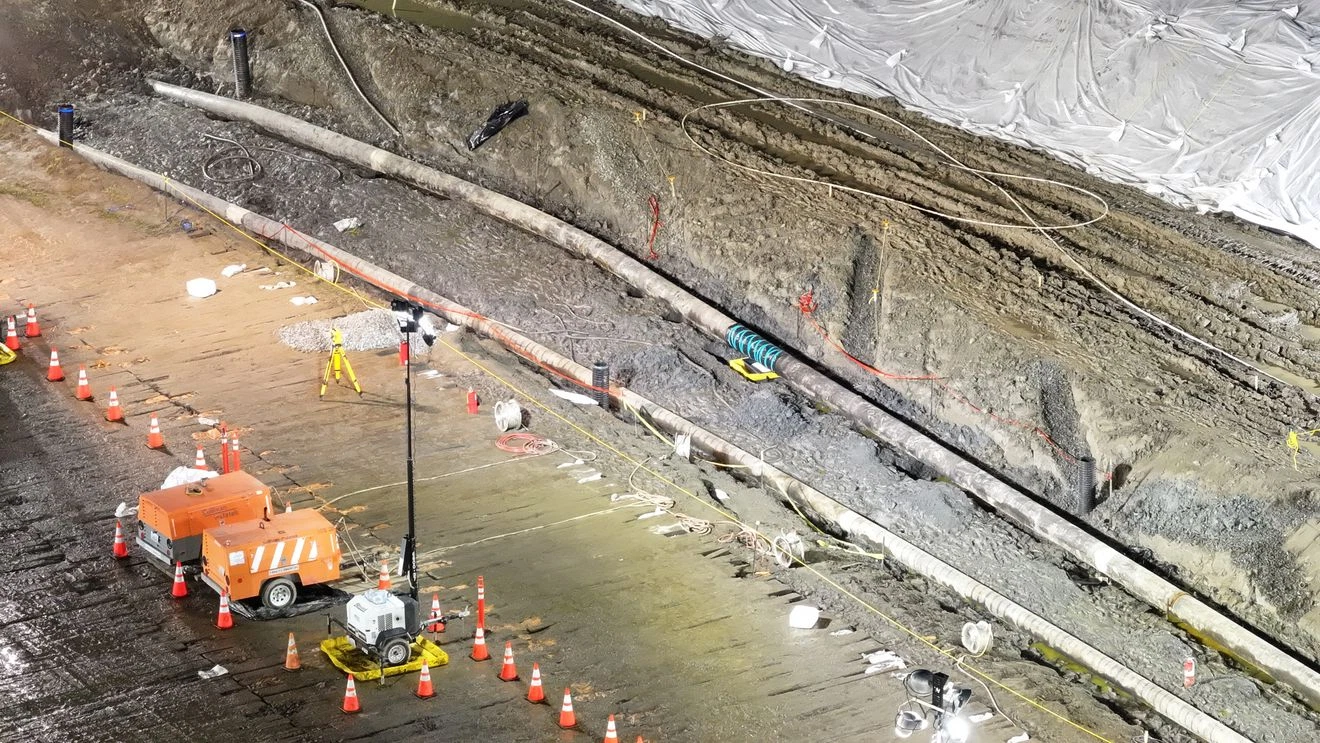
Crews have successfully identified the precise source of the leak in the Olympic Pipeline that supplies jet fuel to Seattle-Tacoma International Airport near Everett, and are now developing a comprehensive repair plan to restore operations on the critical fuel transportation infrastructure.
During testing conducted Monday, investigators confirmed the leak exists in the 20-inch pipeline segment, the larger of two parallel lines that supplies more than 90% of Oregon’s gasoline and diesel fuel as well as jet fuel to Seattle-Tacoma International Airport. Testing revealed no indication of leakage in the adjacent 16-inch pipeline, suggesting damage is confined to a specific section of the larger line.
The Olympic Pipeline system, which extends 400 miles from Whatcom County in northern Washington to Portland, Oregon, is operated by BP Pipelines North America, Inc., a subsidiary of the global energy company responsible for maintaining and operating the aging infrastructure.
Repair crews are working in close coordination with federal regulators, Washington state environmental officials, tribal authorities whose lands are affected, and local emergency management agencies. The company plans to release an updated pipeline restart timeline providing specific dates for resuming operations as soon as engineering assessments and regulatory approvals allow.
The pipeline shutdown arrives during the worst possible timing, coinciding with the beginning of the busy Thanksgiving holiday travel season when airline passenger volumes surge dramatically. Fuel supply constraints have forced some airlines operating at Seattle-Tacoma International Airport to divert flights to other airports for refuelling or to arrange expensive tanker truck deliveries, creating delays and logistical complications for travellers.
The threat of widespread fuel shortages affecting both transportation and heating oil supplies prompted emergency declarations in two states aimed at expediting alternative fuel delivery methods whilst the pipeline remains offline.
Washington Governor Bob Ferguson issued an emergency proclamation last week temporarily suspending regulations limiting how many consecutive hours commercial truck drivers hauling fuel can operate, allowing extended shifts to maximise tanker truck capacity replacing pipeline deliveries. Oregon Governor Tina Kotek followed with a similar emergency order Monday night, authorising truck drivers to exceed normal hours-of-service limits to bring replacement fuel into Oregon via tanker trucks travelling longer routes from refineries in other states.
The leak was first detected after a petroleum sheen was discovered in a drainage ditch running through an agricultural field on Tuesday, 11 November, prompting immediate investigation and pipeline shutdown as a safety precaution. Emergency responders have since deployed containment boom and oil recovery equipment to prevent the leaked fuel from spreading beyond the immediate area, and officials indicated no petroleum products have been observed outside the contained response zone. Environmental specialists continue assessing the total volume of fuel released, a calculation requiring careful measurement of contaminated soil and water.
The current incident represents the third significant problem with the Olympic Pipeline system within the last five years, raising questions about the infrastructure’s integrity and the adequacy of BP Pipelines’ maintenance and monitoring programmes designed to prevent releases.
In a separate but related matter, the Washington State Department of Ecology recently imposed nearly $4 million in fines against BP Pipelines for a December 2023 leak near Conway, Washington, that released approximately 21,000 gallons of gasoline into waterways, contaminating habitat and requiring extensive cleanup efforts. That incident occurred when corroded equipment failed, allowing gasoline to overflow from a monitoring vault into an irrigation channel connecting to the Skagit River system.
The pattern of repeated failures has intensified scrutiny of the Olympic Pipeline’s condition and prompted calls from environmental advocates and some elected officials for more rigorous inspection requirements, accelerated replacement of aging infrastructure, and consideration of alternative fuel transportation methods less vulnerable to catastrophic failures that can disrupt regional supply chains.