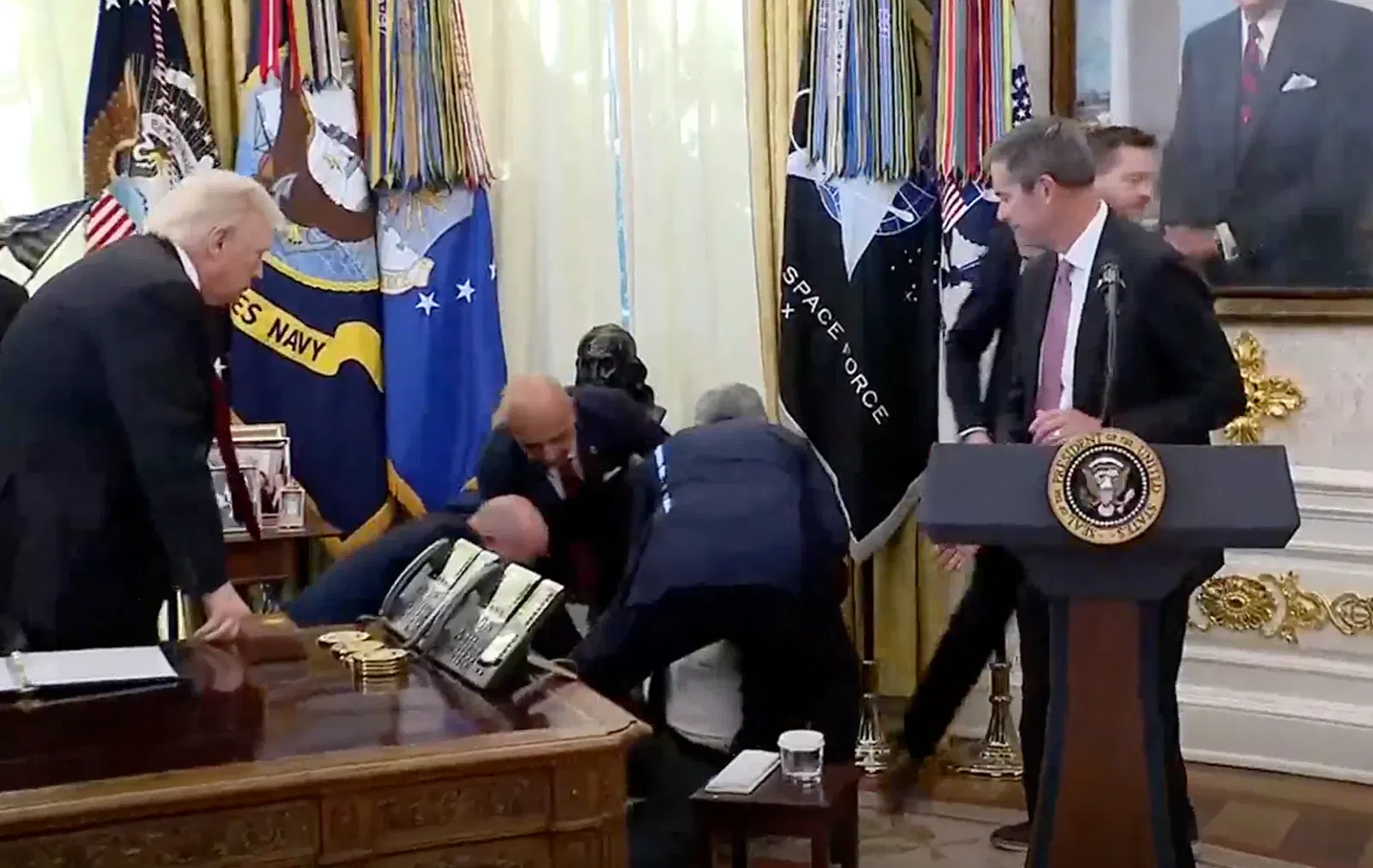
The healthcare executive from Novo Nordisk, Gordon Findlay, collapsed Thursday at the Oval Office during an announcement concerning weight loss medications.
The event focusing on GLP-1 drugs was suspended and press members were escorted from the room as Robert F. Kennedy Jr., President Donald Trump and Dr. Mehmet Oz directed their attention to Findlay.
White House Press Secretary Karoline Leavitt confirmed a representative from one of the pharmaceutical companies fainted, but is expected to make a full recovery.
“During the Most Favored Nations Oval Office Announcement, a representative with one of the companies fainted,” Leavitt stated. “The White House Medical Unit quickly jumped into action, and the gentleman is okay. The Press Conference will resume shortly.”
On Thursday, Trump announced an agreement with Eli Lilly and Novo Nordisk that would enable some of their obesity medications to be sold to Americans for approximately $150 for one month’s supply.
Multiple individuals spoke at the White House announcement and during Eli Lilly CEO David Ricks’ speech, Findlay collapsed. This prompted press members being rushed from the room and Dr. Oz attending to him.
Kennedy departed the room to secure medical assistance, according to White House Deputy Press Secretary Kush Desai.
The press conference resumed by 1:29 p.m. Eastern Time.
President Donald Trump acknowledged the emergency by explaining the executive was “lightheaded,” but had recovered.
The incident briefly overshadowed what the administration characterised as a significant pharmaceutical pricing achievement. The announced agreement aims to make obesity medications more accessible to Americans struggling with weight management, a condition affecting a substantial portion of the population.
GLP-1 drugs, including Novo Nordisk’s Wegovy and Ozempic alongside Eli Lilly’s Mounjaro and Zepbound, have transformed obesity treatment in recent years. These medications work by mimicking hormones that regulate appetite and blood sugar, producing substantial weight loss results that previous pharmaceutical interventions could not match.
The medications’ effectiveness has created enormous demand, but their cost has limited access for many Americans who could benefit. Monthly supplies often exceed $1,000 without insurance coverage, placing them beyond reach for most people dealing with obesity.
The $150 monthly price point announced Thursday represents a dramatic reduction from typical retail costs, potentially expanding access to millions of Americans currently priced out of treatment. However, questions remain about implementation details including which specific medications will be available at this price and what eligibility criteria might apply.
The “Most Favored Nations” framework referenced in the announcement typically involves international price comparisons, with the U.S. paying no more than what other developed nations pay for the same medications. This approach has been proposed previously as a mechanism for reducing American drug costs, which typically far exceed prices in other wealthy countries.
Eli Lilly CEO David Ricks’ presence at the announcement, alongside Novo Nordisk representation through Findlay, indicates both major manufacturers agreed to participate in the pricing arrangement. These two pharmaceutical companies dominate the GLP-1 market, making their cooperation essential for any meaningful pricing initiative.
The medical emergency during the announcement created an awkward moment for an event designed to highlight healthcare policy success. Findlay’s collapse while standing during speeches suggests possible factors including extended standing, warm room conditions, or underlying medical issues.
White House Medical Unit personnel responded rapidly, consistent with established protocols for medical emergencies in the executive mansion. The unit maintains constant readiness to address health crises affecting anyone in the building, from staff to visitors to the President himself.
Dr. Oz’s involvement in providing immediate assistance reflects his medical background as a cardiothoracic surgeon before his television career and subsequent political appointment. His presence at the announcement likely relates to his current role in the administration’s health policy apparatus.
Kennedy’s departure to summon additional medical help demonstrates appropriate response to a medical emergency, ensuring adequate personnel and resources were available even though the White House Medical Unit was already responding.
The relatively brief suspension of the press conference, resuming within what appears to be less than an hour based on the 1:29 p.m. restart time, suggests Findlay’s condition stabilised quickly and did not require emergency transport to a hospital facility.
Trump’s characterisation of the executive as “lightheaded” rather than using more alarming terminology likely aimed to reassure attendees and the public that the situation was not serious. Lightheadedness can result from various causes including dehydration, low blood sugar, or vasovagal responses to stress or extended standing.
The incident will likely generate questions about Findlay’s current health status and whether any underlying conditions contributed to the collapse. However, privacy considerations typically limit public disclosure of individuals’ medical information absent their consent.
The announcement’s resumption following the emergency indicates the administration considered the pricing agreement sufficiently important to continue despite the disruption. Postponing to another day would have delayed communicating what officials apparently viewed as significant news regarding drug affordability.
The pharmaceutical companies’ willingness to agree to substantial price reductions likely reflects various factors including political pressure, desire to expand market access, and possibly negotiations around other policy issues affecting their business operations.
Implementation questions surrounding the announced pricing include timeframes for availability, whether the reduced price applies to all formulations and dosages, what insurance or payment mechanisms will facilitate the pricing, and whether any restrictions limit who can access medications at this cost.