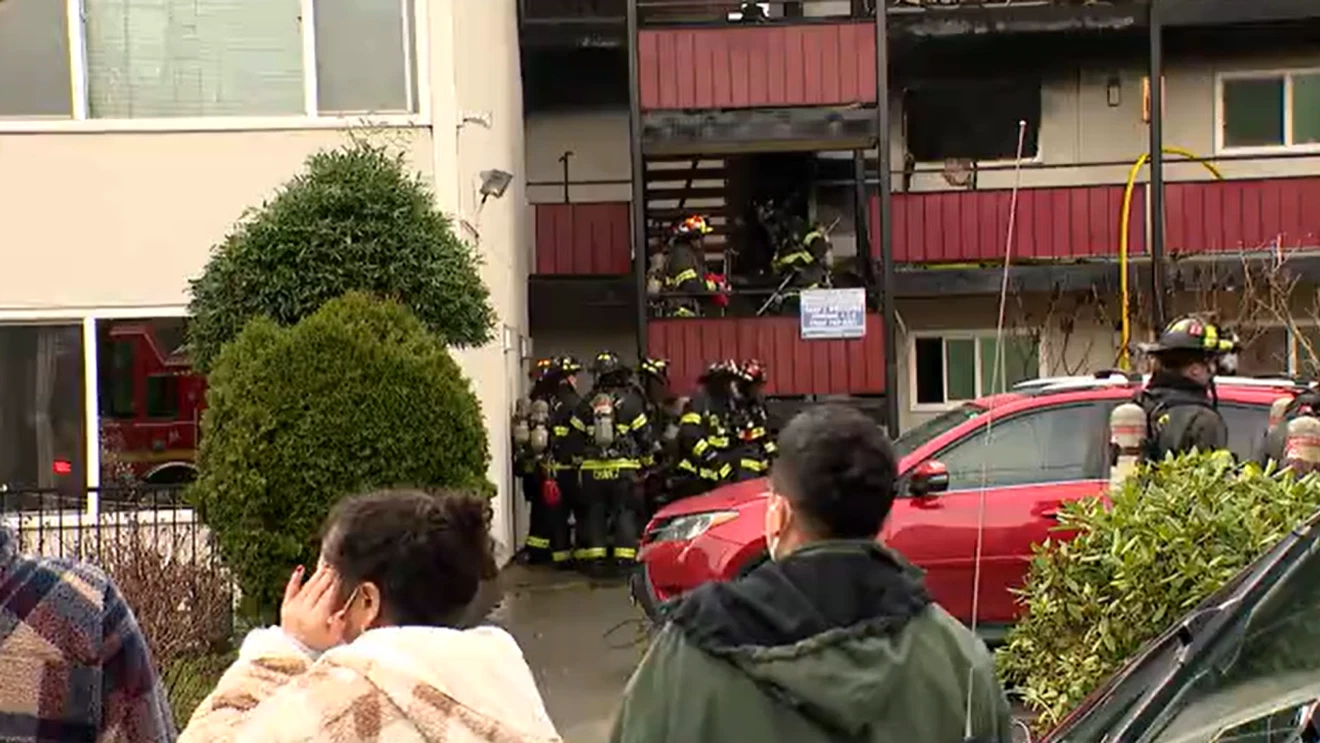
A two-alarm fire erupted on the 1700 block of 13th Avenue S in Seattle just before noon Sunday, forcing evacuations from a 15-unit apartment building where firefighters rescued an 87-year-old woman who was taken to Harborview Medical Center in stable condition. One firefighter suffered minor injuries and was also hospitalized. But the response, which brought the fire under control shortly before 1 p.m., drew criticism from residents who claimed crews took longer than 15 minutes to arrive, time that one resident says cost the lives of her two cats. The fire started on the second floor and quickly spread to the third floor, prompting the Seattle Fire Department to upgrade to a two-alarm response. At least two units suffered heavy damage while investigators work to determine the cause and total extent of damage.
The location, 1700 block of 13th Avenue S, places this fire in Seattle’s Central District, an area of mixed residential and commercial development where older apartment buildings sit alongside newer construction. The building’s 15 units suggest a structure typical of the Central District’s housing stock, likely built decades ago before modern fire suppression requirements like sprinkler systems became standard. That age matters because older buildings often lack the fire safety features that can contain blazes before they spread between floors, exactly what happened here when fire that started on the second floor quickly reached the third floor.
The rescue of an 87-year-old woman represents the most critical outcome. Elderly residents face higher risks in fires due to mobility limitations that slow evacuation and medical conditions that make smoke inhalation more dangerous. That firefighters located and extracted her, then transported her to Harborview where she stabilized, represents successful execution of Seattle Fire Department’s primary mission of saving lives. Without that rescue, this fire likely would have resulted in a fatality rather than a hospitalization with stable condition.
One firefighter’s minor injuries reflect the inherent dangers of interior firefighting operations. Entering burning buildings to search for victims and suppress flames exposes firefighters to extreme heat, toxic smoke, structural collapse risks, and various hazards from debris to chemical exposures. That the injury was minor and required only precautionary transport to Harborview suggests something like smoke inhalation, minor burns, or physical strain rather than serious trauma. But it demonstrates that firefighting remains dangerous even in residential blazes that are brought under control relatively quickly.
The upgrade to two-alarm status indicates incident commanders determined the initial response wasn’t sufficient to handle the fire’s intensity or spread. Seattle Fire Department’s alarm system works in tiers, with each alarm level bringing additional apparatus and personnel. A two-alarm fire typically means roughly double the resources of a single-alarm response, bringing more engines, trucks, and crews to provide sufficient firefighters for aggressive interior attack, search and rescue, and establishing water supply. The upgrade suggests the fire was spreading faster than initial crews could contain with standard response levels.
Residents gathering outside to watch the scene unfold is standard evacuation protocol, but it creates complicated emotions. Katie Kaminski described coming home from work to see smoke pouring from her neighbor’s apartment, so much smoke she couldn’t identify which unit was burning. That testimony suggests the fire produced significant smoke before flames became visible, typical of structure fires where combustion creates smoke that spreads through the building before fire actually breaches walls or roofs. For residents watching their building burn, uncertainty about whether their own units are damaged, whether possessions survived, and whether they’ll have homes to return to creates acute stress.
The claim from some residents that fire crews took longer than 15 minutes to respond requires examination because it directly contradicts Seattle Fire Department standards and typical response times. SFD aims for first-unit arrival within roughly 5 minutes for most incidents in the city, with full complement of resources arriving within 8-10 minutes for structure fires. A 15-minute response time would represent significant delay, possibly due to simultaneous incidents stretching available resources, traffic congestion delaying apparatus, or errors in dispatch. Without reviewing actual dispatch timestamps and arrival logs, it’s impossible to verify residents’ perception versus actual response times, but their perception matters because it affects trust in fire protection.
Kristen Adamson’s statement through tears that “both of my cats are dead because the fire department took so long to show up” captures the anguish of losing pets in fires and the human need to assign blame for tragic outcomes. Whether fire department response time actually contributed to her cats’ deaths, or whether the fire’s rapid spread made their survival impossible regardless of response speed, can’t be determined from available information. Pets often hide during fires rather than fleeing, making them difficult to locate even when firefighters search structures. Smoke inhalation affects animals faster than humans due to their smaller size and faster respiratory rates. Adamson’s grief is legitimate regardless of what caused her pets’ deaths, but her attribution of blame to response time reflects how tragedy creates need for explanation and accountability.
The statement that at least two units suffered heavy damage while investigators work to determine total extent suggests fire damage assessment is ongoing. Heavy damage typically means structural elements like walls, ceilings, and floors sustained serious fire or water damage requiring extensive reconstruction. Moderate damage might mean smoke and water damage requiring cleaning and cosmetic repairs but not structural work. Light damage could be just smoke odor requiring cleaning. The uncertainty about total number of damaged units suggests investigators are still accessing parts of the building to evaluate conditions, particularly checking for hidden fire extension in walls or attic spaces that might have spread beyond obvious damage.
For residents of the 15-unit building, even those whose apartments weren’t directly damaged by fire, the question is when they can return home. Buildings after fires often remain uninhabitable for days or weeks while investigators complete their work, utilities are restored, and building officials verify structural safety. Smoke and water damage can render undamaged units temporarily unlivable. Residents face displacement, need for temporary housing, uncertainty about recovering possessions, and questions about whether the building will be repaired or condemned. Those without renters insurance face particular hardship because they lack coverage for temporary housing costs and replacing damaged belongings.
The Central District location creates specific displacement challenges. This neighborhood has experienced significant gentrification and rising rents in recent years, making alternative housing difficult to find and afford for residents suddenly displaced by fire. The 15 units likely housed 15 to 30 people depending on household sizes, all of whom now need somewhere to stay. Some might have family or friends who can temporarily house them. Others might need emergency shelter or hotel vouchers from Red Cross or city assistance programs. Finding new permanent housing if the building remains uninhabitable long-term presents even greater challenges in Seattle’s tight rental market.
The fire’s cause remains under investigation, which is standard procedure. Fire investigators examine origin and cause systematically, documenting burn patterns, interviewing witnesses, and ruling out potential ignition sources until they identify the most likely cause. Common causes in residential fires include cooking equipment left unattended, electrical malfunctions, smoking materials, heating equipment, and intentional acts. The second-floor origin narrows the search to units and common areas on that level. Whether the cause was accidental, negligent, or intentional affects both prevention lessons and potential liability.
The criticism about response time, even if perception rather than reality, highlights the challenge fire departments face in managing public expectations. When your home is burning and your pets are trapped, every second feels like minutes. Studies show people consistently overestimate how long emergency responses take when they’re anxiously waiting. Fifteen minutes might have felt accurate to residents watching smoke billow while waiting for fire trucks, even if actual response time was much shorter. Seattle Fire Department will likely review dispatch logs and apparatus arrival times to verify actual response and address any legitimate delays if they occurred.
For Seattle’s fire protection system, this incident reflects typical challenges of urban firefighting: aging building stock without modern fire suppression, rapid fire spread between floors, occupied buildings requiring rescue operations, and resource allocation that sometimes means delayed response when multiple simultaneous incidents occur. The successful rescue of the 87-year-old woman demonstrates the system working, but the resident who lost pets and criticizes response time illustrates that “working” from a fire department perspective might not feel adequate to people who lost what they value.
The firefighter who suffered minor injuries will recover, the 87-year-old woman stabilized at Harborview will hopefully return to health, and fire investigators will eventually determine what caused this blaze. But for residents of the 1700 block of 13th Avenue S, this Sunday afternoon fire represents a life disruption that might take months to resolve. Whether their units were heavily damaged or just smoke-affected, whether they can return in days or never, whether their possessions survived or were destroyed, these questions will dominate their lives while the rest of Seattle moves on from another structure fire that didn’t result in fatalities and was brought under control before spreading to neighboring buildings.