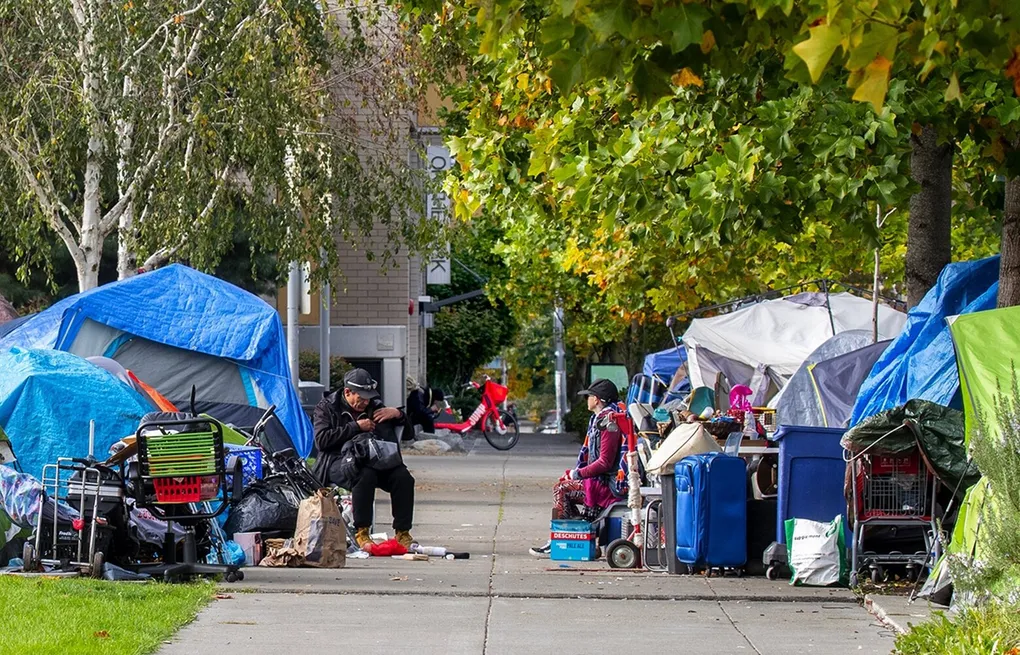
Seattle cleared a homeless encampment along the Burke-Gilman Trail in Ballard on Thursday after a month-long effort to connect residents with housing.
Outreach workers placed at least six people into permanent and emergency housing before the clearing. The remaining residents at the site, which housed roughly ten tents, packed their belongings as the city’s encampment team arrived.
Mayor Katie Wilson called the clearing a safety necessity given the camp’s location at a busy bike path and industrial driveway, but said the outcome highlighted the city’s shelter shortage.
“The conversations I had there underscored the reality that we simply don’t have enough housing, shelter and services for everyone who is living unsheltered,” Wilson said.
The delay marked Wilson’s first departure from former Mayor Bruce Harrell’s approach. Harrell cleared camps at record pace, often with just 48 hours notice. Wilson’s decision to pause the Ballard clearing drew attention from advocates hoping for a policy shift.
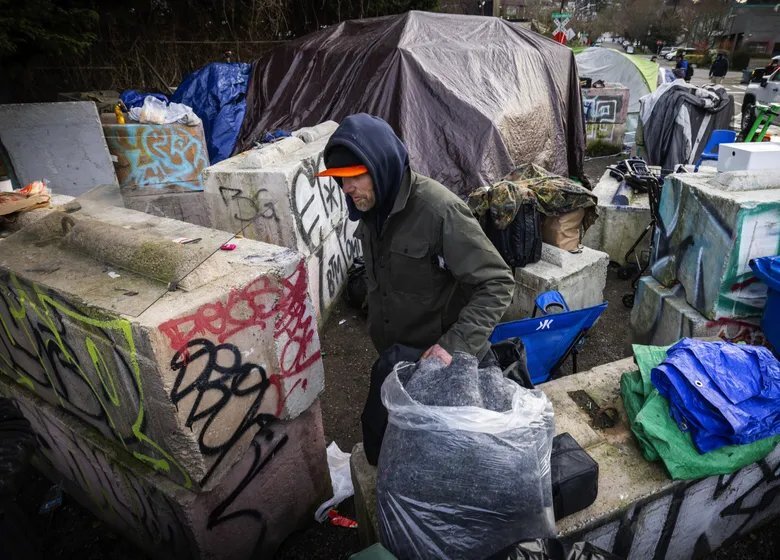
Bruce Drager, who co-chairs the Ballard Community Task Force on Homelessness and Hunger, said the extended timeline produced better results. Over the past month, the city’s HOPE team made repeated visits, placing at least five people in permanent units and one in a tiny home.
“If you slow things down, and you are more deliberate about approaching sweeps, the outcomes can be improved dramatically,” Drager said.
Marcus Weatherspoon was among those who secured housing after a decade of homelessness. He credited the mayor’s personal visit with spurring the attention that led to his placement.
“I definitely feel like this all happened because the mayor came down,” he said.
The approach resembles what Seattle practiced under former Mayor Jenny Durkan, who emphasized securing housing before clearing sites. Harrell reversed that strategy, promising quick removals with minimal advance outreach.
Wilson has said public spaces must remain accessible while arguing the city needs strategies that don’t shuffle homeless residents between locations. Whether Thursday’s clearing signals a broader policy change remains unclear.