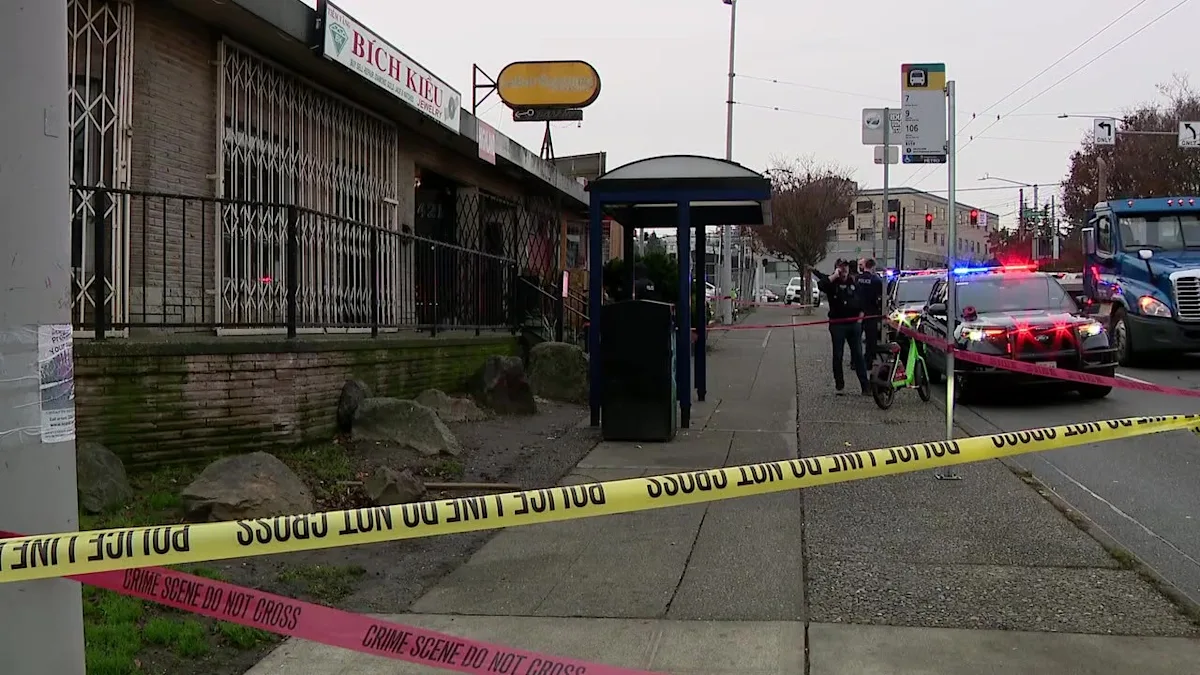
Management at Caravel Lounge is pushing back on claims connecting them to a shooting that killed a man and injured three others over the weekend. In a statement posted on social media, the hookah lounge says employees closed their business and left hours before the fatal shooting at 8th Avenue and South Lane Street just before 5 a.m. Saturday. “We would like to clarify the shooting DID NOT occur inside, outside, or near Caravel Lounge, and it has no connection to our business in any way,” the statement says. “Caravel Lounge is a respectful, law-abiding establishment.”
Video shows shell casings in the parking lot of a card game store next to Caravel Lounge. According to police, the deceased victim was located in the card store parking lot. Two men were found with gunshot wounds in a car in the 500 block of South Dearborn Street and taken to Harborview Medical Center in serious condition. A fourth victim arrived on his own at Valley Medical Center in Renton.
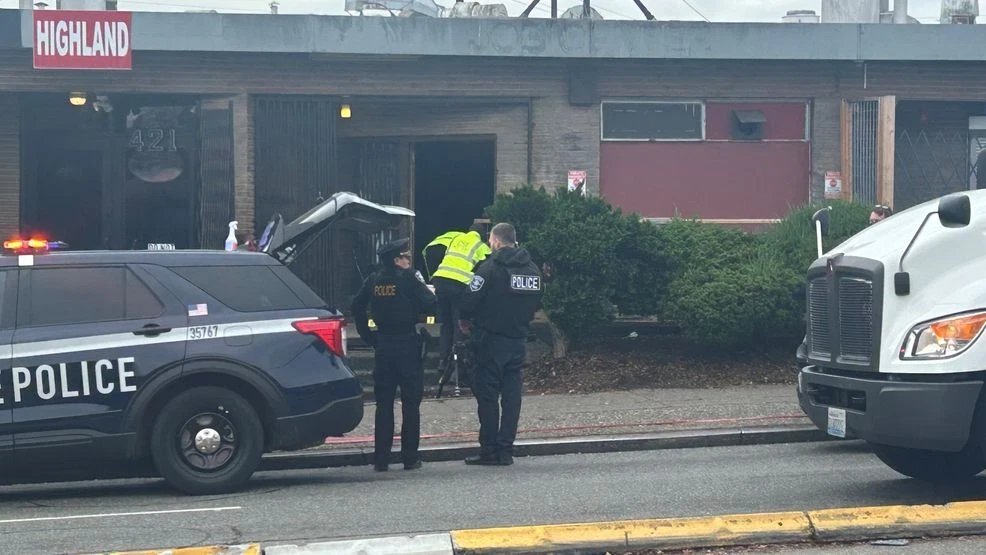
Caravel Lounge shared surveillance video from their parking lot showing staff closed the business at 2 a.m., everyone left, and a janitor stayed behind. Video from 4:57 a.m., as police responded to the shooting, shows two cars in the lounge parking lot that were not there at 2:45 a.m. One of those vehicles was towed from Caravel’s lot under police supervision, raising questions about the lounge’s claim of complete disconnection from the incident.
The lounge’s assertion that they were “unaware” of the shooting location conflicts with the physical evidence. Whether people involved in the shooting used Caravel’s parking lot as meeting point or escape route, whether victims or shooters had been at the lounge earlier in the evening, or whether the proximity is purely coincidental affects the business’s culpability and the city’s enforcement response.
This is not the first time serious gun violence has struck near Caravel Lounge. In December 2024, five people were injured in a shootout at the entrance to Caravel’s parking lot, with all victims leaving before paramedics arrived. The pattern of violence clustering around specific venues creates question of whether the businesses attract dangerous clientele, whether inadequate security allows conflicts to escalate, or whether location and operating hours simply create conditions where violence is more likely.
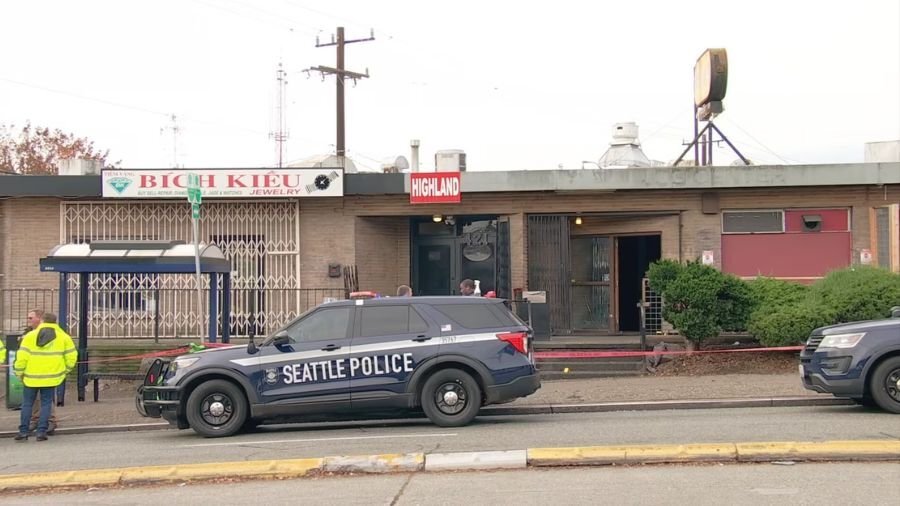
The Seattle City Council passed a new nightlife ordinance in 2025 requiring after-hours clubs to meet minimum standards for security and safety after more than 35 shootings at such venues in 2024 with a combined total of more than 800 rounds fired. Whether Caravel Lounge complies with those requirements or whether their history of violations indicates ongoing noncompliance affects whether the business should be allowed to continue operating.
Caravel Lounge was the target of city inspectors on multiple occasions in 2025, including back-to-back visits in June. Inspectors found the lounge operating after hours without a permit, with owner Lidiya Yemane meeting them with hostility and claiming they were hosting a private event. According to a city report, Yemane was told to cease operations that night, but inspectors and police did not enforce the shutdown order due to lack of patrol resources.
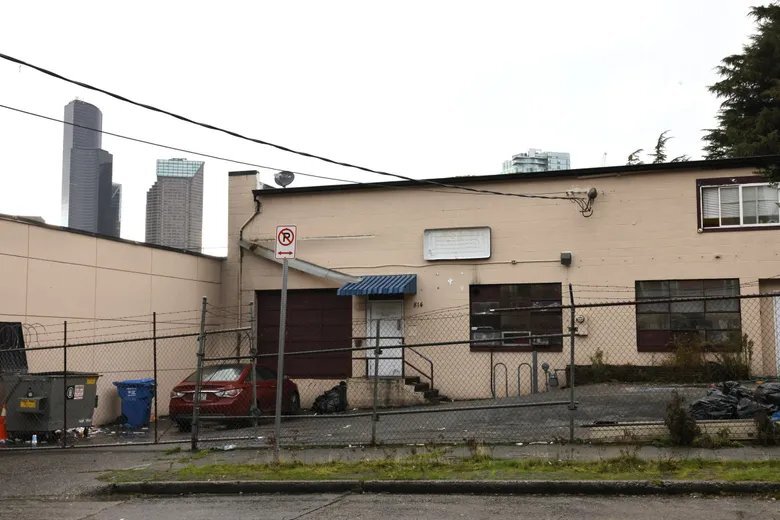
Inspectors returned at 3:15 a.m. in July and found the club again operating past authorized hours without a liquor license and without submitting a mandatory written safety plan. The city issued $5,000 fines for both violations. Caravel Lounge initially appealed the violation but later withdrew the appeal. Whether those fines were paid, whether the business corrected violations, or whether enforcement remains ineffective affects whether regulatory approach can control problem venues.
The enforcement failures where inspectors identified violations but lacked resources to shut down illegal operations demonstrate gap between policy and implementation. The nightlife ordinance creates standards but proves meaningless if the city can’t enforce compliance. Whether Seattle commits resources needed for effective oversight or whether after-hours venues continue operating in violation because enforcement is sporadic and penalties are minor affects whether violence at such establishments can be reduced.
Neighborhood advocate Tanya Woo, who lost her friend Donnie Chin to gun violence at the same intersection ten years ago, says she expects immediate action to make the area safer. “I think we need to collaborate with everyone in our community, including our after-hour venues, on how to make this area safe,” Woo said. “I think everyone is scared, angry, and frustrated.” Her statement that “the city sometimes forgets about our neighborhood” reflects Chinatown-International District residents’ frustration with persistent violence and inadequate response.
Investigators have not announced arrests, but cameras at the intersection connect to the Seattle police Real Time Crime Center, and several additional cameras likely captured the shooting. Whether those cameras produce footage identifying shooters or vehicles, whether witnesses come forward, and whether victims cooperate with investigation affects whether anyone faces accountability for the killing.