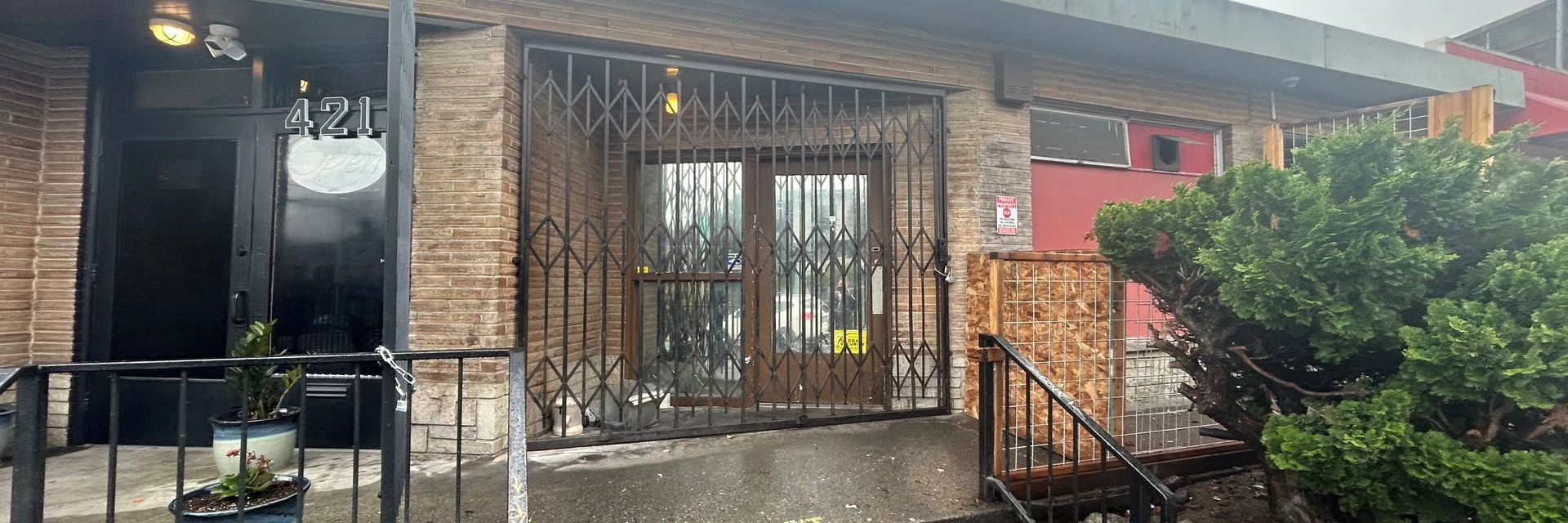
A fatal shooting represents the latest incident in a series of violent crimes at a Seattle hookah lounge, prompting Police Chief Shon Barnes to declare the nightclub a chronic public nuisance Thursday.
In response, the owner of Evangadi Hookah Lounge decided to shut down the operation permanently.
The establishment at 419 Rainier Avenue South in the Chinatown-International District has been the scene of prior assaults, an armed robbery, a fatal overdose, and numerous violations of Seattle’s recently adopted late-night business ordinance.
On Monday around 4 a.m., an employee attempted to force a customer to leave the premises. Instead, the individual pulled out a firearm and began shooting through an open doorway back into the hookah lounge, striking one man and causing other patrons to flee.
The shooting victim later died at the hospital. The King County Medical Examiner identified him as 34-year-old Khalif Hussein. Police continue searching for the suspect, who fled the scene before officers arrived.
Firew Berjia, who owns Evangadi Hookah Lounge, has been cited five times since July for violating Seattle’s nightlife ordinance. The regulation was passed to curb violence at after-hours venues following concerns about safety at late-night establishments.
The ordinance requires businesses to obtain liquor licenses and after-hours permits from the state Liquor and Cannabis Board to operate past 2 a.m. The clubs must also hire security staff, install cameras at entrances, conduct weapons checks on customers, and file a safety plan with the city.
Berjia faced $20,000 in fines and was contesting the citations when he received the chronic nuisance declaration letter from the police chief Thursday. Berjia decided to close the business permanently later that night, according to the Seattle City Attorney’s Office.
The threshold for city action against a business is seven violations within 12 months, according to the City Attorney’s Office. Evangadi Hookah Lounge’s five citations since July, combined with the violent incidents, approached this threshold.
The chronic nuisance declaration allows the city to take legal action against property owners who fail to address ongoing criminal activity or safety issues at their establishments. The designation can lead to closure orders, increased enforcement, or legal proceedings seeking permanent shutdown.
The Monday morning shooting occurred during hours when the establishment should not have been operating without proper permits. The 4 a.m. timing placed the incident well beyond the standard 2 a.m. closure time required for venues lacking after-hours authorization.
The fatal overdose referenced among prior incidents highlights how the venue faced multiple types of safety concerns beyond violence. Drug-related deaths at entertainment establishments often indicate inadequate security measures or management oversight.
The armed robbery and assaults demonstrate a pattern of violent crime rather than isolated incidents. This pattern of recurring problems likely influenced the police chief’s decision to issue the chronic nuisance declaration.
Seattle’s late-night business ordinance emerged from community concerns about violence and disorder at after-hours venues. The regulation aims to balance allowing nightlife businesses to operate with ensuring public safety through mandatory security measures.
The requirement for weapons checks addresses concerns about armed individuals entering establishments. The Monday shooting demonstrates how failure to implement such screening can result in tragedy when disputes escalate to gunfire.
Camera requirements at entrances provide investigative evidence when crimes occur and serve as potential deterrents to criminal activity. Footage from entrance cameras can help police identify suspects who flee after violent incidents.
The safety plan filing requirement forces businesses to proactively consider security measures and emergency response protocols. Plans should address how establishments will prevent violence, respond to incidents, and cooperate with law enforcement.
Berjia’s decision to close permanently rather than contest the chronic nuisance declaration or attempt to achieve compliance suggests either inability or unwillingness to meet ordinance requirements. The $20,000 in existing fines may have created financial pressure making compliance investments unfeasible.
The Chinatown-International District location placed the hookah lounge in a neighborhood that has experienced various public safety challenges. Community members have raised concerns about late-night noise, disorder, and violence affecting residential quality of life.
The permanent closure removes a source of neighborhood complaints and eliminates a venue where multiple violent incidents occurred. However, it also represents a business failure and potential loss of employment for staff who worked at the establishment.