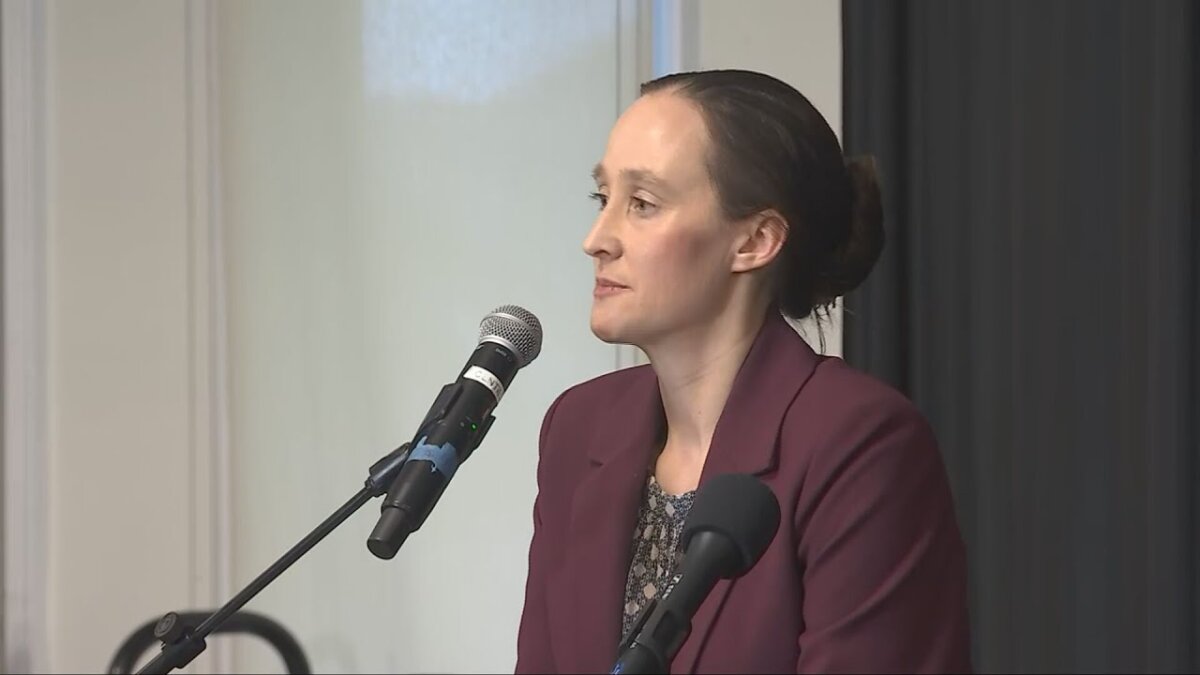
Seattle Mayor Katie Wilson introduced three pieces of legislation Wednesday aimed at rapidly expanding shelter capacity and speeding development of new facilities, moving closer to her promise of creating 1,000 new shelter units this year despite criticism that the city continues shuffling homeless people between locations.
Wilson was joined by community leaders, neighbors, and service providers Wednesday afternoon. The first piece of legislation would allow the city’s director of finance and administrative services to directly sign lease agreements with property owners to significantly speed up the development process for new shelter spaces. Currently, all shelter spaces in Seattle, including tiny home villages and RV safe parking lots, have a maximum capacity of 100 people.
“This is a very low limit which is out of step with national best practices and what cities like L.A., Tampa, and Austin are doing now,” Wilson said. The mayor’s second piece of legislation would increase the capacity number to 150 people on an interim basis and allow one location in each city district to house up to 250 people. “We can’t just keep moving people from place to place and calling that progress,” the mayor said.

That statement rang hollow for Stacy Hummons, who told reporters exactly that happened to her and several other neighbors. Hummons was living at an encampment on 41st Street in Ballard that was cleared by the city last month. She said all but one person living at that camp moved to a new, larger encampment only blocks away on 43rd Street after receiving little to no help from Wilson or other city employees. “If you want to stop homelessness, give people homes, give people housing,” Hummons said. “They’re not actually giving anybody housing.”
In a third piece of legislation, Councilmember Cathy Moore said Wilson’s team identified $4.8 million in existing city funds that could be used to support new shelters and wraparound services at each location. Of that total, $3.3 million would be appropriated from an underutilized revolving loan program, and $1.5 million would come from the Downtown Health and Human Services Fund, which has not been used for a decade, according to city officials.
Wilson’s proposals gained support from several council members, including Rob Saka, who represents District 1. “The scale and scope of our homelessness crisis demands action,” Saka said Wednesday. He told reporters his constituents in District 1, which includes West Seattle, SoDo and Pioneer Square, bear the brunt of the city’s homelessness challenges. “Tiny home villages work. And many people prefer them,” Saka said. Jon Scholes, president and CEO of the Downtown Seattle Association, also expressed support. “There are far too many people sleeping unsheltered in our city. This plan will ensure more people get inside and connected to the help they desperately need,” Scholes said. Wilson did not take questions from reporters Wednesday.