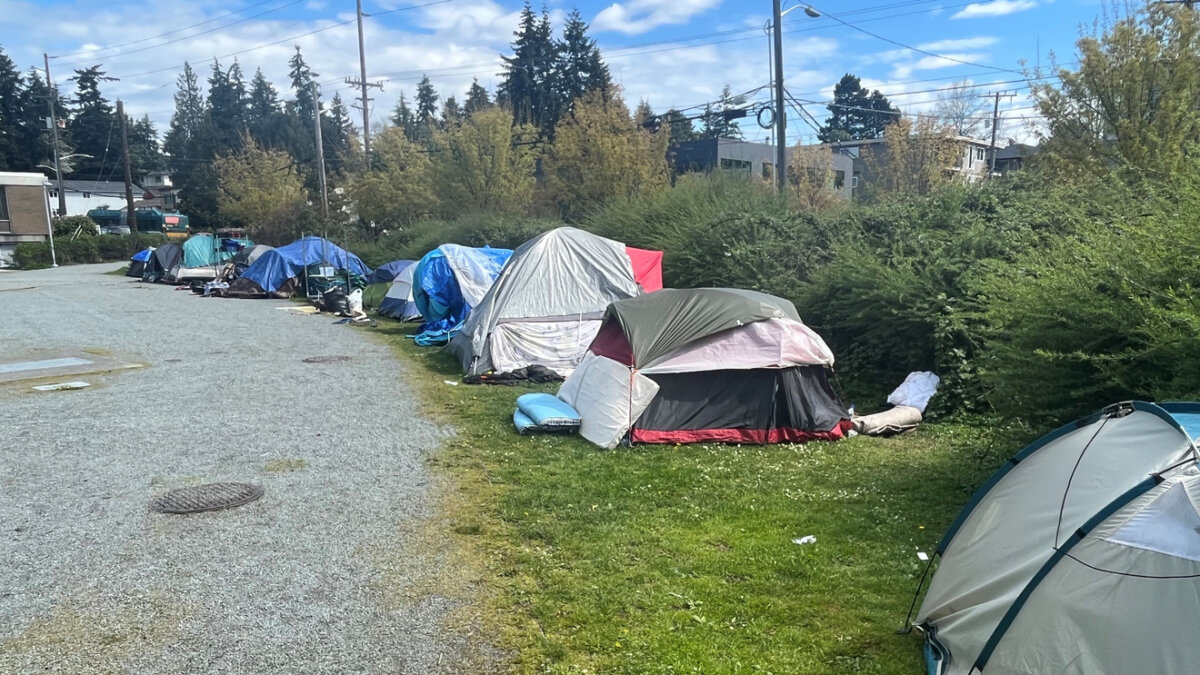
Brandon Herman reported the problem over the summer when three people living in a fenced-off dumpster area at a vacant city-owned lot had accumulated so much rubbish that it eventually caught fire.
The city cleared it. The people came back.
Herman reported it again. The city cleared it again. The people came back again.
“Unfortunately, the homeless folks are back. They are not on premises now, but they are trying to move back in because there’s no fence up, there’s nobody patrolling the area,” Herman said.
The vacant property owned by the City of Seattle at the former Pecos Pit BBQ restaurant site at 4400 35th Avenue Southwest has been a source of ongoing problems ever since a homeless camp moved in, according to neighbours.
“A lot of garbage that’s just left there for weeks at a time,” said Vince Belfield, who lives down the street.
Several neighbours have routinely reported issues created by the encampment on the Find It Fix It app.
“There’s an open-air drug market and rubbish and human waste,” Herman said. “The dumpster area was fenced off at the end of the property. I reported it over the summer because there were three people living there who had accumulated a lot of garbage. Sure enough, it caught on fire.”
Earlier this week, a crew arrived to clear away the rubbish and items left behind by a group of homeless people. Although it’s now gone, many are concerned that nothing is being done to prevent people from returning to the vacant lot.
The parcel is owned by Seattle City Light and is in the pathway of Sound Transit’s light rail expansion into West Seattle.
However, that construction is likely years away, and the property will likely be left idle until those tracks are laid.
Seattle has a law that requires owners of vacant buildings to secure them against unauthorised entry, both to reduce fire hazards and issues related to blight and illegal activity. Landlords who don’t comply can be fined.
Neighbours said these problems are taking place at the vacant lot the city owns, yet no one is taking responsibility.
“I’d say it’s a double standard,” Belfield said. “If they are going to try to fine homeowners for doing that, they should be held accountable too.”
A Seattle City Light spokesperson said: “City Light is aware of the issue and is taking steps to deter future activity at this location.”
The statement doesn’t specify what those steps are, when they’ll be implemented, or whether they include the fencing and security measures the city’s own law requires for vacant properties.
The cycle Herman describes, clearing followed by return followed by clearing followed by return, demonstrates the fundamental problem with sweep-and-move homeless policy. Without places for people to go, they simply relocate to the next available spot until that gets cleared, then move back to previously cleared locations.
The fire Herman reported over the summer represents the exact hazard Seattle’s vacant building law is meant to prevent. Accumulated rubbish in occupied spaces creates fire risks that endanger both the people living there and surrounding properties.
The “open-air drug market” allegation suggests the encampment attracted not just people seeking shelter but drug activity that creates additional public safety concerns for the neighbourhood.
The Find It Fix It app reports neighbours filed demonstrate they’re following proper channels to address the problem. The city’s app exists specifically to allow residents to report issues requiring municipal response, yet repeated reports haven’t produced lasting solutions.
The dumpster area being fenced off initially shows someone attempted to secure part of the property, but fencing just the dumpster area whilst leaving the rest of the lot accessible doesn’t meet the requirement to secure vacant properties against unauthorised entry.
Seattle City Light owning the property creates an unusual situation where a city utility holds land awaiting future Sound Transit use. The multiple layers of government ownership, Seattle City Light technically owning it but Sound Transit eventually using it, may contribute to confusion about who’s responsible for securing it.
The light rail expansion into West Seattle being years away means this property could sit vacant for half a decade or more. Without active use planned in the near term, securing it becomes even more important to prevent it becoming a persistent problem site.
The city’s vacant building law applies equally to all property owners, public and private. The ordinance doesn’t exempt city-owned properties from requirements to secure vacant buildings and lots.
Neighbours pointing out the double standard have a legitimate grievance. Private property owners face fines for failing to secure vacant buildings whilst the city lets its own property become a revolving-door encampment site without consequences.
The “taking steps to deter future activity” language City Light used is notably vague. Steps could mean anything from eventually installing fencing to increased patrols to simply planning to do something eventually.
The fact that people are “trying to move back in” as Herman said indicates the property remains unsecured after the most recent clearing. Whatever deterrence measures City Light claims to be taking haven’t yet materialised in physical barriers preventing reoccupation.
West Seattle neighbours watching this cycle repeat have reason to be frustrated. They’re following the process, reporting problems through official channels, yet the city-owned property continues having the same issues private owners would be fined for allowing.