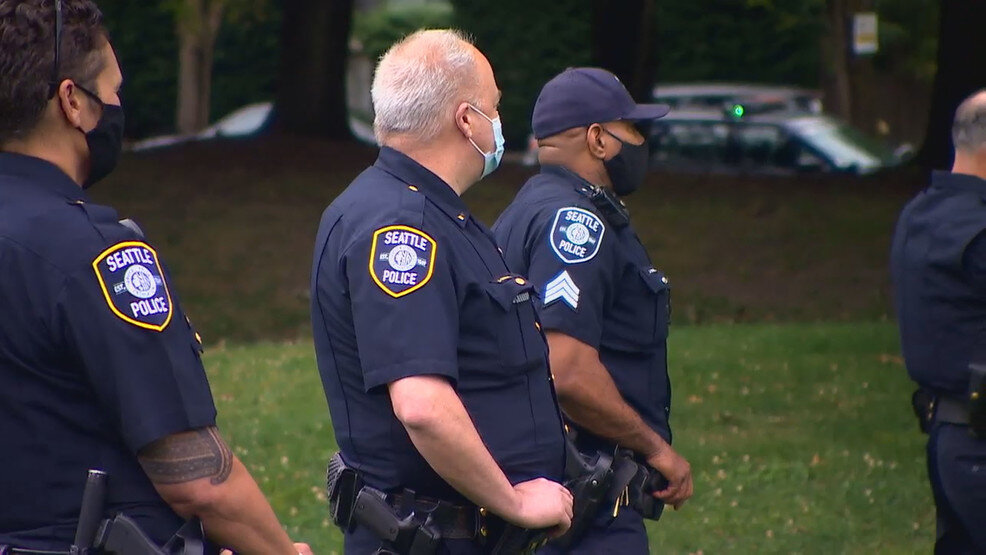
The Seattle Police Department will launch the first of 10 monthly community conversations on January 14, “Our City, Our Safety 2026,” with each gathering designed to shape how the department approaches safety on a neighborhood-by-neighborhood basis.
In partnership with the Department of Neighborhoods, SPD is holding the inaugural meeting at the Rainier Beach Community Center, followed by a second session on February 11 at the Green Lake Community Center, and the third on March 11 at the Alki Beach Boathouse. Each meeting will run from 6 p.m. to 7:30 p.m.
While the Seattle Police Department constantly engages with community partners, the Our City, Our Safety series is intended to enhance these efforts through a structured approach to gathering and implementing feedback.
What differentiates this series is how the information will be used and eventually shared back with stakeholders. At the first of two annual meetings in each Seattle precinct, police officials including Chief Shon Barnes and each precinct captain will present information and gather feedback and ideas from attendees. At the second meeting, they will share results, lessons learned, unexpected impacts, and other updates to continuously improve and create accountability.
“Safety means different things to Seattle’s more than 800,000 residents, whether you live in Rainier Beach, Ballard, or Capitol Hill, and there’s no one-size-fits-all solution. Having honest conversations and being accountable for our actions is critical to moving forward,” Chief Barnes said. “My goal with Our City, Our Safety is to emphasize how dedicated SPD employees are to earning trust and building the partnerships we need to change peoples’ perceptions.”
“Every neighborhood in Seattle deserves to feel safe and connected, and the only way we get there is by listening to the people who live that experience every day. This partnership is about meeting residents where they are, across languages and cultures and building solutions with them,” Department of Neighborhoods Director Jenifer Chao said. “When we lead with community, safety endures. I’m hopeful about what this series can unlock: deeper trust, shared understanding, and real progress.”
The Seattle Police Department and Department of Neighborhoods designed a 90-minute meeting format that combines elements of a town hall with aspects of a neighborhood watch program. Participants will have the chance to hear directly from police officials and each other. The meeting also features a roundtable portion where they can have more in-depth conversations about urgent concerns to attempt to co-develop solutions or examine the department’s past efforts.
“This is our opportunity to go beyond analyzing data and hear stories and potential solutions directly from the people who live, work, study, and play in Seattle’s diverse neighborhoods,” Assistant Chief Tyrone Davis said. “Their input will let us co-create solutions to current and hopefully potential future problems.”
The concept is grounded in research indicating that when residents come together with police to discuss their concerns, solutions, and ideas, they can create collaborative safety strategies that truly reflect the unique needs of each neighborhood. The series is designed to complement the Seattle Police Department’s current efforts, including its active advisory councils such as the West Seattle Advisory Council, the LGBTQ Advisory Council, and the Belltown Advisory Council and local business engagements such as Coffee with a Cop.
The department piloted this concept in the South Precinct in October, holding a community event with the Department of Neighborhoods at the Filipino Community Center. About 80 people attended, with South Precinct Captain Heidi Tuttle, Assistant Chief Davis, and Chief Barnes presenting updates to the audience. During the meeting, people exchanged ideas, addressed complex challenges, revealed their unique perceptions about public safety, discussed firsthand experiences with criminal activity, and shared their thoughts about the root causes of crime.
“People were able to say what they wanted to say and felt that they were heard,” said Agness Navarro, the Filipino Community Center’s executive director, describing the pilot event’s reception.
Academic researchers from the Seattle University Crime & Justice Research Center who specialize in studying residents’ perceptions about public safety also join these meetings to document outcomes and assess effectiveness.
The two-meeting annual structure for each precinct creates built-in accountability. The first meeting gathers input and concerns, while the second reports back on what actions were taken, creating a feedback loop that demonstrates responsiveness.
The 10-month schedule running through 2026 ensures every Seattle precinct receives attention. The geographic distribution across neighborhoods like Rainier Beach, Green Lake, and Alki demonstrates commitment to reaching diverse communities throughout the city.
The 90-minute time frame balances thorough discussion with respect for participants’ schedules. Evening timing from 6 p.m. to 7:30 p.m. accommodates working residents who cannot attend daytime meetings.
The roundtable format encourages deeper engagement than typical public comment periods at city meetings. Small group discussions allow more nuanced conversations about specific neighborhood concerns.
Chief Barnes’s emphasis on earning trust acknowledges past tensions between SPD and certain communities. The conversation series represents a proactive approach to relationship-building rather than reactive crisis management.
Director Chao’s focus on meeting residents “across languages and cultures” recognizes Seattle’s diversity. Effective community engagement requires accommodating language barriers and cultural differences in communication styles.
Assistant Chief Davis’s reference to going “beyond analyzing data” acknowledges limitations of statistics. Crime data shows what happened but not why, and cannot capture how safe people feel in their neighborhoods.
The integration with existing advisory councils and Coffee with a Cop programs creates a comprehensive community engagement strategy rather than isolated initiatives. These various touchpoints provide multiple ways for residents to connect with SPD.
The South Precinct pilot in October provided valuable lessons for refining the format before citywide rollout. The 80-person attendance and positive feedback from Navarro suggest the model resonates with community members.
The participation of Seattle University researchers adds academic rigor to the process. Their expertise in studying public safety perceptions can help identify which engagement strategies prove most effective.