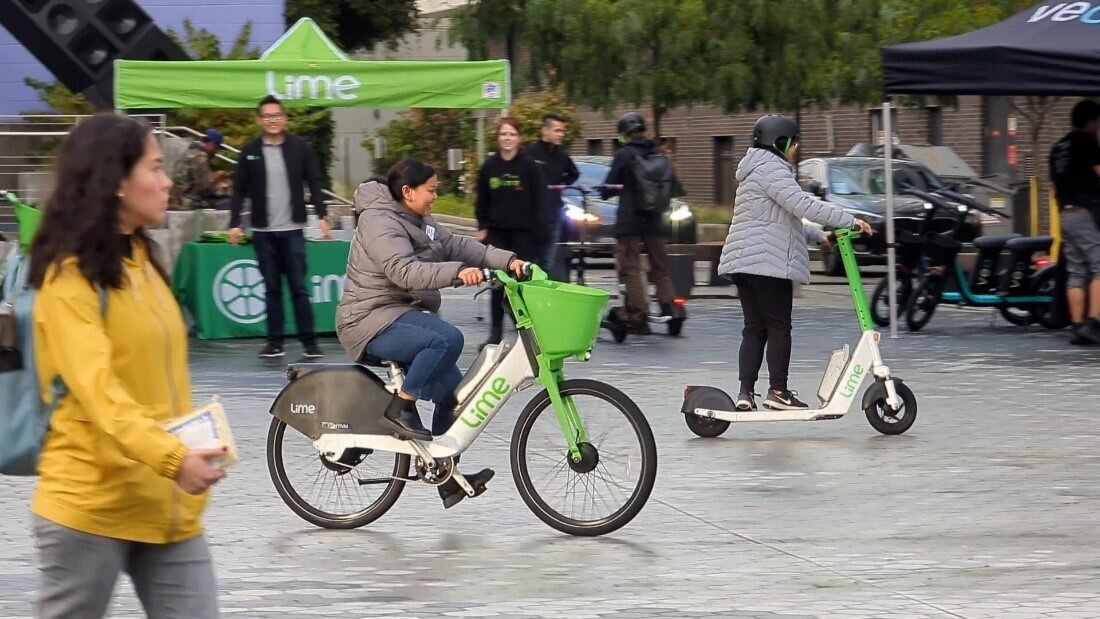
Seattle loves its electric scooters. The city’s bike and scooter share program hit 10 million trips in 2025, up 60% from the year before, roughly 26,000 rides per day. Lime alone carried 57,000 trips on the day of the Seahawks parade this February. With the 2026 FIFA World Cup on the horizon, the city is tripling the number of downtown scooter parking spots to accommodate even more riders. But behind the convenience and the momentum is a pattern that doctors at Seattle’s only Level 1 trauma hospital are watching with growing alarm.
Harborview Medical Center treated 163 serious e-scooter and e-bike injuries in 2024. That number is up 37% from 2023. And the injury leading the charts isn’t a broken wrist or a sprained ankle. It’s head and brain trauma.
A study by UW Medicine, which reviewed electronic health records from its emergency departments, urgent care centers, and primary care clinics between 2018 and 2023, found that 41% of e-scooter patients had head or neck injuries. Thirteen percent were diagnosed with traumatic brain injuries. The total number of e-scooter medical encounters at UW Medicine facilities climbed from just nine cases between 2018 and 2020 to 273 between 2021 and 2023, then jumped another 35% in 2024 alone, bringing the cumulative total since 2020 to 850. That’s not counting Swedish, Virginia Mason, or the injuries that never made it to an emergency room.
The physics of why this happens are straightforward. E-scooters position riders higher off the ground than bicycles or motorcycles, which means that when something goes wrong, a pothole, a crack in the pavement, an unexpected stop, the fall tends to be head-first. Dr. Beth Ebel, a pediatrician at Harborview’s Injury Prevention and Research Center, describes the mechanics in stark terms. “Hitting a car or a pothole with a scooter can flip the rider over the handlebars,” she said, “so you have rotational energy right onto your head. That movement and sudden stop can stretch and snap the axons, or the little connections between brain cells, and can cause profound cognitive injury.” She added something that should stop anyone mid-ride: “If you fall on a scooter and break your arm, we can fix your broken arm. But when you have a head injury, it is not something that we fix. We just keep the damage from getting worse.”
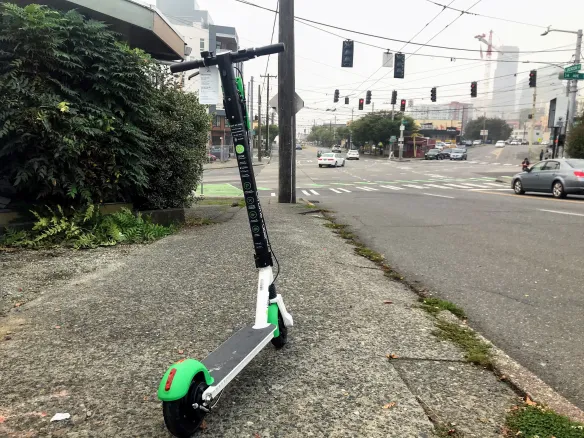
The majority of those injured, 87%, weren’t brought down by a car. They fell. And 75% of them were not wearing helmets when they did.
That statistic is tied directly to a policy decision made three years ago. King County repealed its mandatory helmet law in 2022, citing evidence that in the rare instances it was enforced, people of color were ticketed at disproportionate rates. The intention behind the repeal was rooted in equity. The consequence, in the data, is a city full of riders with no legal obligation to protect their heads. A Seattle Department of Transportation survey found that 70% of e-scooter riders in Seattle never or almost never wear a helmet. Dr. Ebel has said she would like to see a helmet law reinstated, with monitoring to ensure it is applied fairly. “We deserve to have both public health evidence-based laws and equitable enforcement,” she said. “Those should not be enemies of each other.”
The financial toll is also significant. According to data from Harborview, the average cost of treatment per serious e-scooter injury case runs approximately $92,000. At least three patients died at Harborview during one study period. One rider, who settled a lawsuit against Lime for $2.5 million, hit a pothole on 42nd Avenue SW in West Seattle in October 2022, landed on his head, and required an emergency craniectomy. He also sustained rib fractures, a clavicle fracture, and pulmonary lacerations.
Dr. Ebel is already anticipating what 2026 will bring. Speaking in late 2025, she said: “We’ve seen increases of almost 36% from last year, and I would expect that we’re going to see higher numbers this year.” Seattle is preparing to host hundreds of thousands of FIFA World Cup visitors this summer, with scooter infrastructure expanding across the city to meet demand. More tourists, more first-time riders, more scooters on the street, and still no mandatory helmet law.
None of this means e-scooters are going away. Seattle’s ride numbers make that clear. Dr. Ebel herself acknowledges that scooters fill a real niche in a hilly, traffic-heavy city where not everyone wants to drive or wait for the bus. But filling that niche responsibly requires an honest accounting of what the data already shows. The rides are increasing. The injuries are increasing. And Seattle is heading into its biggest scooter summer yet with the same unanswered question it has been avoiding for years: at what point does convenience become a public health crisis?