Nearly two decades after skeletal remains washed ashore on a Washington beach, they have been identified as Clarence Edwin Asher, a former mayor of Fossil, Oregon who went missing while crabbing in Tillamook Bay in September 2006 at age 72. Two months after Asher was pronounced dead, skeletal remains were discovered on a beach in Taholah within the Quinault Indian Reservation, but could not be identified at the time using available forensic technology. The identification came after forensic evidence was submitted last year to Othram, a Texas-based company specializing in forensic genetic genealogy, which developed a comprehensive DNA profile through forensic-grade genome sequencing and used genetic genealogy searches to develop investigative leads that eventually connected the remains to Asher’s relatives. The case reveals how advances in DNA technology are finally providing answers to families who lost loved ones decades ago, closing cold cases that seemed unsolvable using traditional forensic methods available when the remains were first discovered.
Asher served briefly as mayor of Fossil, Oregon for an unspecified period, in addition to working as a lineman technician for the Fossil Telephone Company and opening Asher’s Variety Store in 1965. His obituary described him as actively involved in his community: “As past mayor of Fossil, Ed also volunteered as a local fireman and ambulance driver, was active on the ambulance board, museum board, Wheeler County Planning Commission, and Columbia Basin Electric Co-op.” That level of community engagement, serving as mayor while working as lineman and store owner and volunteering across multiple civic organizations, reflects the pattern common in small Oregon towns where the same dedicated individuals fill numerous leadership roles because limited population means fewer people available to take on community responsibilities.
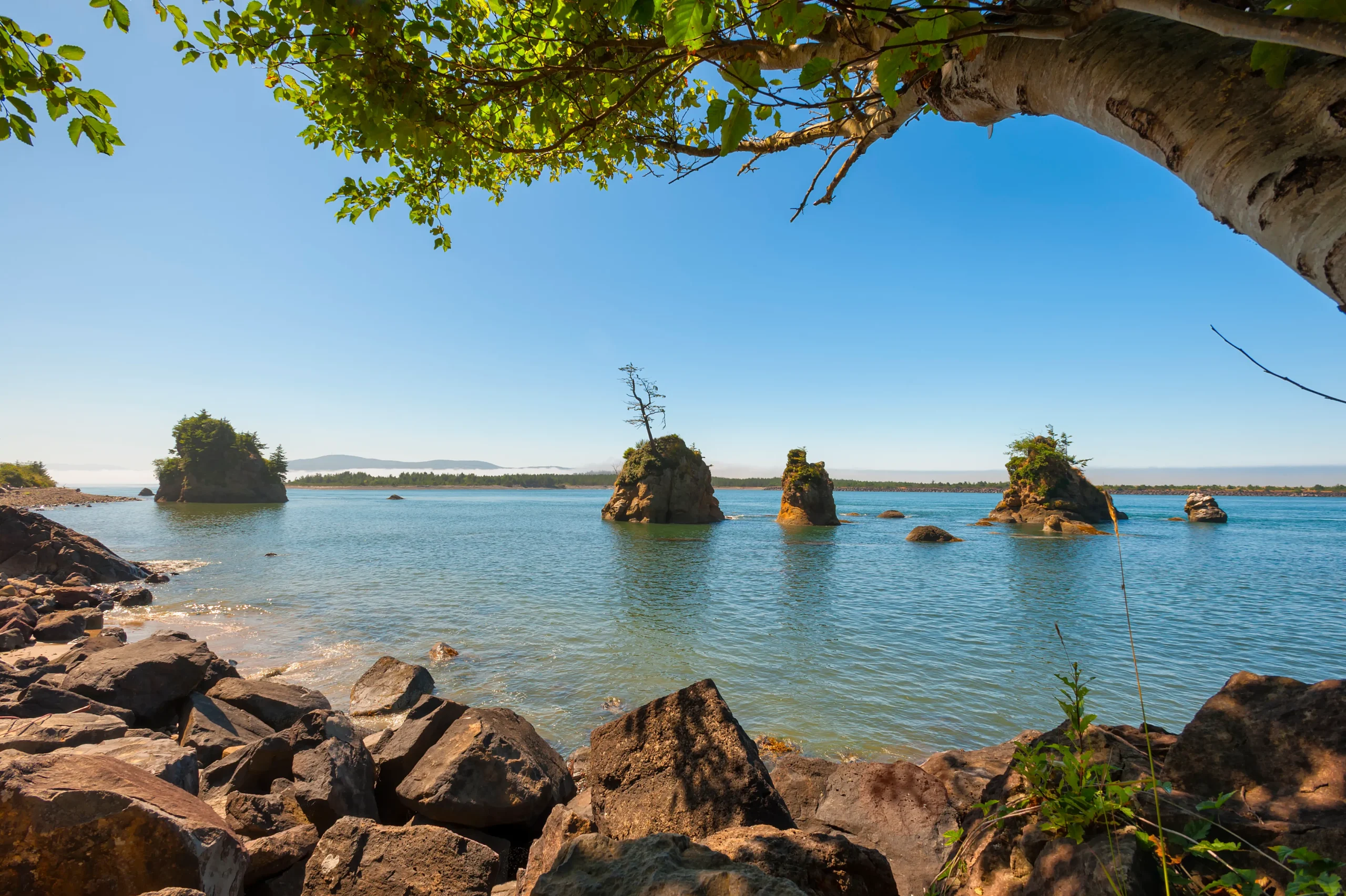
The circumstances of Asher’s death, going missing while crabbing in Tillamook Bay in September 2006, point to the dangers of coastal waters that claim lives regularly along the Oregon and Washington coasts. Tillamook Bay, located on Oregon’s northern coast roughly 80 miles west of Portland, is known for productive crabbing but also for strong currents, tides, and weather conditions that create hazards for recreational and commercial fishermen. Whether Asher fell from a boat, was swept away by unexpected wave or current, or experienced medical emergency while crabbing isn’t specified in available information, but the fact that he was pronounced dead in September 2006 suggests authorities determined at the time that he had died even though his body wasn’t immediately recovered.
The discovery of skeletal remains two months later on a beach in Taholah, roughly 150 miles north of Tillamook Bay, demonstrates how ocean currents carry human remains significant distances along the Pacific Coast. Taholah sits on Washington’s coast within the Quinault Indian Reservation, a sovereign tribal nation controlling coastal territory where the Quinault River meets the Pacific Ocean. The 150-mile distance between where Asher went missing and where his remains were found reflects complex ocean current patterns that move materials northward along the coast, though the exact path his remains traveled over those two months, whether staying offshore or washing up and being carried back out multiple times, is impossible to determine.
The inability to identify the remains when they were discovered in 2006 reflects limitations of forensic technology available then. Traditional identification methods rely on dental records, fingerprints, or distinctive physical features, but skeletal remains that have been in ocean water for months often lack sufficient detail for those methods. DNA testing existed in 2006 but required intact samples and known reference DNA from relatives for comparison. If investigators couldn’t locate potential relatives or if DNA degradation prevented successful profiling using technology available then, the remains would become unidentified persons cases stored with evidence awaiting future technological advances that might enable identification.
The breakthrough came when forensic evidence was submitted to Othram last year, eighteen years after the remains were discovered. Othram specializes in forensic genetic genealogy, a technique that uses DNA sequencing technology and genealogy databases to identify unknown individuals by finding their genetic relatives. Scientists developed a DNA extract from the skeletal remains and used forensic-grade genome sequencing to create a comprehensive DNA profile. That profile was then used in genetic genealogy searches that compare the unknown person’s DNA against publicly available genealogy databases containing DNA profiles from millions of people who’ve submitted samples to services like Ancestry.com, 23andMe, or GEDmatch to learn about their family history.
The genetic genealogy search developed “new investigative leads that were returned to law enforcement,” allowing investigators to identify potential relatives of the unidentified man. Reference DNA samples were collected from a relative and compared to the DNA profile from the skeletal remains, leading to positive identification of Asher. That process, from submitting evidence to Othram through developing DNA profile through genetic genealogy search through finding relatives through confirming identity via reference samples, typically takes months but can finally answer questions that remained unresolved for decades using traditional forensic methods.
The Grays Harbor County Coroner’s Office and King County Medical Examiner’s Office assisted Othram in the investigation, reflecting the collaborative nature of modern forensic work where multiple jurisdictions and specialized labs work together on complex cases. Grays Harbor County, where Taholah is located, had jurisdiction over the remains because they were discovered there, while King County Medical Examiner’s Office, serving the Seattle area, has advanced forensic capabilities and resources that smaller county coroner’s offices might lack. That collaboration allows cases from rural areas to access sophisticated forensic technology and expertise concentrated in urban centers.
This identification represents Othram’s 43rd solved case in Washington State, demonstrating the company’s significant impact on resolving unidentified remains cases across the Pacific Northwest. Those 43 cases likely include decades-old discoveries like Asher’s as well as more recent unidentified persons, creating closure for families and clearing backlogs of cold cases that accumulated when identification wasn’t possible using available technology. The fact that one company has solved 43 Washington cases suggests substantial number of unidentified remains exist in the state, reflecting both the challenges of identifying skeletal remains found in remote areas and the backlog created by limitations of pre-genetic genealogy forensic methods.
For Asher’s family, the identification provides definitive answer about what happened to him after he went missing while crabbing in 2006. They presumably held memorial services and grieved his death in the months after he disappeared, given that he was pronounced dead in September 2006, but without recovered remains they lacked the closure that burial or cremation provides. The identification eighteen years later allows them to finally recover his remains and potentially conduct burial or memorial services that were impossible when his body couldn’t be found or identified. Whether any of Asher’s immediate family members are still living to receive this news, or whether the identification primarily affects more distant relatives who provided reference DNA samples, isn’t specified but affects the emotional impact of finally identifying remains nearly two decades after his death.
For the Quinault Indian Nation on whose reservation land the remains were discovered, the identification resolves a long-standing mystery about human remains found on their territory. Tribal nations often face questions about whether unidentified remains found on reservation land might be tribal members or have cultural significance requiring specific handling. Identifying the remains as an Oregon man who went missing while crabbing in Oregon waters clarifies that these remains represent tragic accident rather than crime or unexplained death requiring ongoing investigation within Quinault territory.
The broader significance of this identification extends beyond Asher’s case to the hundreds or thousands of unidentified remains cases nationwide that can potentially be solved using genetic genealogy techniques that didn’t exist or weren’t widely applied to forensic cases until recent years. Organizations like Othram have created business models around providing advanced DNA sequencing and genealogy services to law enforcement agencies, coroners, and medical examiners who lack in-house capabilities. As this technology becomes more established and costs decrease, the backlog of unidentified remains from decades past will gradually be worked through, providing answers to families and closing cases that once seemed permanently unsolvable.
The ethical questions around forensic genetic genealogy, particularly use of consumer genealogy databases for law enforcement purposes, remain debated. People who submit DNA to genealogy services to learn about their ancestry generally don’t expect that data will be used to identify their relatives’ remains or connect them to crime scenes. Some databases like GEDmatch allow users to opt into law enforcement matching, while others prohibit such use. Othram’s approach, building proprietary databases and using forensic-grade sequencing, navigates some of these concerns by not relying solely on consumer databases, but the technique fundamentally depends on genetic connections to people who’ve had their DNA sequenced for other purposes.
For Washington State specifically, the fact that Othram has solved 43 cases suggests significant investment in using genetic genealogy to address unidentified remains. Whether that investment comes from state funding, individual county budgets, or grants and donations varies by case, but processing each case through advanced DNA sequencing and genealogy analysis costs thousands of dollars that many jurisdictions struggle to afford. The return on that investment, families receiving closure and cold cases being resolved, provides intangible benefits that justify costs but requires prioritization decisions when budgets are limited and newer cases also need resources.
The eighteen-year gap between remains being discovered and identified highlights how scientific advances occur at pace that outstrips individual cases. Genetic genealogy techniques that enabled Asher’s identification in 2024 didn’t exist in practical form in 2006 when his remains were found. DNA sequencing was possible but much more expensive and time-consuming. Consumer genealogy databases were smaller or didn’t exist. The analytical methods for using genetic matches to identify unknown persons through family trees weren’t yet developed. All those pieces had to come together before cases like Asher’s could be solved, meaning families waited years or decades for technology to catch up to their questions.
For communities along Washington and Oregon coasts, this case serves as reminder of how ocean conditions and currents can carry human remains significant distances from where people go missing. When someone disappears in coastal waters, search efforts naturally focus on areas near where they were last seen. But remains can travel 150 miles or more over weeks or months, washing up far from original locations in ways that prevent connection between missing persons reports in one jurisdiction and unidentified remains found in another. Cross-jurisdictional databases and communication help address these challenges, but geographic distance and bureaucratic boundaries still complicate efforts to match missing persons with unidentified remains.
Asher’s life, serving as small-town mayor while working as lineman and running variety store while volunteering as firefighter and ambulance driver and serving on multiple boards, reflects pattern of civic engagement common in rural Oregon communities where population is too small to support full-time elected officials or extensive volunteer corps. People like Asher who dedicate themselves to community service often hold multiple roles simultaneously because someone needs to do the work and limited number of people are willing and able. His death while pursuing recreational activity he enjoyed, crabbing in Tillamook Bay at age 72, ended life of service to Fossil and surrounding Wheeler County communities.
The identification of Clarence Edwin Asher nearly two decades after his skeletal remains washed ashore on a Washington beach closes a cold case that seemed unsolvable using forensic methods available when the remains were discovered. The breakthrough came through genetic genealogy technology that didn’t exist in practical form in 2006, demonstrating how scientific advances eventually provide answers to questions that remained unanswerable for years. For Asher’s family, the identification offers closure and opportunity to finally lay his remains to rest. For forensic science, it represents another successful application of techniques that are transforming how unidentified remains cases are approached and resolved, offering hope to thousands of families still waiting for answers about loved ones who disappeared or whose remains were found but never identified using traditional methods.