Heavy rainfall and relentless flooding have caused extensive damage to highways across western Washington, but few areas face more severe economic consequences than the mountain communities along Highway 2 in Snohomish, King, and Chelan counties.
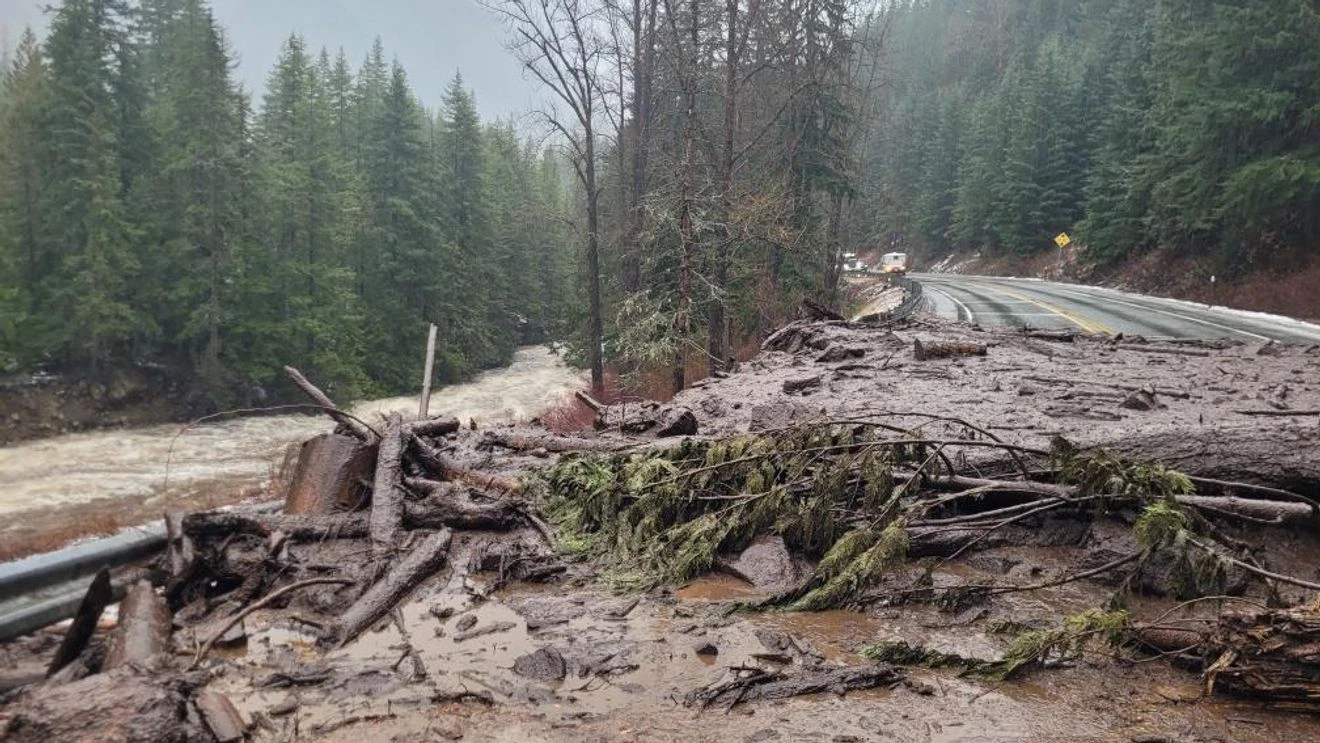
The highway provides a critical transportation link over the Cascade Mountains connecting western and eastern Washington. A 50-mile stretch of Highway 2, from east of Skykomish to west of Leavenworth, remains closed due to washed-out roads and debris from recent storms. The Washington State Department of Transportation estimates repairs could take months to complete.
“We’re hearing it’s going to be until February,” said Franny Sweeters, who operates the Whistling Post Saloon in the town of Skykomish. “It’s going to be a big hit to business if we don’t get the highway open soon.”
Skykomish serves as a frequent stopping point for travelers along Highway 2, including skiers heading to Stevens Pass and tourists visiting Christmas events in Leavenworth.
“This is one of their money seasons,” said Deputy Mike Mellis with the King County Sheriff’s Office. “Skiers should be passing by, buying sandwiches, buying coffee, every day from this point on, but it’s just not going to happen.”
At a press conference Wednesday, Governor Bob Ferguson addressed the devastating impact of the closure on communities and businesses along the corridor.
“When you take a major, major highway that crosses our state, when that’s down for what is undoubtedly a period of months, the impact to businesses, to individuals, to our state, it would be hard to overstate the significance of that,” Ferguson said. “When we had the conversation about Highway 2 a couple of days ago, I was like, ‘Guys, come on, it can’t be months.’ They started showing me photographs and some video. I don’t think you need to be an engineer to understand it’s going to take some time.”
Ferguson said crews have not been able to fully assess the road’s condition due to active landslides still occurring along the route.
“It’s not safe in certain spots to even get people to it; it’s very unstable right now,” he said.
Ferguson added that once repairs begin, crews will work seven days a week until completion, and the state will bring in outside contractors to accelerate the timeline.
“That’s the type of focus we need to move us as quickly as possible,” he said.
Even before assessments of the road damage can be completed, businesses that depend on highway traffic already understand the next few months will be extremely difficult.
“I think the uncertainty is probably where we are all sitting at the moment,” said Mo Ainsley, who runs Sky River Coffee in Skykomish.
Ainsley’s store remains operating but at reduced capacity on a generator as power remains out throughout the town.
“We’re used to the dark, but it’s the not knowing what’s next,” Ainsley said. “There’s a lot of fear, there’s a lot of anxiety. That’s where I think the emotions come from. These are our everyday people, I care really heavily about them, these are friends of ours, these are people you rely on, these are comrades through this time.”
The economic blow to Skykomish extends beyond immediate lost revenue from passing travelers. The town’s entire business ecosystem depends on Highway 2 traffic during the winter months when ski season brings steady streams of customers.
Sweeters’ Whistling Post Saloon typically sees skiers stopping for meals and drinks on their way to and from Stevens Pass. That traffic represents the financial lifeline that sustains the business through winter, traditionally the slowest season for mountain communities without robust ski traffic.
The timing couldn’t be worse. December through February represents peak ski season in the Cascades when Stevens Pass operates seven days a week and attracts thousands of visitors. Without highway access, those skiers will either skip trips entirely or find alternative routes that bypass Skykomish.
Leavenworth’s Christmas events draw massive crowds to the Bavarian-themed village during December. Travelers from Seattle and Puget Sound normally pass through Skykomish on their way to experience the holiday lights and festivities. The closure eliminates that pass-through traffic entirely.
The February timeline Ferguson mentioned represents roughly three months of lost business during what should be the most profitable period of the year. For small businesses operating on thin margins, losing an entire season’s revenue can mean permanent closure.
Ainsley’s generator-powered operation demonstrates the compounding challenges facing Skykomish businesses. Not only have they lost customer traffic, but they’re also dealing with power outages and infrastructure failures that make even basic operations difficult.
The emotional toll Ainsley described reflects how these aren’t just businesses losing money but communities losing their social and economic fabric. In a small mountain town, the coffee shop owner knows every regular customer personally. These relationships matter beyond simple commercial transactions.
The “comrades through this time” language reveals how crisis unites small communities even as it threatens their economic survival. People check on neighbors, share generators, pool resources. But solidarity can’t pay bills or replace lost income.
Ferguson’s admission that he initially didn’t believe the months-long timeline shows how severe the damage must be. State officials don’t casually accept multi-month closures of major highways. The photographs and videos that convinced him must have shown catastrophic failures.
The active landslides preventing even preliminary assessments mean the full extent of damage remains unknown. Engineers can’t design repairs until they can safely access the damaged sections. This uncertainty makes planning even more difficult for affected businesses.
The seven-day-a-week repair schedule and outside contractor commitment signals the state understands the urgency. But accelerated timelines still mean months, not weeks, before Highway 2 reopens.