Snohomish County deputies are being credited with saving a man’s life after a medical emergency was mistaken for a criminal incident, demonstrating how split-second assessments can mean the difference between life and death in evolving emergency situations.
On Thursday, 13 November, deputies were dispatched to what was initially reported as a road rage assault with a weapon in the 15900 block of US 2 near Everett.
A caller reported that the driver of a truck was repeatedly ramming an SUV until the truck’s tyres eventually caught fire.
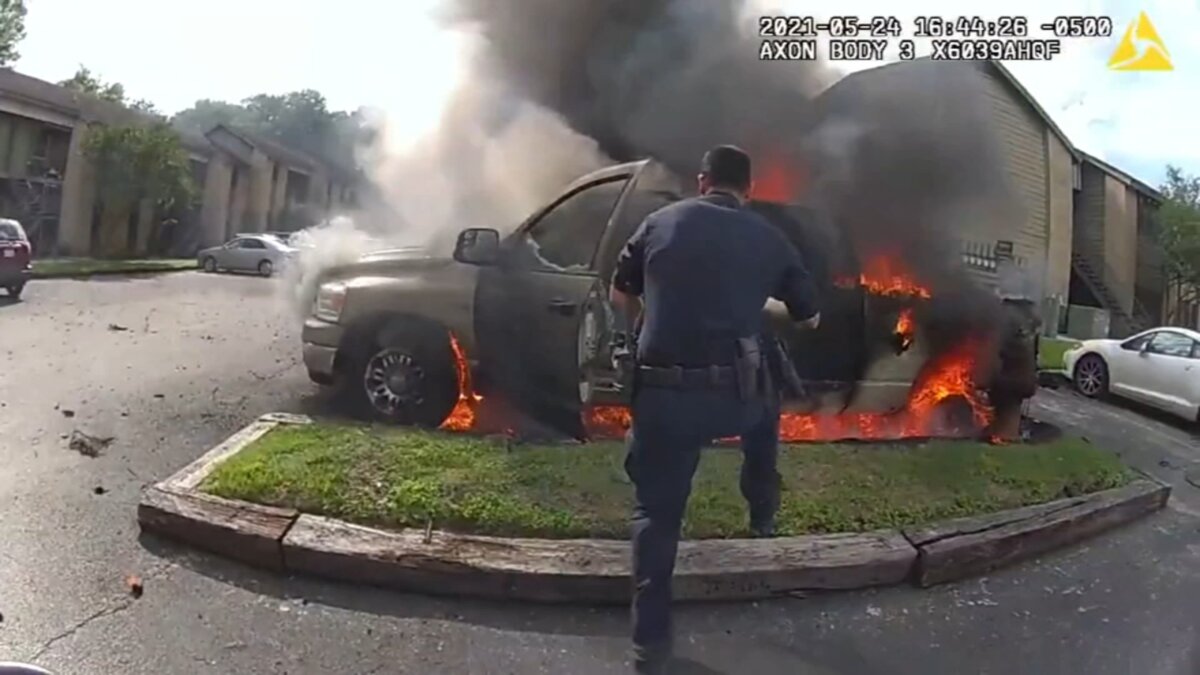
When deputies arrived, they realised the truck’s driver was actually suffering a medical emergency and was trapped, as the back of his vehicle was engulfed in flames.
Using fire extinguishers, deputies slowed the fire and pulled the driver to safety, then stayed with him until firefighters and medics arrived.
The incident near Everett on US 2 illustrates the complex judgment calls law enforcement officers must make when responding to reports that may initially appear to describe intentional criminal behaviour but actually involve medical emergencies causing individuals to lose control of their actions and vehicles.
The witness who called 911 to report what appeared to be road rage with the truck driver repeatedly ramming an SUV made an understandable interpretation of the observed behaviour. From an external perspective, a vehicle repeatedly striking another vehicle suggests intentional aggression, particularly given the prevalence of road rage incidents that have become increasingly common on roadways nationwide. The witness fulfilled their civic duty by reporting what appeared to be a dangerous situation requiring immediate law enforcement response.
However, the reality that the driver was experiencing a medical emergency rather than engaging in intentional aggression highlights how medical conditions including seizures, strokes, heart attacks, diabetic emergencies, or other sudden incapacitations can cause individuals to lose control of vehicles in ways that mimic intentional dangerous driving. Seizures in particular can cause repetitive motor movements that might result in a driver’s foot remaining on the accelerator whilst the vehicle continues moving forward, potentially explaining the repeated ramming behaviour the witness observed.
The fire that developed in the truck’s tyres likely resulted from the repeated collisions and potentially from the vehicle’s brakes or mechanical components overheating as the incapacitated driver’s foot remained on the accelerator or brake. Tyre fires can develop when friction from locked wheels dragging against pavement or from impacts generates sufficient heat to ignite rubber, particularly if brake fluid or other flammable automotive fluids are present.
The deputies’ decision to use fire extinguishers to slow the fire rather than waiting for firefighters to arrive with specialised equipment proved crucial to saving the driver’s life. Vehicle fires can spread rapidly, particularly once they reach fuel lines or the fuel tank, creating explosion risks and toxic smoke that can quickly overcome trapped occupants. The minutes saved by deputies taking immediate action with available fire extinguishers likely prevented the fire from spreading to the cab where the driver was trapped.
The physical act of pulling the driver to safety whilst fire engulfed the rear of the vehicle required deputies to accept personal risk, entering close proximity to flames and potentially explosive vehicle components to extract an incapacitated individual who could not assist in his own rescue. This action exemplifies the risks law enforcement officers accept as part of their duties, responding to situations where seconds matter and waiting for specialised rescue personnel might mean the difference between life and death.