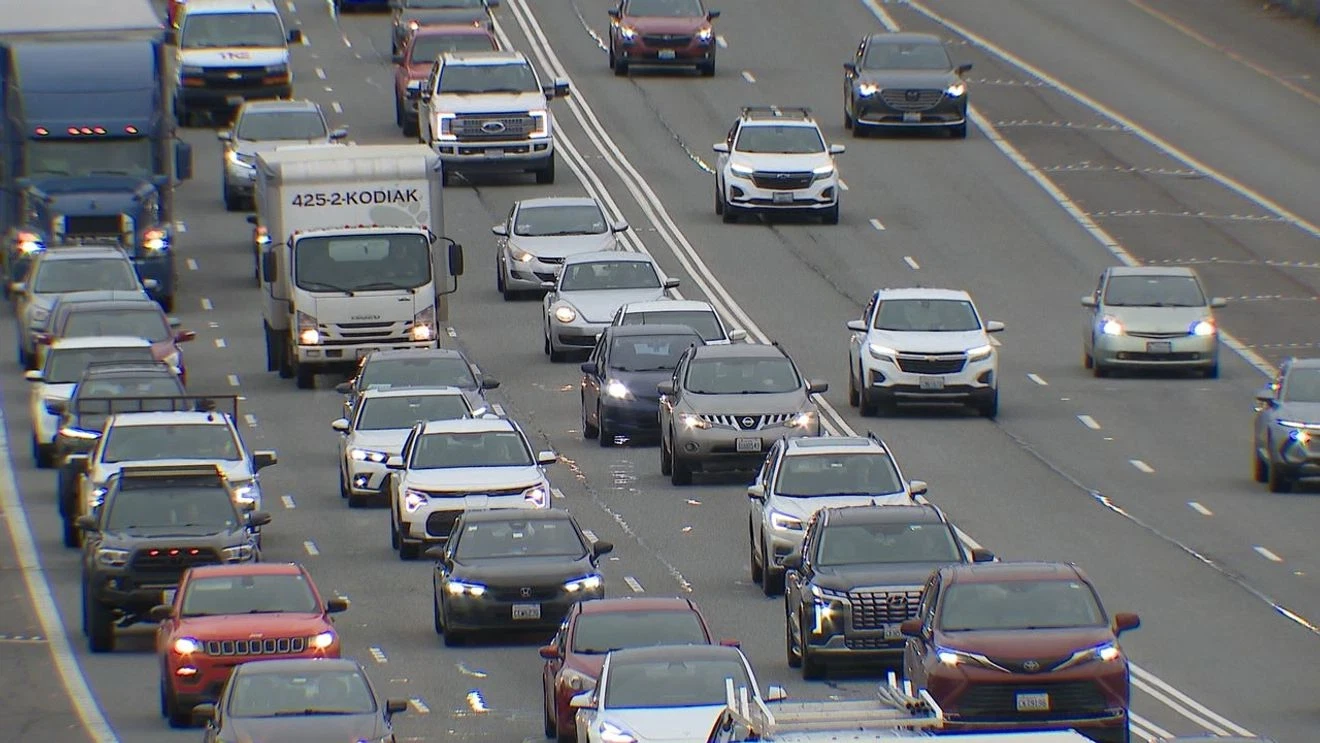
State Route 167 is one of the most congested freeways in the Puget Sound area, with thousands of commuters facing miles of backups every morning coming north out of Pierce County into King County. Starting January 12th, WSDOT will open six miles of new express toll lanes in the northbound direction, matching up with the rest of the toll lane corridor on SR 167 after delays caused by a truck hitting the bridge carrying the freeway over Third Avenue Southwest in Pacific last October. The new lanes promise relief for northbound traffic, but they reveal deeper questions about how Washington State manages congestion through pricing mechanisms that create two-tier road systems where wealthier drivers buy faster commutes while others sit in traffic.
The mechanics of express toll lanes, also called ETLs or HOT lanes for “high-occupancy toll,” work by converting what were previously carpool lanes into dynamic pricing corridors where solo drivers can pay to use capacity reserved for carpools during congestion. Tolls fluctuate based on traffic volume, rising when demand is high to keep the lanes moving at minimum speeds and dropping during lighter traffic periods. The theory is that providing a paid option for people who need faster trips generates revenue while maintaining free carpool lanes for people willing to share rides, creating a market-based system where those willing to pay can bypass congestion.
State Route 167 runs from Tacoma through Puyallup, Sumner, Auburn, and Kent before connecting to I-405 in Renton, serving as a critical freight and commuter corridor between Pierce and King counties. The existing toll lanes, which already operate southbound and on portions of northbound SR 167, have demonstrated both benefits and controversies. They generate revenue that funds transportation improvements, provide reliable travel times for people willing to pay, and incentivize carpooling by offering free access to vehicles with multiple occupants. But they also create two-tier highway systems where wealthier drivers can pay to bypass congestion while others sit in traffic, and they raise questions about whether adding capacity through new lanes actually reduces congestion or simply induces more demand.
The six miles of new express toll lanes opening January 12th in the northbound direction will match up with the rest of the toll lane corridor on SR 167, creating continuity for drivers using the system. Previously, the express toll lanes would end at a certain point, forcing users back into general-purpose lanes and creating merge congestion. The extension allows toll lane users to maintain speed for an additional six miles, theoretically providing more reliable travel times for those willing to pay variable tolls that increase during peak congestion periods.
The October delay caused by a truck hitting the bridge carrying SR 167 over Third Avenue Southwest in Pacific illustrates how single incidents can derail major infrastructure projects. That collision required bridge repairs and safety assessments that pushed the toll lane opening back by three months, extending the period when the constructed but unopened lanes sat unused while thousands of commuters continued sitting in traffic. The truck strike wasn’t anyone’s fault in terms of malicious intent, but it demonstrates how infrastructure vulnerability at single points, like bridges, can delay entire corridor improvements.
For northbound commuters traveling from Pierce County into King County every morning, the six-mile extension of express toll lanes offers potential relief, though with important caveats. Toll lanes work by providing a faster alternative for drivers willing to pay variable tolls that adjust based on traffic conditions. When free lanes are congested, toll rates rise to maintain traffic flow in the express lanes. That dynamic pricing means commuters face a choice: sit in free but congested lanes, or pay for faster travel in toll lanes. Whether that trade-off is worth it depends on individual circumstances, urgency of arrival time, and ability to afford tolls that can range from a few dollars to $10 or more during peak congestion.
The six-mile extension matching up with the rest of the toll lane corridor on SR 167 creates continuity that should improve traffic flow. Previously, toll lanes ended and merged back into general purpose lanes, creating bottlenecks where that transition occurred. Extending the toll lanes provides continuous paid access for a longer stretch of the commute, theoretically reducing the congestion chokepoints where toll lanes ended and all traffic merged back into general purpose lanes. Whether that actually eases congestion or simply shifts bottlenecks to different locations depends on how many drivers use the toll lanes versus the free lanes.
The delay from October to January due to a truck hitting the bridge carrying SR 167 over Third Avenue Southwest in Pacific demonstrates how infrastructure damage cascades into broader project delays. The bridge strike required repairs that necessitated lane restrictions, which prevented opening the toll lanes on schedule. That three-month delay meant commuters continued experiencing the congestion the new lanes were meant to address, and WSDOT lost toll revenue it had projected for that period. For truck drivers and freight companies, the bridge strike that caused the delay represents the kind of incident that creates ripple effects across entire transportation networks.
The requirement that carpoolers maintain Good To Go accounts with Flex Passes set to HOV mode, plus having at least two people in the vehicle, creates a technical barrier that will likely reduce toll-free usage even among eligible carpoolers. Some people who carpool won’t bother creating accounts or installing devices, choosing instead to pay tolls or avoid the express lanes entirely. That’s not necessarily bad for traffic flow, fewer free users means more available capacity, but it creates equity concerns when administrative requirements effectively convert supposedly “free” HOV access into paid access for people who don’t navigate the account and pass setup process.
The requirement that motorcyclists need an account and Good To Go motorcycle pass to continue using lanes for free represents another administrative barrier. Previously, motorcycles could use HOV lanes without passes based on visual identification. Now they need accounts and transponders, creating paperwork and potential billing issues for riders who don’t properly maintain their accounts. The change reflects WSDOT’s move toward automated toll collection that eliminates human toll collectors but requires all users to interact with the Good To Go system.
The Pacific bridge strike by a truck that delayed the toll lane opening from October until now demonstrates how single infrastructure incidents can cascade into months-long delays for major projects. The bridge carrying SR 167 over Third Avenue Southwest in Pacific required repairs after the truck impact, and those repairs necessitated lane restrictions that made opening the new toll lanes impossible. That kind of construction setback, where one unrelated incident delays a major project, is common in infrastructure work but frustrating for commuters who were expecting relief months earlier.
For Pierce County residents commuting north into King County for work, the new toll lanes promise faster commutes for those willing to pay. But they don’t add capacity for people who can’t or won’t pay tolls. The same number of general-purpose lanes remain, carrying the same congestion, while people willing to pay for speed get a new option. That creates a two-tier highway system where wealthier commuters buy their way out of traffic while others sit in backups. Whether that’s equitable or efficient depends on perspective, but it’s the funding and congestion management model Washington has increasingly adopted.
The requirement that carpoolers maintain Good To Go accounts with Flex Passes set to HOV mode, and motorcyclists need accounts and motorcycle passes to continue using lanes for free, creates administrative barriers that didn’t exist when these were simply carpool lanes. Someone who occasionally carpools must remember to switch their Flex Pass to HOV mode or face tolls. Motorcyclists who previously used HOV lanes freely now need accounts and passes to avoid bills. That added complexity, meant to enforce proper HOV usage and prevent toll evasion, creates friction that might discourage carpool formation or motorcycle use of the lanes.
The delay from October to January, caused by a truck hitting the bridge carrying SR 167 over Third Avenue Southwest in Pacific, illustrates how infrastructure is vulnerable to random events that cascade into schedule disruptions. The truck strike damaged the bridge enough to require repairs that necessitated lane restrictions. Those restrictions made it impossible to safely open the new toll lanes while construction activity was ongoing in adjacent lanes. A single truck hitting a bridge in October pushed the opening of a major regional transportation project back three months, affecting thousands of daily commuters who continued experiencing congestion that the new lanes were meant to relieve.
For Pierce County residents commuting north to jobs in Kent, Renton, or further into Seattle, the new toll lanes represent a choice: pay variable tolls for faster travel, or continue using the general purpose lanes for free but with longer travel times. That choice reflects Washington’s increasing reliance on tolling as a mechanism to manage demand on congested corridors and generate revenue for transportation projects. The express toll lanes use dynamic pricing, where tolls increase when traffic is heavy and decrease when traffic is light, theoretically incentivizing some drivers to shift their travel times or routes to reduce congestion.
The requirement that carpoolers must have a Good To Go account, a Flex Pass set to HOV mode, and at least two people in the vehicle to continue using express toll lanes for free represents a change from previous policy where carpoolers could use HOV lanes without any electronic tolling equipment. That requirement, needing an account and transponder even when not paying tolls, creates a barrier that some carpoolers might not navigate successfully, resulting in unexpected bills. Motorcyclists needing an account and motorcycle pass to continue free use similarly adds administrative requirements that riders might not be aware of until they receive toll bills.
The October delay when a truck hit the bridge carrying SR 167 over Third Avenue Southwest in Pacific demonstrates how infrastructure vulnerability affects major projects. Lane restrictions for repair work pushed the toll lane opening back months, illustrating how single incidents can cascade through transportation systems and delay benefits meant to ease congestion for thousands of daily commuters.
For Pierce County residents commuting north into King County for work, six additional miles of express toll lanes represents relief from the daily grind of backups that have made SR 167 one of the region’s most congested corridors. But that relief comes with costs, either direct tolls for solo drivers who choose to pay for faster travel, or the requirement to carpool and navigate the Good To Go account and Flex Pass system to maintain free access. The choice between paying tolls or organizing carpools becomes a daily calculation of time versus money that adds complexity to commutes even as it theoretically reduces congestion.
WSDOT’s framing that the new stretch “will now match up with the rest of the toll lane corridor on SR 167” indicates this is part of a larger managed lanes network. The expansion creates continuity in express toll lanes, reducing the number of lane changes and merges required as drivers enter and exit tolled sections. That continuity should improve traffic flow, but it also extends the distance over which tolls might apply, potentially increasing costs for regular users who choose to pay for access rather than carpool.
The enforcement mechanism, getting a bill in the mail for whatever the toll is at the time you use the lane without proper credentials, relies on automated systems reading license plates and checking against Good To Go accounts. That system works efficiently but creates delayed consequences where drivers might not realize they’ve incurred tolls until bills arrive weeks later. For people unfamiliar with the requirements or who haven’t set up accounts properly, that creates surprise expenses and potential confusion about why they’re being charged.
The distinction between carpoolers needing a Flex Pass set to HOV mode and motorcyclists needing a Good To Go motorcycle pass reflects different vehicle categories in the tolling system, but it adds complexity that creates opportunities for mistakes. A carpooler with a regular Good To Go pass but not a Flex Pass, or with a Flex Pass not set to HOV mode, would be charged tolls despite meeting the occupancy requirement. A motorcyclist without the specific motorcycle pass designation would similarly face unexpected charges. These technical requirements protect the system’s integrity but create barriers for users trying to access free travel they qualify for.
The January 12th opening provides immediate relief for Monday morning commuters who face some of the worst backups, but it also introduces new dynamics in traffic patterns. Some drivers who previously avoided SR 167 due to congestion might return, attracted by faster travel in toll lanes. Others might shift to alternative routes to avoid tolls. The initial weeks after opening will reveal whether the new lanes actually reduce congestion for everyone or primarily benefit those willing to pay tolls while general purpose lanes remain congested.
For the thousands of daily commuters Pierce County to King County represents, this infrastructure represents years of planning, construction, and finally delayed opening converging into operational capacity that might shave 10, 20, or 30 minutes off daily commutes. Whether that time savings justifies the tolls, or the effort required to organize carpools, or the hassle of managing Good To Go accounts, each commuter will evaluate based on their individual circumstances and priorities. What’s certain is that SR 167’s status as one of the region’s most jammed freeways reflects persistent growth in travel demand that continues outpacing infrastructure capacity, making managed lanes like these express toll lanes part of Washington’s response to chronic congestion that shows no signs of resolving through traditional capacity expansion alone.