Starbucks is investing hundreds of millions of dollars in artificial intelligence and automation as the coffee giant tries to reverse years of struggling sales, with technology now taking orders at drive-throughs and managing inventory.
At some locations, an AI robot enters orders at drive-throughs instead of staff. Inside stores, baristas use a virtual assistant to recall recipes or manage schedules. In the back, a scanning tool counts inventory, addressing out-of-stock gaps that have frustrated the company.
The technology push is part of a broader turnaround under CEO Brian Niccol, who joined in 2024 when the business was under pressure from price increases, competition, and boycott calls tied to union disputes and the company’s stance on the Israel-Gaza war.
Last week, Starbucks reported its first sales increase in two years at established US stores, its biggest market accounting for 70% of revenue. However, the share price slid 5%, reflecting investor concerns that spending, including $500 million to boost staffing, had hurt profits.

Niccol is confident that sales growth will address profitability concerns. With the company promising $2 billion in cost savings over three years, technology investments are crucial. The 52-year-old, who turned around Chipotle, halted price increases, simplified the menu, and set a target for baristas to complete orders in four minutes or less. Starbucks also cut thousands of corporate roles, closed underperforming stores, and sold off a huge stake of its China business.
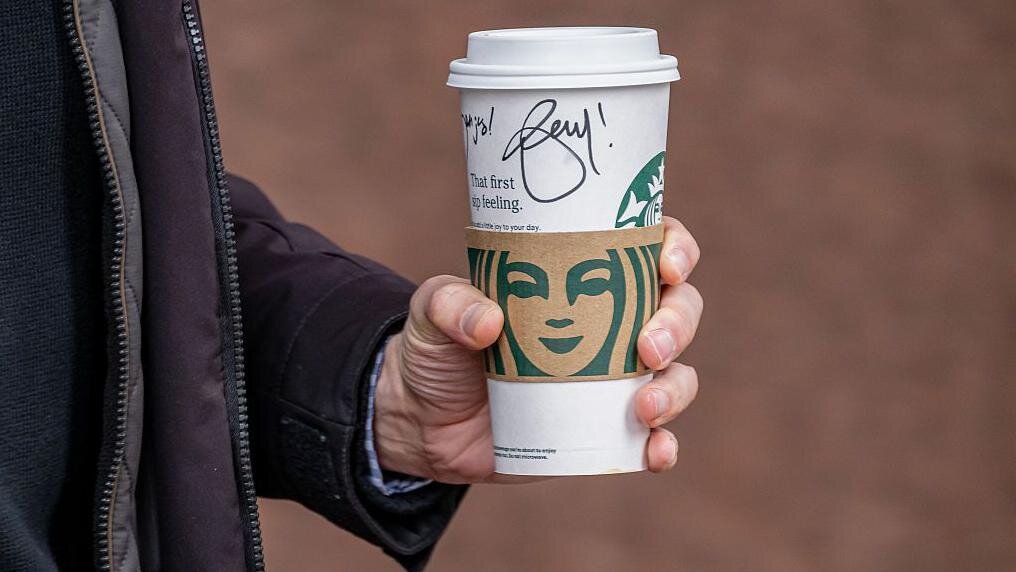
Niccol describes the challenge as losing focus on experience and connection. To improve atmosphere, staff were urged to write customer names on cups by hand. The firm started upgrading shops with inviting armchairs, new paint and ceramic mugs, part of a $150,000-per-store “uplift” expected to take four years.
The company is testing an AI chatbot to match drinks with customer moods and introducing scheduled orders to reduce waits. Niccol outlined ambitious expansion plans, especially overseas, where the company hopes to nearly double its footprint to almost 40,000 stores.
The union battle continues, with organizers accusing Niccol of stonewalling contract talks. The fight has spotlighted Niccol’s compensation: $97 million in 2024 and $30 million last year, compared with the average employee’s earnings of about $17,300.