Animal control and Tacoma police officers discovered dozens of malnourished and deceased cats inside a U-Haul truck lacking food, water, or ventilation, according to court documents.
On 7 November, Tacoma police officers were dispatched to a Motel 6 in Tacoma to assist animal control officers who received a complaint about cats in a truck.
According to probable cause documents, 10 to 20 cats were visible in the cab of the truck. Both windows were rolled up, and one door was unlocked. When a Tacoma officer opened the door, the odour of feces and urine was overwhelming, the officer’s report stated.
After searching for the owner of the cats, 39-year-old Naomi Harrison came down and opened the box portion of the truck.
It was packed with Harrison’s belongings. The animal control officer lifted a blanket covering a cage to discover several cats inside, three of which were dead. The surviving cats were soaked in urine, covered in feces, and crying to escape, a Tacoma Police Department report indicated.
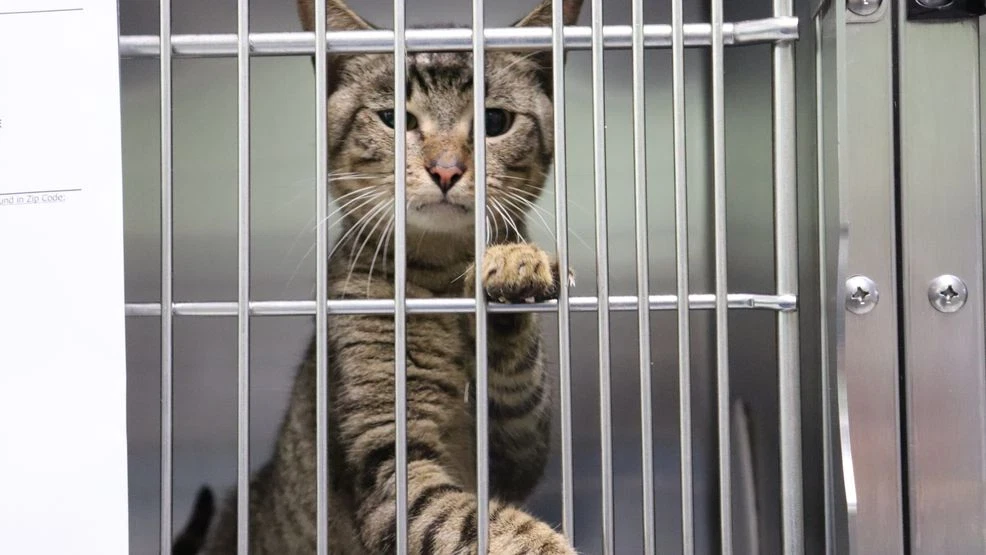
Additional animal control officers were called to help clear the truck and take custody of the cats, which were transported to the Humane Society for Tacoma/Pierce County.
As the truck was searched with police assistance, more kennels were discovered containing both living and deceased cats.
“The cats were desperate to get out of the wired kennels. I observed they were covered in urine and waste. I observed they had no ventilation or light,” a TPD officer stated in a report attached to probable cause documents.
“As I was impounding the cats and kittens in the cab, I placed hands on each cat’s body. As I picked up the cats, I felt their bodies. I felt no flesh between the skin and skeleton, they were dehydrated,” the report stated.
After the truck was searched, a total of 73 cats were found. Of those, 10 were dead, emaciated adults.
Another officer wrote in their report that most of the cats were “severely malnourished.”
Harrison is charged with 11 counts of animal cruelty, 10 counts of first-degree and 1 count of second-degree.
The maximum penalty for each count of first-degree animal cruelty is five years in prison, a $10,000 fine, or both, and a lifetime ban on owning animals.
The maximum penalty for second-degree animal cruelty is up to a year in prison, a $5,000 fine, or both, and a two-year ban on owning animals.
Harrison was arrested and booked into the Pierce County Jail, where she is held on $30,000 bail.
Her trial is scheduled for 18 December.
The discovery of 73 cats crammed into a U-Haul truck under conditions causing death and extreme suffering to multiple animals represents one of the most severe animal hoarding and neglect cases Tacoma authorities have encountered. The scale of the operation, with dozens of animals confined in spaces without basic necessities, reveals systematic neglect rather than momentary lapse in care.
The conditions officers described, with cats soaked in their own waste, desperately attempting to escape wire kennels, and so emaciated that officers could feel only skin stretched over skeleton, paint a picture of prolonged suffering. Animals in such states have typically endured days or weeks of deprivation, as the deterioration from healthy to severely malnourished and dehydrated occurs gradually.
The presence of 10 dead cats amongst the 73 discovered indicates Harrison continued housing living cats alongside decomposing bodies of deceased animals, suggesting either complete detachment from the animals’ welfare or psychological impairment affecting her ability to recognise the severity of the situation. Most people would immediately seek help or surrender animals upon discovering deaths, but Harrison apparently continued the pattern.
The overwhelming stench of feces and urine that greeted officers upon opening the truck door reflects the accumulation of waste in enclosed spaces without ventilation or cleaning. The ammonia from concentrated urine creates respiratory distress for confined animals and can cause eye and lung damage with prolonged exposure.
The truck’s location at a Motel 6 raises questions about Harrison’s living situation and how long the cats had been confined in these conditions. U-Haul trucks are typically rented for short-term moving purposes, not as long-term animal housing. Whether Harrison was living out of the motel and truck, traveling with the cats, or had recently relocated remains unclear from available information.
The complaint that prompted the welfare check suggests someone noticed the cats or heard their distress cries and contacted authorities. This civilian intervention likely prevented additional deaths, as cats in such weakened states deteriorate rapidly without intervention.
The involvement of multiple animal control officers to clear the truck and process 73 cats represents a massive logistical undertaking. Each cat requires individual assessment, documentation, medical evaluation, and placement, overwhelming typical shelter capacity and resources.