A truck transporting an excavator collided with a light and pedestrian overpass along southbound Interstate 405 near the Northeast 85th Street interchange in Kirkland early Thursday, prompting partial lane blockage and complete closure of the pedestrian bridge for safety inspection.
While all southbound Interstate 405 lanes remained open to traffic, the southbound on-ramp at Northeast 116th Avenue was temporarily reduced to one lane. Crews worked to repair a damaged traffic signal before fully reopening the ramp, according to the Washington State Department of Transportation.
WSDOT and Washington State Patrol have not indicated whether the truck operator who damaged the Kirkland overpass will face accountability measures or financial responsibility for repairs.
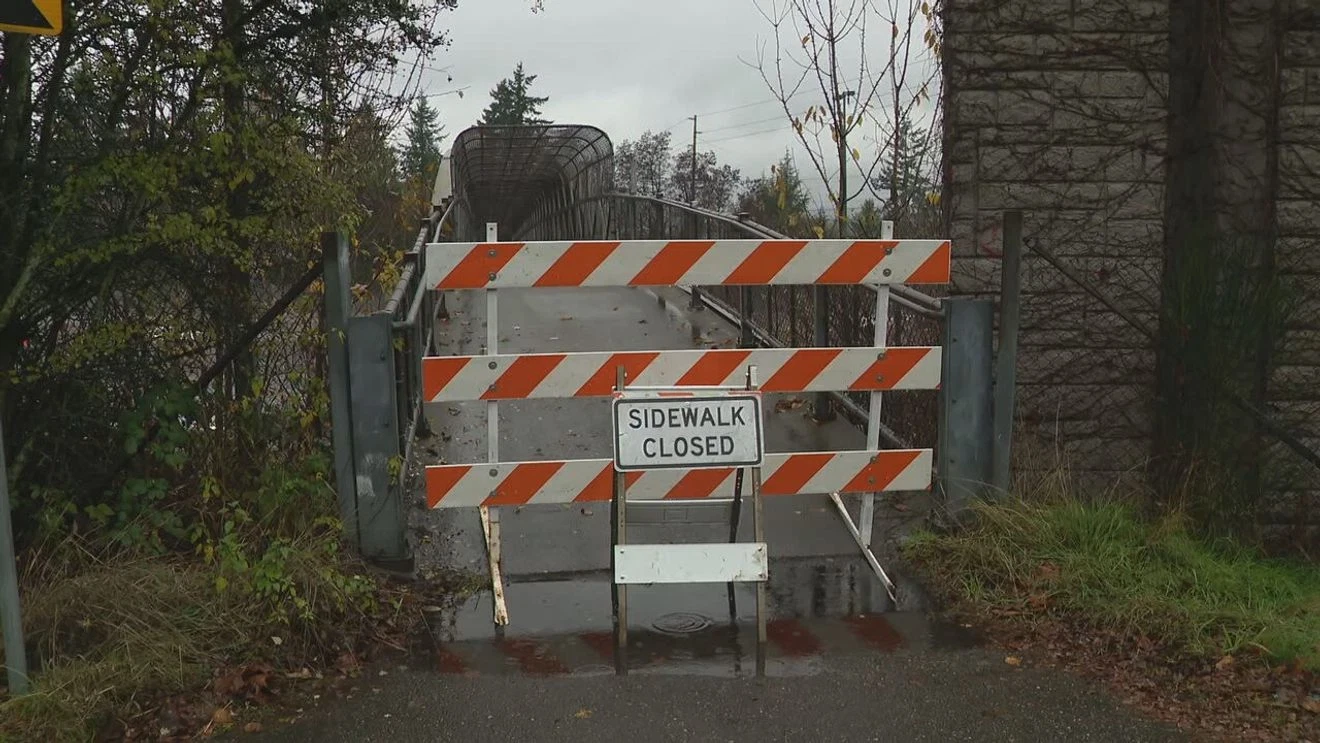
Bridge inspectors closed the pedestrian overpass until further notice to assess structural damage and determine necessary repairs, WSDOT stated. The closure ensures public safety while engineers evaluate whether the impact compromised the bridge’s integrity.
Northbound Interstate 405 lanes continued operating without interruption, minimizing overall traffic impact from the incident.
Thursday’s bridge strike represents one of numerous incidents where bridges have sustained damage from trucks during the current year. The recurring problem has prompted calls for stronger enforcement and preventive measures.
In October, a King County councilmember urged the Washington State Department of Transportation to implement stronger measures preventing bridge strikes across the region.
King County Vice Chair Reagan Dunn sent a letter to WSDOT suggesting development of a “Stupid Motorist Law” to hold drivers of extremely tall loads accountable for bridge strike damage. Dunn’s proposal included additional countermeasures to prevent future incidents beyond just punitive legislation.
The proposal reflects growing frustration among officials and transportation planners about the frequency of bridge strikes and the disruption they cause to transportation infrastructure and public safety.
Motorists are advised to exercise caution when traveling through the affected area while inspection and repair work continues.
The excavator collision with the overpass raises questions about load height verification procedures and whether the truck driver was aware of clearance restrictions. Commercial vehicles carrying oversized loads must plan routes that accommodate their dimensions, avoiding structures with insufficient clearance.
Bridge strikes can cause significant structural damage even when impacts appear minor from ground level. Engineers must thoroughly inspect impacted structures to identify cracks, displaced components, or weakened structural members that could compromise safety.
The pedestrian bridge closure affects walkers and cyclists who use the overpass to cross Interstate 405 safely. Alternative crossing routes may require significant detours, particularly for those commuting to work or school using non-motorized transportation.
The Northeast 85th Street interchange area serves as an important connection point for Kirkland residents and businesses. Traffic signal damage from the collision created additional complications beyond the bridge structure itself.
WSDOT’s rapid response to repair the traffic signal and restore full ramp capacity demonstrates prioritization of maintaining traffic flow. However, the pedestrian bridge assessment will require more time given the structural evaluation complexity.
The frequency of bridge strikes in Washington has prompted discussions about whether existing penalties adequately deter careless driving with oversized loads. Current enforcement may not sufficiently incentivize careful route planning and height awareness.
Reagan Dunn’s proposed “Stupid Motorist Law” would create specific financial accountability for drivers whose negligence damages public infrastructure. Similar laws exist in other states addressing various forms of avoidable damage requiring taxpayer-funded repairs.
The law’s provocative name references Arizona’s Stupid Motorist Law, which allows the state to charge drivers who enter flooded roadways despite warning signs and require rescue. Washington’s version would apply similar logic to bridge strikes caused by failure to verify clearances.
Beyond punitive measures, prevention strategies could include enhanced signage warning of low clearances, electronic detection systems that alert drivers of overheight vehicles before they reach bridges, and improved route planning tools for commercial carriers.
Some jurisdictions have implemented “smart” warning systems that detect vehicle heights and activate flashing warnings when overheight vehicles approach low-clearance structures. These technologies provide last-chance warnings before collisions occur.
The excavator involved in Thursday’s incident likely exceeded the overpass clearance by a significant margin, suggesting either route planning failure or inattention to posted height restrictions. Excavators on flatbed trailers can reach considerable heights when booms are raised.
Commercial drivers transporting equipment bear responsibility for knowing their load dimensions and planning routes accordingly. Many bridge strikes result from drivers unfamiliar with loads or failing to account for equipment positioning.
The investigation will likely examine whether the excavator was properly secured and positioned, whether the driver had appropriate route permits for oversized loads, and whether advance planning should have identified the clearance conflict.
Repair timelines for the pedestrian bridge remain uncertain pending inspection findings. Minor damage might allow quick repairs and reopening, while significant structural compromise could require extensive work and extended closure.