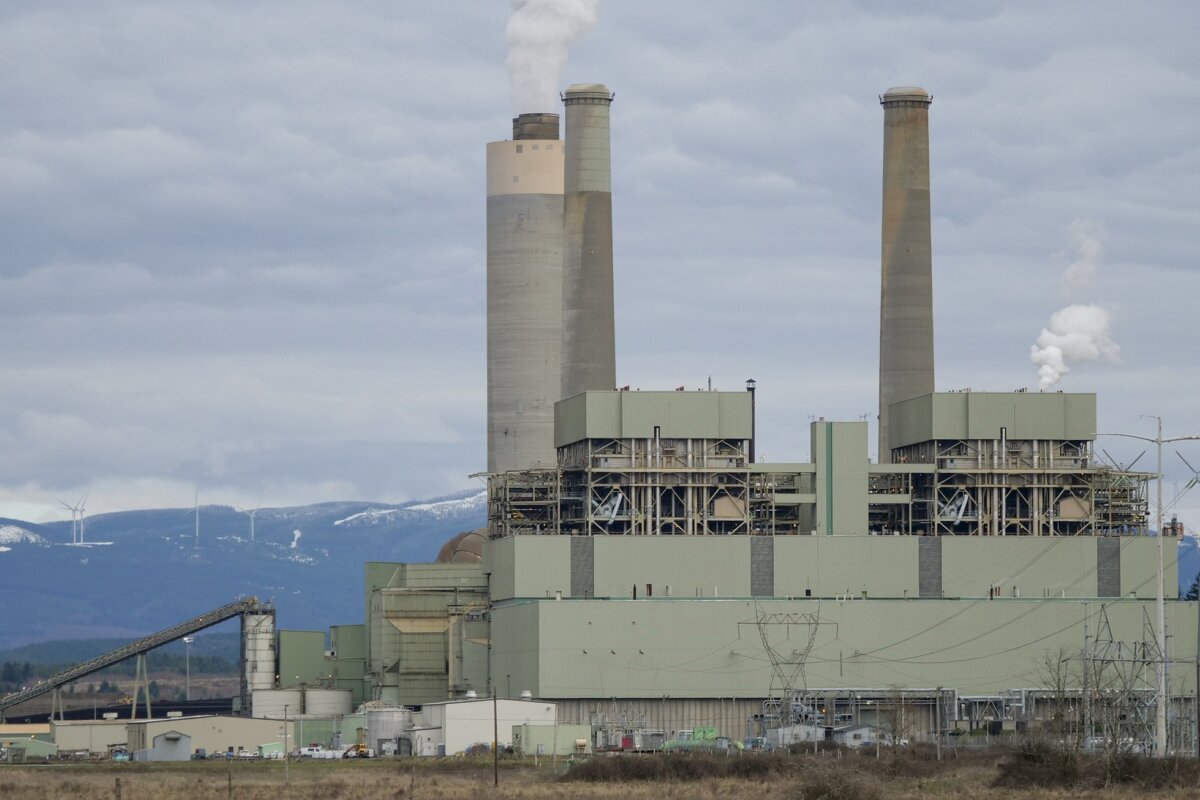
The U.S. Department of Energy under President Donald Trump has issued an emergency order directing TransAlta to continue operating its coal plant in Centralia, directly contradicting a state law mandating the cessation of coal power generation by the end of this year.
The controversial decision has ignited fierce criticism from Washington state officials, who argue the order undermines more than a decade of planning and negotiation aimed at transitioning to cleaner energy sources.
The emergency order, issued under section 202(c) of the Federal Power Act, requires TransAlta to keep Unit 2 of the Centralia Generating Station operational from December 16, 2025, to March 16, 2026.
This directive represents part of a broader federal effort to extend the operational life of coal plants across the country, including recent orders affecting facilities in Michigan and Pennsylvania.
Washington Governor Bob Ferguson, Attorney General Nick Brown, and Ecology Director Casey Sixkiller have condemned the order, accusing U.S. Energy Secretary Chris Wright of exploiting emergency powers to prolong coal use in the state.
In a joint statement, the three officials said: “Under the guise of ’emergency powers,’ U.S. Energy Secretary Chris Wright is attempting to force Washington state’s dirtiest power plant to continue burning coal. Let’s be clear: there’s no emergency here.”
The officials emphasized that the TransAlta plant was on the verge of completing its shutdown, a process that began in 2011 as part of an agreement between the state, TransAlta, and climate advocates. They noted that workers have already moved on to other positions and that no coal remains on site to burn.
The statement further criticized the Trump administration’s rationale, asserting it creates uncertainty in Washington’s power market and could lead to increased electricity costs and pollution.
Washington’s Clean Energy Transformation Act requires all utilities to stop using coal-fired electricity after this year, aiming for greenhouse gas neutrality by 2030 and emission-free electricity by 2045. Despite these state mandates, the federal order insists on maintaining coal operations, citing energy security concerns.
TransAlta had previously announced plans to partner with Puget Sound Energy to convert the Centralia facility to a natural gas plant, aligning with the state’s clean energy objectives. However, the federal order now places these conversion plans in jeopardy, raising questions about the future of Washington’s energy landscape.
TransAlta provided a statement in response to the order:
“TransAlta Corporation’s subsidiary, TransAlta Centralia Generation LLC, has received an order from the United States Department of Energy. The Order mandates that Centralia Unit 2 in Washington State remain available for operation for a period of 90 days, until March 16, 2026.
TransAlta is currently evaluating the Order and will work with the state and federal governments in relation thereto. The coal-to-gas conversion project, announced on December 9, 2025, remains a priority for TransAlta.
Further information regarding the Order will be provided as it becomes available in due course.”
The federal intervention creates a direct conflict between state and federal authority over energy policy. Washington has spent years building consensus around retiring the Centralia coal plant, involving negotiations with labor unions, environmental groups, local governments, and the utility itself.
The 2011 agreement that set the closure timeline represented a compromise that gave workers and the community more than a decade to prepare for the transition. Retraining programs were established, economic development initiatives launched, and alternative employment opportunities created.
The fact that workers have already moved on, as state officials noted, means restarting operations would require recalling employees who have established new careers or hiring and training new staff, a process that takes months.
The absence of coal on site presents a logistical challenge. Coal plants require substantial fuel stockpiles. Sourcing, transporting, and storing coal for a three-month operation would require significant time and expense.
The Clean Energy Transformation Act’s 2030 greenhouse gas neutrality goal and 2045 emission-free electricity target represent Washington’s most ambitious climate commitments. The federal order forcing continued coal use directly conflicts with these state mandates.
Energy security concerns cited by the federal government typically relate to grid reliability during peak demand periods. However, Washington officials argue no such emergency exists, suggesting the order is ideologically motivated rather than operationally necessary.
The natural gas conversion project TransAlta announced with Puget Sound Energy would maintain the Centralia facility’s generating capacity while significantly reducing emissions. Natural gas produces roughly half the carbon dioxide of coal per unit of electricity generated.