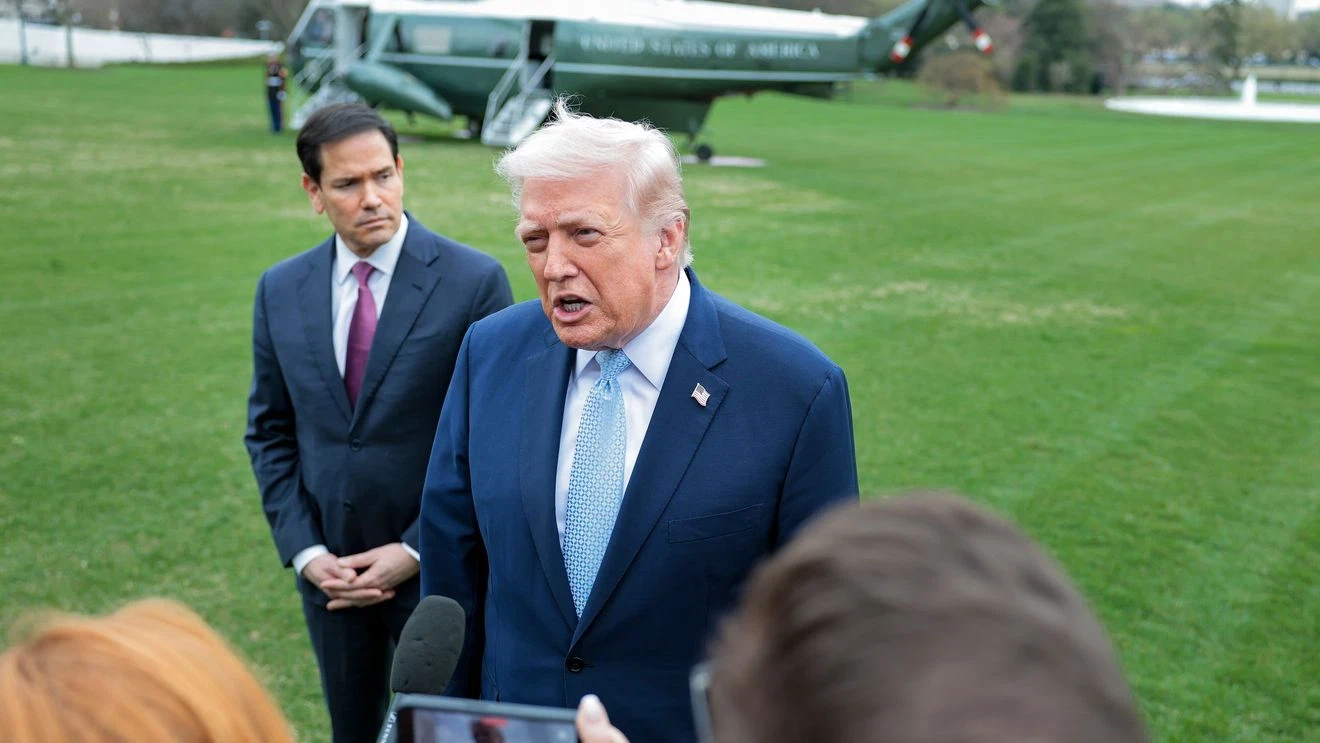
President Donald Trump announced ICE agents will begin deploying to U.S. airports on Monday under Border Czar Tom Homan’s command, a move that comes as travelers face worsening wait times due to unpaid TSA workers amid a partial government shutdown that began in mid-February.
Homan spoke to CNN’s State of the Union on Sunday, saying that the agents would be there to relieve Transportation Security Administration officers from “non-significant roles.” However, Secretary of Transportation Sean Duffy shared a plan that highlights a broader role for ICE agents beyond simply supporting TSA operations.
Trump’s move follows the president’s warning a day earlier that he would deploy ICE agents if lawmakers failed to reach an agreement to fund the Department of Homeland Security. Travelers are warned to expect worsening airport wait times throughout this weekend as TSA workers go without pay due to the partial government shutdown.

In the weeks since funding issues emerged between Congress and DHS, which also includes TSA, security checkpoint times at some airports across the U.S. have soared. The combination of unpaid TSA screeners calling in sick and now the addition of ICE agents raises questions about how airport security operations will function and whether the deployment will ease or worsen congestion.
Senate Minority Leader Chuck Schumer called Trump’s order “disturbing” in remarks on the Senate floor on Sunday. Schumer warned their presence would only hinder travelers. “ICE agents, who are untrained and have caused problems everywhere they’ve gone, lurking at our airports, that’s asking for trouble. And it will certainly make the chaos at our airports worse,” Schumer said.
The deployment marks an escalation in the standoff between the White House and Congress over DHS funding. Trump appears to be using the threat of airport disruption as leverage to force lawmakers to approve his funding demands, while critics argue the move will compound problems already created by the shutdown rather than solve them.
ICE agents are trained in immigration enforcement and investigations, not airport security screening or passenger processing. Their deployment to airports in roles typically handled by TSA raises operational and legal questions about their authority to conduct searches or detain travelers, particularly U.S. citizens passing through domestic terminals.