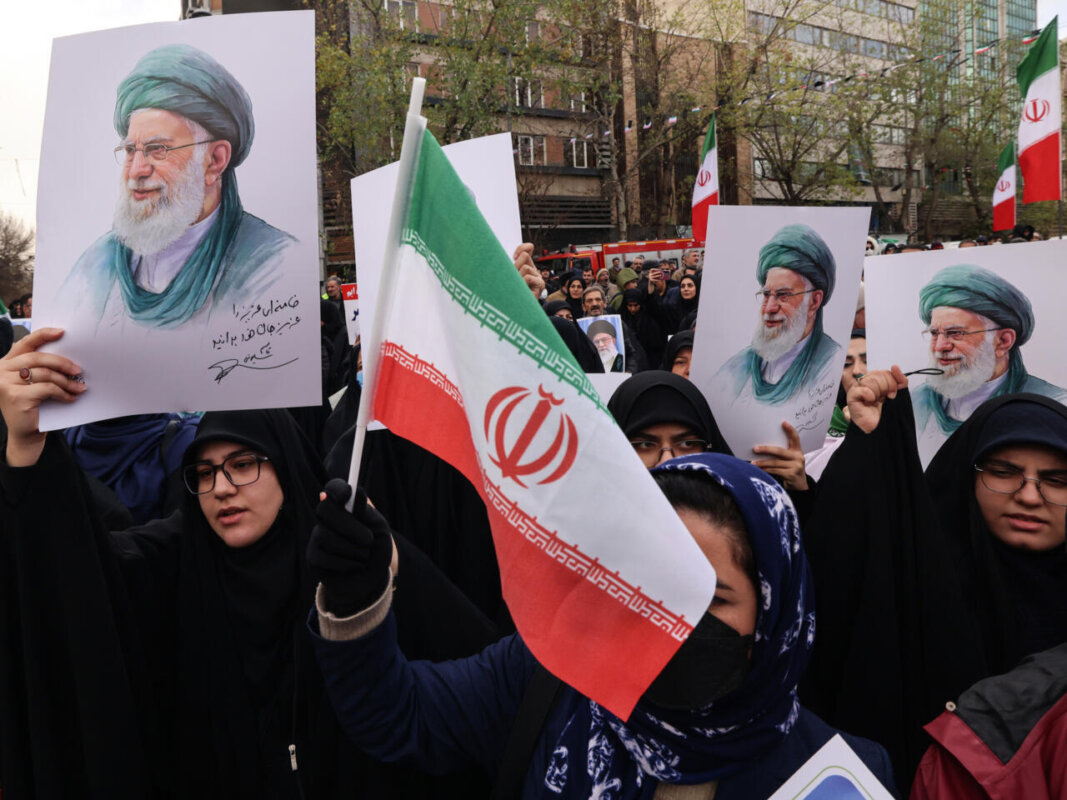
President Donald Trump warned the US will take “very strong action” against Iran if it executes protesters, as human rights groups report more than 2,400 anti-government demonstrators have been killed in a violent crackdown by Iranian authorities. Trump told CBS News “if they hang them, you’re going to see some things… We will take very strong action if they do such a thing,” referring to potential executions of protesters like 26-year-old Erfan Soltani, who relatives say was sentenced to death within two days of detention last week and could be executed without notice. The threats reveal how Iran’s domestic unrest has become flashpoint for US-Iran tensions, with Trump positioning himself as defender of protesters while Iranian authorities characterize demonstrations as terrorist activity requiring severe repression, creating collision course where American threats of intervention meet Iranian warnings against manufacturing pretexts for military action.
The scale of violence reported by human rights organizations is staggering. The US-based Human Rights Activists News Agency confirmed killing of 2,403 protesters plus 12 children despite internet blackout, while nearly 150 people affiliated with government have also been killed. An Iranian official told Reuters that 2,000 people had been killed but blamed “terrorists” rather than security forces. State-linked Fars news agency reported funerals in Tehran for more than 100 security force members described as “martyrs.” Those competing narratives, protesters characterizing deaths as government massacre while authorities frame casualties as combating terrorism, reflect fundamental disagreement about whether demonstrations represent legitimate protest against economic collapse and political repression or foreign-backed insurrection requiring violent suppression.
Videos posted online Sunday showed people searching for bodies at Kahrizak Forensic Centre in Tehran, with at least 180 shrouded bodies and body bags visible in footage. Another video Monday showed around 50 additional bodies at the facility. An activist described the scene: “They piled up bodies from every neighborhood, like Saadatabad, Naziabad, Sattarkhan. So you go to your address pile and search there. You don’t know a fraction of the level of violence that’s been used.” That description, bodies sorted by neighborhood for families to search through, reveals industrial scale of killing that exceeds what governments typically acknowledge or what can be documented through individual reports during internet shutdowns that prevent comprehensive documentation.
The case of Erfan Soltani demonstrates how Iranian authorities are using expedited executions to terrorize protesters and their families. Relatives told BBC Persian that a death sentence was issued “in an extremely rapid process, within just two days” and expressed deep concern “that he could be executed without any prior notice” given internet shutdown affecting contact. Hengaw Organization representative Awyar Shekhi told BBC Radio 4 that they had “never witnessed a case move so quickly,” characterizing the detention as demonstrating Iranian government’s attempt “to control the population, to not allow any more protests to happen.” Soltani’s sister, a lawyer, tried to intervene but was told by authorities there was nothing to pursue. Despite authorities telling the family they would allow a meeting before execution, Soltani hasn’t been allowed any family contact since arrest.
That expedited process, from arrest to death sentence in two days without defense attorney access or family contact, violates basic due process standards but reflects Iranian judiciary’s role as repression tool rather than justice system. Judiciary chief Gholamhossein Mohseni Ejei said Monday that those involved in unrest would be “dealt with seriously and severely,” and prosecutors indicated some will be charged with “enmity against God,” a national security offense carrying death penalty. The threat of mass executions through expedited trials creates terror intended to stop protests by making participation potentially fatal, though history suggests such tactics often backfire by radicalizing populations and intensifying rather than suppressing opposition.
Trump’s threats of “very strong action” if executions proceed raise questions about what actions he’s contemplating and whether threats effectively deter Iranian authorities or provide them propaganda about foreign interference justifying crackdowns. Trump has already announced 25% tariffs on any country trading with Iran and canceled “all meetings with Iranian Officials until the senseless killing of protesters STOPS,” adding “HELP IS ON ITS WAY. MIGA!!!” using acronym for “Make Iran Great Again,” a US-based Iranian opposition slogan. He wrote on Truth Social that Iranian authorities would “pay a big price” for the killings and urged people to “keep protesting,” positioning himself as supporting Iranian opposition while weighing “military and other options” in response to the crackdown.
Iran’s government responded by accusing the US of seeking to “manufacture a pretext for military intervention,” warning that “this playbook has failed before.” That response references Iraq War and other US interventions where humanitarian concerns were used to justify military actions serving broader strategic interests. Whether Trump’s threats represent genuine humanitarian concern about protester deaths or opportunistic exploitation of Iranian unrest to advance regime change objectives that eluded his first administration remains unclear. Iranian authorities’ characterization of protesters as terrorists backed by foreign enemies allows them to frame any US intervention as validating their narrative about protests being externally manufactured rather than authentic domestic opposition.
The protests, reportedly spread to 180 cities and towns in all 31 provinces, were sparked by anger over currency collapse and soaring cost of living but quickly widened into demands for political change, becoming one of the most serious challenges to clerical establishment since the 1979 Islamic revolution. Demonstrations escalated significantly last Thursday and were met with deadly force masked by near total internet and communication shutdown. More than 18,434 protesters have been arrested according to HRANA. That scale, affecting 180 cities across all provinces with thousands dead and tens of thousands arrested, indicates this isn’t isolated unrest but nationwide uprising against government that has lost legitimacy with significant portions of population.
The internet shutdown, now passed 132 hours according to monitor NetBlocks, prevents comprehensive documentation of violence and coordination of protests while isolating Iranians from outside world. Some international calls went through Tuesday, and some people have access via Starlink satellite service, but systematic blackout makes verifying reports difficult. One person near Tehran with Starlink access described “checkpoints in every block” where security forces inspect cars and phones. That level of control, checkpoints throughout cities examining communications devices, reveals police state operations where movement and information are comprehensively monitored and restricted.
Prof Shahram Kordasti, an Iranian oncologist in London, told BBC that the last message from a Tehran colleague said “In most hospitals, it’s like a warzone. We are short of supplies, short of blood.” Other doctors at “two to three hospitals” reported treating hundreds of injured or dead people. An Iranian in Rasht near the Caspian Sea described the city as unrecognizable: “Everywhere is burnt with fire.” Those accounts from medical professionals and residents paint picture of widespread urban warfare between security forces and civilians that goes far beyond police managing protests to military operations against population centers.
New videos of protests emerged despite internet shutdown, with BBC Persian verifying footage from Arak, Tabriz, Urmia, and Khorramabad. In Khorramabad footage, gunfire can be heard during clashes between security forces and protesters throwing stones. Protesters chant “Death to the dictator,” referring to Ayatollah Khamenei, and “Reza Shah, may your soul rest in peace,” referring to the grandfather of Reza Pahlavi who has called for protests from exile in the US. Those slogans reveal how protests have evolved from economic grievances to fundamental rejection of Islamic Republic and expressions of nostalgia for pre-revolutionary monarchy, though whether protesters genuinely support monarchy restoration or simply invoke it to reject current regime is debated.
UN human rights chief Volker Türk urged Iranian authorities to halt all violence and repression against peaceful protesters immediately, calling the labeling of protesters as “terrorists” to justify violence unacceptable. He said it was “extremely worrying” to see statements from Iranian officials indicating possibility of death penalty through expedited trials. Türk also demanded Iranian authorities restore full internet access. Those demands from UN represent international consensus that Iranian response violates basic human rights standards, but UN lacks enforcement mechanisms to compel compliance beyond moral pressure that authoritarian governments typically ignore when facing existential threats to their rule.
For Trump’s administration, the question is what “very strong action” means practically. Military strikes on Iran would risk broader regional conflict, potentially involving Iran’s proxies in Iraq, Syria, Lebanon, Yemen, and Palestinian territories. Economic sanctions are already at maximum levels with Trump announcing 25% tariffs on countries trading with Iran, though sanctions’ effectiveness at changing regime behavior is debatable given Iran has survived decades of sanctions. Covert support for protesters through communications technology, intelligence sharing, or financial assistance carries risks of validating Iranian claims about foreign backing while potentially exposing protesters to greater danger if Iranian security services identify them as foreign agents.
The fundamental tension is that Trump’s threats might embolden protesters by suggesting international support and potential intervention while simultaneously providing Iranian authorities propaganda justifying crackdowns as defending against foreign interference. Whether American threats help or hurt Iranian opposition depends on domestic Iranian dynamics that outside observers struggle to assess accurately. Some protesters might welcome American support as providing hope and international attention. Others might resent foreign intervention as undermining protests’ authenticity and playing into regime narratives about external enemies.
The death toll comparison is instructive. HRANA reports 2,403 protesters plus 12 children killed, while nearly 150 government-affiliated killed. That roughly 16-to-1 ratio of protester deaths to security force deaths indicates this isn’t a civil war with relatively balanced casualties but rather systematic repression where armed security forces are killing largely unarmed demonstrators. Even accounting for potential undercounting of security force deaths or overcounting of protester deaths due to reporting biases, the disparity suggests security forces are using overwhelming lethal force against protesters who lack comparable weaponry.
The expedited trial processes that Soltani and potentially hundreds or thousands of other detained protesters face create immediate crisis requiring rapid international response if executions are to be prevented. Trump’s threat of “very strong action” if executions proceed attempts to create deterrent, but whether Iranian authorities care more about avoiding American retaliation than about terrorizing protesters into submission through mass executions remains uncertain. Authoritarian regimes facing existential threats often prioritize survival over international relations, making them willing to accept costs of intervention if it means suppressing immediate threats to their power.
For Iranian-Americans in Seattle and across the US, watching their home country experience violence of this scale creates anguish amplified by inability to communicate with relatives due to internet shutdown and uncertainty about what’s actually happening beyond fragmentary reports and videos. The Iranian diaspora is divided between those who fled Islamic Republic and support aggressive American pressure including potential military intervention, and those who maintain ties to Iran and fear American actions will harm ordinary Iranians without helping protesters. Trump’s positioning as champion of Iranian protesters appeals to former group while concerning latter.
The protests’ evolution from economic grievances to political demands for regime change parallels other uprisings where immediate material concerns become vehicles for expressing deeper frustrations with governance and political systems. Whether this uprising succeeds in overthrowing or significantly reforming Islamic Republic, or whether it gets violently suppressed like previous Iranian protests in 2009, 2017-18, and 2019, depends on factors including security forces’ willingness to continue killing protesters, protesters’ ability to sustain mobilization despite repression, and whether elite splits emerge within regime that create opportunities for change.
Trump’s involvement, positioning himself as supporting Iranian opposition while threatening intervention, adds international dimension that complicates internal Iranian dynamics by allowing regime to frame protests as foreign-backed while potentially providing protesters with hope that international community won’t allow mass killings to continue unchallenged. Whether that involvement helps or hurts depends on whether American threats actually deter some violence or whether they simply provide regime with propaganda while failing to prevent killings that continue regardless.
What’s clear is that Iran is experiencing nationwide uprising met with lethal force on scale rarely seen in 21st century outside active war zones, with thousands dead, tens of thousands arrested, and government using expedited death sentences to terrorize population into submission while internet shutdown prevents comprehensive documentation. Whether Trump’s threats of “very strong action” translate into meaningful intervention that affects outcomes, or whether they remain rhetorical positioning that changes nothing for protesters facing bullets and executions, will become clear in coming days if Iran proceeds with executing Soltani and other detained demonstrators despite American warnings.