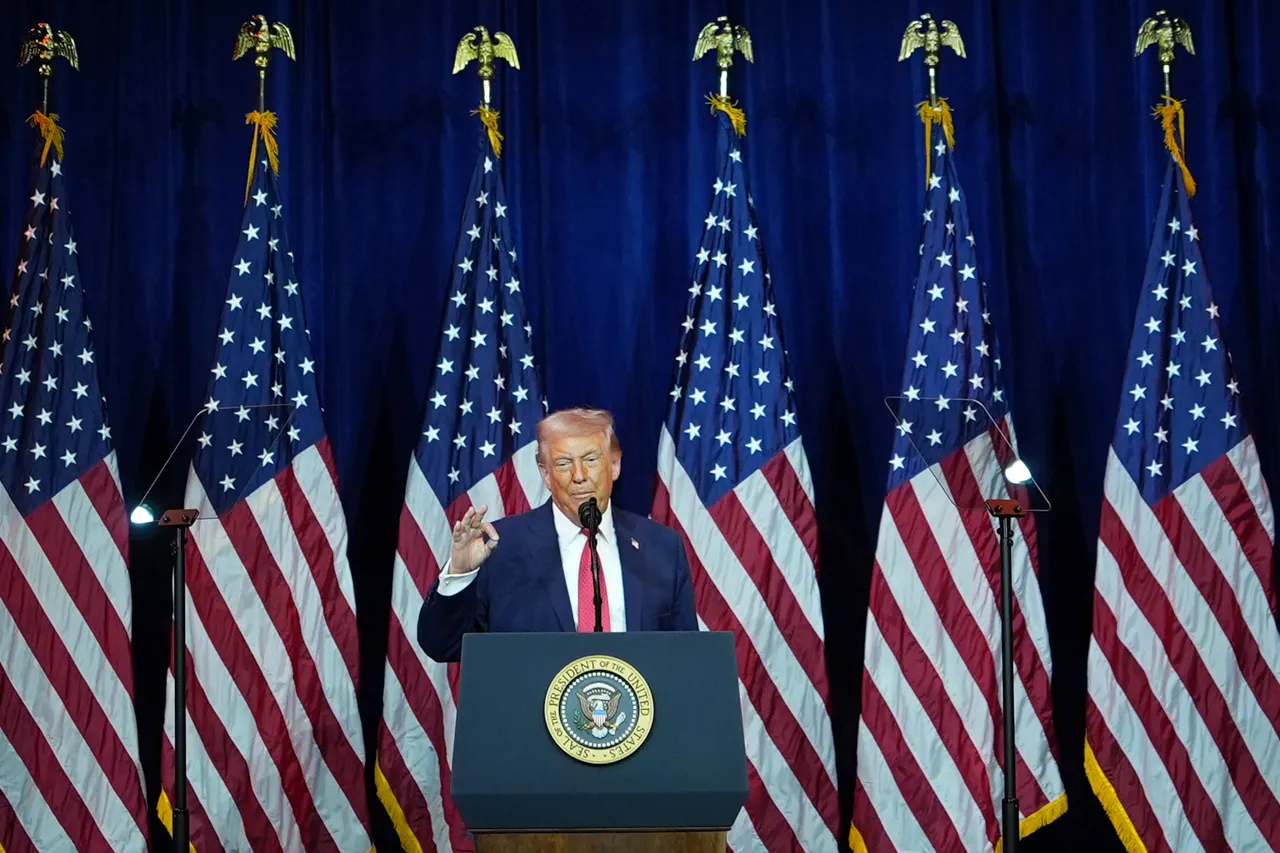
President Donald Trump announced Wednesday that Venezuela will exclusively purchase American-made products with proceeds from a new oil deal, just hours after Energy Secretary Chris Wright revealed the U.S. will buy Venezuela’s current and future oil for American refineries and resale to other countries. But the mechanics of this arrangement, and what it signals about how the Trump administration views energy policy as a tool of geopolitical control, matters more than the transaction itself.
“These purchases will include, among other things, American agricultural products, and American-made medicines, medical devices, and equipment to improve Venezuela’s electric grid and energy facilities,” Trump wrote on Truth Social. “In other words, Venezuela is committing to doing business with the United States of America as their principal partner, a wise choice, and a very good thing for the people of Venezuela, and the United States.”
The underlying structure here is not simply an oil purchase. It’s a closed-loop economic system where Venezuela sells oil, but the revenue from those sales flows back to American companies through mandated purchases. This arrangement effectively converts Venezuela’s primary export into a captive market for U.S. goods, from farm products to medical equipment to infrastructure technology.
For Seattle’s economy, this could have tangible ripple effects. Washington state produces significant agricultural exports, from wheat to apples to dairy products. If Venezuela is now required to buy American agricultural goods, that creates new market access for Pacific Northwest farmers who have struggled with trade disruptions in recent years. Boeing, with its massive Everett facility, manufactures medical equipment components and energy infrastructure technology that could be part of Venezuela’s mandated purchases. The broader question is whether Seattle-area exporters will see actual orders materialize, or if this remains a high-level agreement that doesn’t translate to regional economic activity.
Trump disclosed on Truth Social Tuesday that Venezuela will deliver between 30 million and 50 million barrels of “high quality” oil to the U.S., sold at market price, with funds to be “controlled” by the president “to ensure it is used to benefit the people of Venezuela and the United States.” That language, “controlled” by the president, is critical. It suggests the U.S. government will have direct oversight of how oil revenue is spent, an extraordinary level of economic intervention in another nation’s finances.
This arrangement follows Trump’s use of military force to capture Venezuelan President Nicolas Maduro, an action that upended decades of international norms around sovereignty and military intervention. In the days after Maduro’s capture, Trump said the U.S. would run Venezuela and tap its oil reserves, justifying the move by claiming Venezuela “stole” U.S. oil. He was referring to former Venezuelan President Hugo Chavez’s nationalization decades ago of hundreds of foreign-owned assets, including those belonging to American oil companies.
That historical grievance now appears to be the foundation for restructuring Venezuela’s entire economic relationship with the United States. The nationalization that occurred under Chavez, when Venezuela asserted control over oil resources within its borders, is being reversed not through negotiation or international arbitration, but through military action followed by economic reorganization.
For energy markets, this creates an interesting dynamic. The U.S. is already the world’s largest oil producer, pumping roughly 13 million barrels per day. Adding 30 million to 50 million barrels from Venezuela over an unspecified timeframe doesn’t dramatically change American supply, but it does give U.S. refineries access to heavy crude that’s particularly suited for certain refining processes. Venezuela’s oil is high in sulfur and requires specialized refining, which is why American Gulf Coast refineries have historically been major buyers. The deal essentially formalizes that relationship under U.S. government control rather than through private contracts.
What’s less clear is how this affects global oil prices and whether it benefits American consumers. If the oil is sold at market price, as Trump stated, then the primary economic benefit accrues not from cheap energy but from the requirement that Venezuela spend those proceeds on American products. That’s fundamentally a trade policy outcome dressed as an energy deal.
The implications for international relations extend beyond Venezuela. Other oil-producing nations are watching how the U.S. combines military intervention with economic restructuring to assert control over foreign energy resources. Trump’s framing that Venezuela “stole” oil by nationalizing assets within its own borders, followed by military action to reverse that nationalization, establishes a precedent that challenges long-standing principles of national sovereignty over natural resources.
For Washington state residents, particularly those in Seattle’s tech and aerospace sectors who work with international partners, this raises questions about how other nations will respond to American economic pressure. If the U.S. is willing to use military force to restructure another country’s economy around American purchasing requirements, that changes the calculus for how other nations engage with U.S. companies and trade agreements.
The deal also highlights tensions between Trump’s “America First” economic nationalism and the realities of global energy markets. Venezuela’s oil doesn’t stay in Venezuela or come exclusively to the U.S. under this arrangement. Wright announced the oil will be sold to American refineries “as well as to other countries,” meaning the U.S. is acting as a middleman, buying Venezuelan oil and reselling it globally. That’s less about American energy independence and more about American control of Venezuelan energy exports.
The requirement that Venezuela improve its “electric grid and energy facilities” with American equipment is particularly telling. Venezuela has experienced chronic electricity shortages and infrastructure failures in recent years, problems that predated Maduro’s capture but which now become the justification for mandated purchases of U.S. technology. Whether that technology transfer actually improves conditions for ordinary Venezuelans, or primarily benefits American manufacturers, will become clear in the coming months.
What we’re witnessing is not just an oil deal but a template for how the Trump administration views energy resources as instruments of foreign policy. The combination of military action, economic control of revenue streams, and mandated purchasing requirements represents a shift from traditional trade relationships toward something closer to economic protectorates. Whether this model extends to other countries, and how international partners respond, will shape America’s economic relationships for years beyond this single transaction.