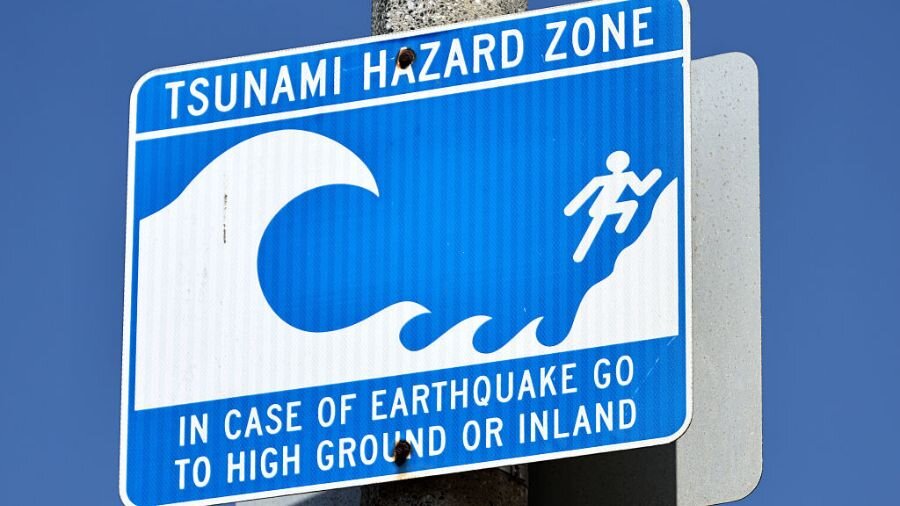
Tsunami warnings that could affect the Washington coast may experience longer delays in reaching the public following the termination of a key data-sharing agreement.
Alaska State Seismologist Michael West reported Tuesday that the National Oceanic and Atmospheric Administration has ended its contract with the Alaska Earthquake Center.
“I don’t want to for one moment suggest that warnings are going dark,” West stated. “The National Tsunami Warning Center is run by outstanding people working with a lot of data from different places.”
However, West indicated the data gathered by instruments in the Aleutian Islands, which he characterises as a “breeding ground for tsunamis in the Pacific,” will be lost, and that will slow information transmission from that region to Washington.
“We’re talking about a delay of, you know, a couple of minutes on a tsunami that takes some hours,” West explained.
A two-minute delay in Alaska would prove more critical, given that such a tsunami could strike there in approximately 20 minutes, he added.
The $300,000 annual contract had been in place for roughly 20 years. NOAA has not explained why it is terminating the agreement.
In response to a request for comment, the agency stated:
“Due to the federal government shutdown, NOAA is unable to respond to emails or voicemails that are not mission-critical. If your request is urgent and critically important, we will make every effort to accommodate; however, please be aware that responses may be delayed. For routine inquiries, NOAA Communications will respond in a timely manner once funds have been appropriated and the shutdown ends.”
The contract termination raises concerns about disaster preparedness infrastructure at a time when coastal communities depend on rapid warning systems to protect lives during tsunami events. The loss of real-time seismic data from the Aleutian Islands, a geologically active region that has generated numerous significant tsunamis historically, creates a gap in the early detection network that has functioned for two decades.
The Aleutian Islands’ designation as a “breeding ground for tsunamis in the Pacific” reflects the region’s position along the Pacific Ring of Fire, where the Pacific Plate subducts beneath the North American Plate. This tectonic configuration creates frequent earthquakes, some of which displace ocean floor sufficiently to generate tsunamis that can propagate across the Pacific Ocean.
The $300,000 annual cost of the contract represents a modest investment relative to the potential consequences of delayed tsunami warnings. Divided across 20 years, the total expenditure of approximately $6 million has provided continuous monitoring that could prove invaluable during major seismic events. The termination of such a long-standing arrangement without public explanation raises questions about decision-making processes and priorities within NOAA.
West’s assurance that “warnings are going dark” should not be suggested attempts to prevent panic whilst acknowledging real degradation in warning system capabilities. The National Tsunami Warning Center will continue operations using alternative data sources, but the specific loss of Aleutian Islands instrumentation removes redundancy and early detection capacity that previously enhanced system reliability.
The two-minute delay West describes as possible for Washington-bound tsunamis might seem relatively minor given that tsunamis generated in the Aleutian Islands require several hours to cross the Pacific and reach Washington’s coast. However, every minute of advance warning provides additional time for coastal evacuations, emergency response coordination, and public notification efforts that can save lives.
The more critical implications for Alaska, where two-minute delays matter substantially when tsunamis can arrive within 20 minutes of earthquake occurrence, highlight differential risk profiles across Pacific coastal regions. Alaska’s proximity to major seismic zones means residents have minimal time to react to tsunami warnings, making rapid detection and notification systems particularly crucial.
The timing of the contract termination during a federal government shutdown complicates efforts to understand NOAA’s rationale or to advocate for contract renewal. The agency’s inability to respond to non-mission-critical communications means questions about this decision may remain unanswered for weeks or months depending on shutdown duration.
The designation of inquiries about tsunami warning system changes as non-mission-critical raises questions about how federal agencies prioritize communications during shutdowns. Whilst routine administrative matters may reasonably be deferred, public safety infrastructure changes arguably warrant explanation even during funding lapses.
The 20-year duration of the contract suggests it has survived multiple administrations, budget cycles, and policy shifts, indicating previous recognition of its value. The decision to terminate such a long-standing arrangement implies either changed risk assessments, budgetary pressures, or organizational priorities that differ from those that originally established the partnership.