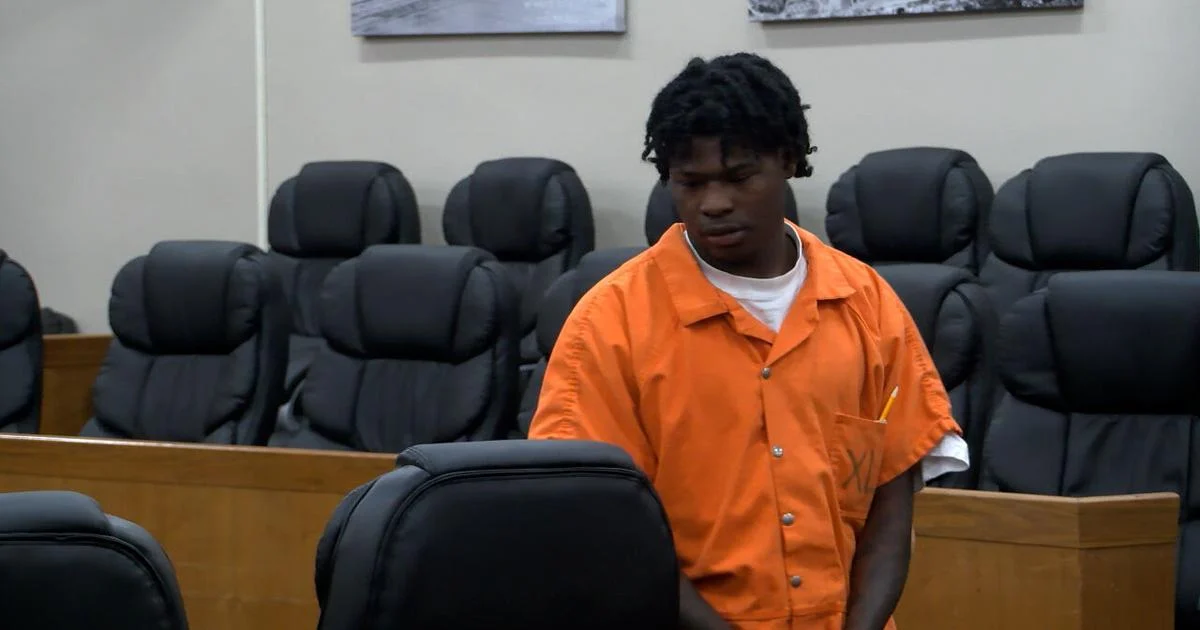
University of Washington student Jakori Buchanan will serve three months in Whitman County Jail for shooting a Washington State University football player at a party following this year’s Apple Cup rivalry game.
Buchanan pleaded guilty to third-degree assault last Friday. He was also sentenced to one year of community custody following his release from jail.
Court records indicate that Pullman police officers were called to a shooting at a house party in the early morning hours in reference to shots being fired. Once on the scene, officers discovered Uilisone “Sone” Falealo with a gunshot wound to his abdomen.
Police were able to identify 20-year-old Jakori Buchanan as the suspected shooter after reviewing surveillance video, court documents state.
Buchanan’s attorney indicated their client fired the gun in self-defence, claiming he and his cousin were assaulted at the party.
WSU stated on Monday that student-athlete Falealo has returned to practicing with the football team.
The three-month jail sentence imposed on University of Washington student Jakori Buchanan for shooting WSU football player Uilisone “Sone” Falealo following the Apple Cup represents a relatively lenient outcome for a shooting incident that could have resulted in death, reflecting either prosecutorial acceptance of self-defence claims, plea bargaining considerations, or judicial assessment that the circumstances warranted lesser punishment than the maximum penalty available for third-degree assault.
The incident at a house party in Pullman during the early morning hours following the Apple Cup, the annual rivalry game between University of Washington and Washington State University, occurred in an environment where alcohol consumption, heightened emotions from the game, and crowded conditions create volatile situations where conflicts can escalate rapidly from verbal arguments to physical violence to life-threatening assaults.
The shooting of Falealo, resulting in a gunshot wound to his abdomen, created immediate life-threatening injuries as abdominal gunshot wounds can damage vital organs, major blood vessels, and intestines, leading to internal bleeding, infection, and death without rapid medical intervention. The fact that Falealo survived and has returned to practicing with the football team suggests the bullet avoided critical structures or that surgeons successfully repaired damage, allowing recovery that many gunshot victims do not experience.
The identification of Buchanan as the shooter through surveillance video demonstrates the investigative value of cameras increasingly present at private residences and public spaces. Video evidence can provide definitive identification of suspects, document sequences of events leading to violence, and corroborate or refute witness statements that may be unreliable due to alcohol consumption, poor lighting, chaotic circumstances, or intentional dishonesty.
Buchanan’s attorney’s assertion that the shooting occurred in self-defence after Buchanan and his cousin were assaulted at the party raises complex legal questions about when individuals can use deadly force to protect themselves or others. Washington law permits the use of force, including deadly force in certain circumstances, when a person reasonably believes it is necessary to prevent imminent harm, but the level of force used must be proportional to the threat faced.
The guilty plea to third-degree assault rather than more serious charges like first or second-degree assault, attempted murder, or unlawful possession of a firearm suggests either that prosecutors determined they could not prove the elements of more serious offenses beyond reasonable doubt, or that a plea agreement was negotiated where Buchanan accepted responsibility for a lesser charge in exchange for a lighter sentence than he might have received if convicted at trial of more serious offenses.