A University of Washington Center for Human Rights report found that federal immigration enforcement agencies accessed Washington drivers’ personal data through a state-administered system, resulting in at least nine confirmed immigration arrests last year. But the number of actual arrests likely far exceeds that figure, and the mechanism enabling it reveals how federal authorities circumvent state sanctuary policies by exploiting data-sharing systems that state agencies didn’t realize they were providing.
Federal agents conducted 2,671,776 queries of Washington Department of Licensing data between January 1 and November 30, 2025, using a national platform called Nlets that connects to Washington State Patrol’s ACCESS system. That’s over 2.6 million searches of Washington drivers’ information by federal agencies, a volume that dwarfs the nine confirmed immigration arrests researchers could document. The discrepancy between searches and verified arrests suggests either that most queries serve other purposes, like border crossings and routine law enforcement, or that the actual number of immigration arrests enabled by this data access is far larger than what researchers could confirm through available records.
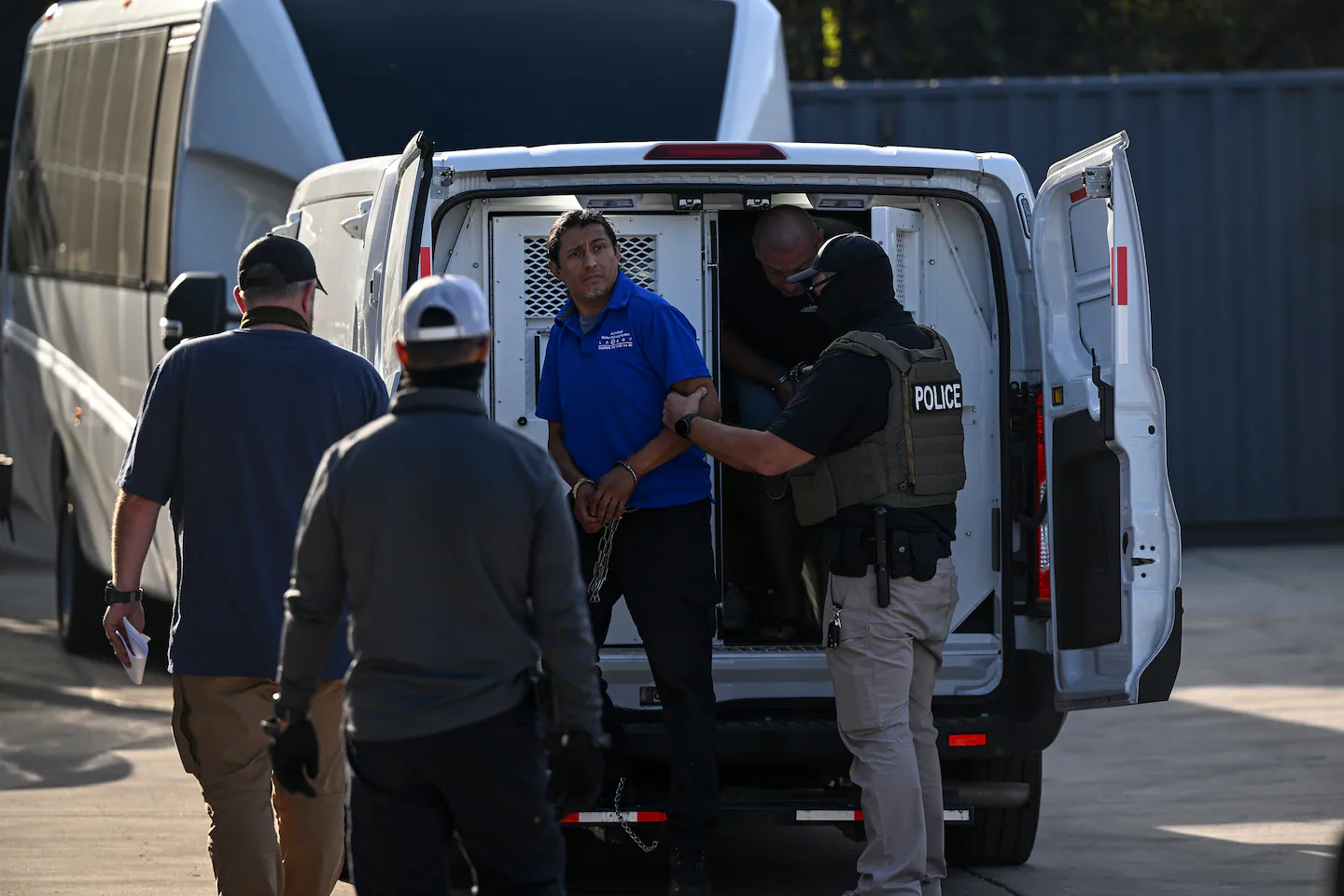
The nine cases researchers verified show a pattern. Federal agents would identify a vehicle, run the license plate through Washington’s DOL database via Nlets, obtain the registered owner’s name and address, then use that information to locate and arrest people for immigration violations. In one case on September 20, 2025, ICE records state that “Seattle ERO conducted a registration query on a 2013 Ford F-150 with Washington license plate number” to identify the vehicle’s owner. In another case on October 4, agents “conducted a registration query using the car’s license plate, obtaining the registered owner’s name.”
This isn’t sophisticated surveillance technology. It’s basic database access that every police department uses for traffic stops and investigations. The problem is that Washington’s sanctuary policies are supposed to limit state cooperation with federal immigration enforcement, but those restrictions don’t apply to automated data systems that federal agents can query directly. State officials apparently didn’t realize ICE and Customs and Border Protection had this level of access until the UW researchers documented how it was being used.
The first documented case occurred on August 22, 2025, when ICE ERO, ICE HSI, and Border Patrol officers went to a residential address in Edmonds to look for someone they believed was undocumented. The last arrest in the report happened on November 16, 2025, when a Washington resident was in Gresham, Oregon for work and had just left a Latino grocery store when ICE officers spotted him. That geographic spread, from Edmonds north of Seattle to Oregon just across the state line, shows how agents used Washington’s driver data to track people’s movements beyond state borders.
Here’s where the state’s response gets complicated. The Governor’s Office claims it directed WSP and DOL to shut off ICE access to DOL data through Nlets as early as November 7, 2025. But implementation took longer than expected because WSP’s data vendor needed time to make the change. ICE’s access wasn’t actually blocked until the morning of November 19. That 12-day gap between directive and implementation meant federal agents continued accessing Washington driver data even after state officials decided to cut them off.
Since blocking ICE access on November 19, WSP confirmed that thousands of attempted queries from ICE have been denied. That ongoing stream of denied requests proves federal agents are still trying to access Washington’s driver database, they just can’t anymore. It also raises questions about what happens when those agents can’t get information through Nlets. Do they stop their investigations, or do they find alternative methods to obtain the same data?
The report identifies another problem that the state’s November response doesn’t solve. In eight of the nine confirmed arrests, it was Customs and Border Protection, not ICE, who conducted the database query. State authorities claim to have curtailed access by “one of ICE’s sub-agencies,” but CBP is a separate agency within the Department of Homeland Security. “There is therefore no reason to believe that this process does not continue to date,” the UW report states.
That distinction between ICE and CBP matters because it reveals how federal immigration enforcement is structured to avoid exactly this kind of restriction. Multiple agencies within DHS have immigration enforcement authority. Cutting off one agency’s access while others retain it doesn’t meaningfully protect Washington residents from having their driver data used for immigration arrests.
For Seattle residents, particularly those in South Seattle neighborhoods with large immigrant populations, this report confirms suspicions many have held about how federal agents identify targets. Every time someone registers a vehicle, renews a license, or updates an address with DOL, that information enters a database that until November 19 was accessible to federal immigration agents. People who carefully avoid interactions with ICE, who don’t answer doors without warrants, who know their rights during traffic stops, could still be located because they complied with state requirements to register their vehicles.
The UW researchers note that the nine verified cases “likely form part of a much broader pattern of federal agents tapping into WA DOL data to target Washingtonians for arrest for civil immigration violations.” That hedge, “likely form part of a much broader pattern,” reflects the difficulty of documenting these arrests. Immigration enforcement records are not comprehensively public. Researchers had to piece together evidence from multiple sources to confirm even these nine cases. How many other arrests occurred using the same method but left no paper trail researchers could access?
Community concerns about data collection and privacy protections intensified last year, leading several western Washington cities to deactivate their Flock camera systems. Auburn announced in October 2025 that any agency using Auburn’s Flock data for immigration enforcement would have its access permanently revoked. But those Flock systems are different from Nlets. Flock cameras are automated license plate readers that cities install to track vehicles moving through their jurisdictions. Nlets is a decades-old interstate data-sharing system that law enforcement agencies use for routine queries.
The difference matters because it’s much easier to shut off a recently installed camera system than to restrict access to a fundamental law enforcement database that serves legitimate purposes beyond immigration enforcement. Police need to check license plates to find stolen vehicles, locate suspects, verify insurance, investigate crimes. Immigration agents were using that same infrastructure for a purpose many Washington residents and officials oppose, but separating legitimate queries from immigration enforcement queries in an automated system requires technical solutions that apparently took weeks to implement.
The report’s recommendations emphasize that “the types of enforcement we have seen in recent months, warrantless arrests by unidentified masked men driving unmarked vehicles, sometimes accompanied by acts of shocking violence, threaten the civil liberties of all Washingtonians.” That language connects database access to broader enforcement patterns. Federal agents using Washington’s driver data aren’t just conducting standard immigration enforcement. They’re enabling tactics that Washington officials characterize as threats to civil liberties.
For the nine people arrested, and likely many more whose cases weren’t documented, the mechanism was straightforward. They registered vehicles with the state as legally required. Federal agents accessed that registration data through a system state officials apparently didn’t know was available to immigration enforcement. Those agents used the information to locate and arrest people. Washington’s sanctuary policies, meant to limit state cooperation with federal immigration enforcement, didn’t protect them because the data sharing happened through automated systems that bypassed policy-level restrictions.
The November 19 cutoff stops that specific pathway, assuming CBP access has actually been blocked along with ICE. But it doesn’t address what happened to the 2.6 million queries conducted before the cutoff, who was targeted based on that information, or whether federal agencies have alternative methods to access similar data. The UW report documents one mechanism by which Washington’s driver information was used for immigration arrests. Whether closing that mechanism actually protects residents, or simply forces federal agents to find different data sources, remains uncertain.