President Donald Trump has pursued campaign promises to intensify illegal immigration enforcement throughout his nearly one-year tenure in office.
The administration has deployed ICE agents to cities nationwide and halted immigration applications from 19 countries and counting.
“Our heroic ICE agents continue to prioritize the removal of violent criminal illegal aliens in communities across the country,” White House Press Secretary Karoline Leavitt said.
Federal government action has prompted Washington State Attorney General Nick Brown to collaborate with state lawmakers on legislation protecting immigrants.
“We are not living in normal times,” Brown stated.
The proposed bill, known as the Immigrant Worker Protection Act, would require workers to receive the same information and notice as their employers when federal officials request audits of employment eligibility information. Brown said this bill “levels the playing field” in multiple ways.
“When workers live in fear, when workers are scared that ICE will show up at their job at any moment to take anyone that looks like an immigrant, they’re less likely to speak out against wage theft or other abuses against the workforce,” he explained.
Brown said the Trump administration “rounds up hard-working people trying to provide for their families,” and noted that almost half of people arrested by ICE in Washington State this year had no criminal record.
“These were people helping keep our economy thriving, contributing to the improvement of our communities, and doing the same things that everyone else in this state does every day,” he said.
Yesica Lopez, small business owner and co-founder of the White Center Business Alliance, said this bill, if enacted, would provide her and other businesses “clear steps” on how to “protect the privacy” of their employees.
“Many small businesses like mine have asked for similar guidelines on what to do in case of an I-9 audit, and I’m glad to have the standardized resource to point them in that direction in case they need it,” she stated.
The legislation was developed with and is being introduced by Senator Rebecca Saldaña, a Seattle Democrat, and Representative Lillian Ortiz-Self, a Mukilteo Democrat.
“We have tons of small businesses that are the hope and dreams of immigrants and refugees and small business owners across our communities,” Saldaña said. “This is about making sure that we keep Washington working.”
“Every person who contributes to our state deserves dignity, respect, and protection,” Ortiz-Self said. “Undocumented immigrants paid $96.7 billion in federal, state, and local taxes in 2022.”
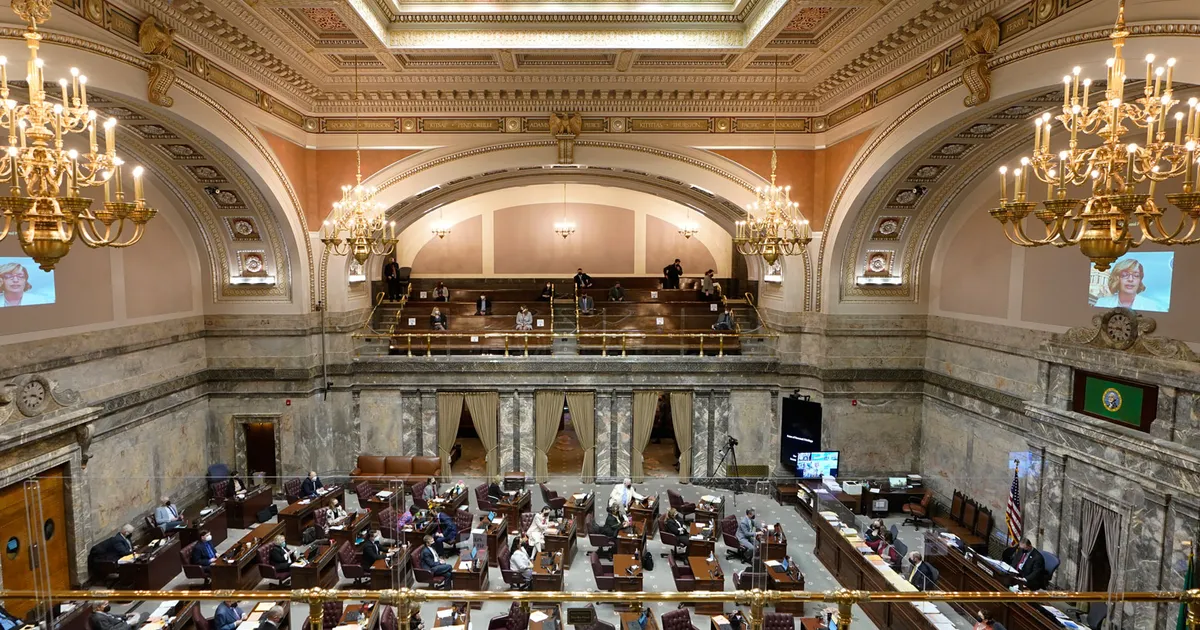
Brown said under the bill, his office would have authority to respond to violations of the law. He said they are not requesting additional funding to support this legislation should it pass and be signed by the governor. Lawmakers convene for the session on January 12.
The state has an existing law known as the Keep Washington Working Act. The KWW has been in effect since 2019 and limits the extent to which local and state officers can cooperate with federal immigration officers. Earlier this year, the law attracted Trump administration attention for creating a “sanctuary jurisdiction” within Washington state.
U.S. Attorney General Pam Bondi said the KWW thwarts federal law.
The Immigrant Worker Protection Act builds upon the Keep Washington Working Act by adding specific protections related to workplace immigration enforcement. The new bill focuses on information sharing during I-9 audits rather than broader cooperation limits.
I-9 audits examine employment eligibility verification forms that employers must complete for all employees. Federal officials request these audits to identify unauthorized workers, potentially leading to worker termination and immigration enforcement actions.
The current imbalance in notification means employers receive advance notice of audits while workers remain unaware until auditors arrive. This asymmetry prevents workers from seeking legal counsel or understanding their rights before enforcement actions occur.
The wage theft concern Brown mentioned reflects broader power imbalances in workplaces employing undocumented workers. Fear of immigration consequences can silence workers facing labor law violations, creating conditions where exploitation goes unreported.
The statistic that nearly half of ICE arrests in Washington this year involved individuals with no criminal record challenges narratives that enforcement targets only dangerous criminals. The data suggests broader enforcement sweeps affecting working immigrants.
Lopez’s perspective as a small business owner highlights practical concerns businesses face navigating immigration enforcement. Clear guidelines help employers balance compliance obligations with ethical treatment of workers.
The $96.7 billion tax contribution figure Ortiz-Self cited demonstrates economic participation by undocumented immigrants. This data counters claims that unauthorized immigrants avoid tax obligations while using public services.
The Keep Washington Working Act’s designation as creating “sanctuary jurisdiction” reflects federal government criticism of state policies limiting immigration enforcement cooperation. Conflicts between federal and state authority on immigration continue escalating.
Attorney General Bondi’s claim that KWW thwarts federal law sets up potential legal challenges. The federal government may argue that Washington’s laws interfere with immigration enforcement authority reserved to the national government.
The January 12 legislative session start provides a tight timeline for bill consideration. Lawmakers will need to move quickly if they hope to pass the Immigrant Worker Protection Act during the session.