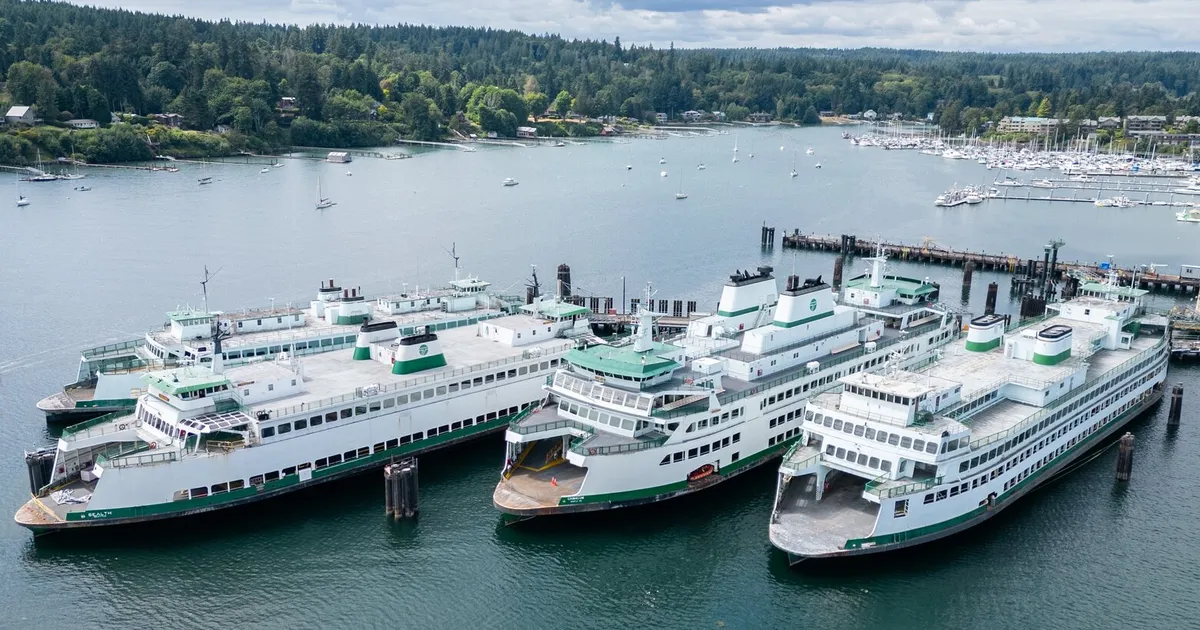
Washington State Ferries is taking an initial step toward offering public Wi-Fi service at ferry terminals and aboard vessels, launching a limited pilot programme at the Bremerton terminal and on the M/V Chimacum.
The agency issued a report in December proposing the restricted pilot as directed by state legislation passed last year requiring the Washington State Department of Transportation to deploy a Wi-Fi pilot within existing resources and report on viability, costs, and potential free or fee-based models.
Washington State Ferries, which operates under WSDOT, is working through the procurement process for a vendor for the pilot programme, according to a spokesperson. The programme is limited in scope and any expansion or continuation would be subject to direction from lawmakers, the spokesperson noted.
The report estimates that the pilot could cost between $100,000 and $150,000, which includes equipment, installation, and minimal vendor support for the pilot period. WSF estimates that expanding public Wi-Fi across terminals and vessels statewide would likely require a multi-million-dollar capital investment, along with ongoing annual operating and maintenance costs in the seven-figure range.
WSF currently provides no public internet service anywhere in its ferry system. The report references a private-sector attempt to offer Wi-Fi in the late 2000s that ultimately failed due to high infrastructure costs and insufficient revenue. WSF previously partnered with wireless networking company Boingo on a fee-based Wi-Fi service in 2008, but that ended in 2016.
The new pilot could determine whether modern networking technology and vendor models change that equation. WSF plans to measure how many passengers actually use Wi-Fi, how much bandwidth they consume, service reliability, and what kind of staffing and vendor support is required to keep the system running.
Final costs for a potential broader rollout would depend on factors such as how many terminals and vessels are covered, the level of bandwidth provided, and whether service is free, paid, or a mix of both.
If WSF proceeds as planned, the pilot would move forward in 2026, with installation in the spring, and an operational test period running from May through August, according to the report. WSF would analyse the data in late summer and deliver findings and recommendations in September 2026.
The agency flagged several risks, including cybersecurity requirements, potential strain on staff resources, infrastructure limitations on older vessels and terminals, and the challenge of managing passenger expectations for a temporary test programme.
Any public Wi-Fi network would need to be fully segmented from ferry operational systems and comply with state IT security and accessibility standards.
The Bremerton terminal and M/V Chimacum selection for the pilot represents a strategic choice. Bremerton serves a major commuter route with high ridership, whilst the Chimacum is a mid-sized vessel that could provide representative data without the complexity of WSF’s largest ferries.
The $100,000 to $150,000 pilot cost covers initial hardware, installation labour, and vendor support but represents a fraction of what full deployment would require. Modern Wi-Fi systems need access points, networking equipment, internet connectivity, and ongoing technical support.
The multi-million-dollar capital investment estimate for statewide expansion reflects the scale of WSF’s system: 20 terminals and 21 vessels spread across Puget Sound and the San Juan Islands. Each location requires unique infrastructure adapted to its size and traffic patterns.
The seven-figure annual operating costs would cover internet service provider fees for bandwidth, equipment maintenance, vendor support contracts, and staff time managing the network and addressing passenger complaints.
WSF providing no public internet service currently means passengers rely on cellular data, which has spotty coverage in parts of Puget Sound, particularly between islands and in areas far from shore.
The late 2000s private-sector Wi-Fi failure demonstrates the challenge of making ferry internet service economically viable. High infrastructure costs for marine environments combined with limited revenue opportunities from occasional ferry riders created an unsustainable business model.
The 2008 to 2016 Boingo partnership ending suggests the fee-based model didn’t generate sufficient revenue to justify continuing. Passengers may have been unwilling to pay for Wi-Fi on short crossings, or cellular data improvements reduced demand for paid ferry Wi-Fi.
Modern networking technology has advanced significantly since 2008. Starlink satellite internet, 5G cellular connections, and improved Wi-Fi standards could make ferry internet more reliable and affordable than previous attempts.
The usage metrics WSF plans to collect, how many passengers use Wi-Fi and how much bandwidth they consume, will determine whether demand justifies investment. If only 10 per cent of passengers use Wi-Fi lightly, the case for expansion weakens. If 70 per cent use it heavily, expansion becomes compelling.
Service reliability measurements will reveal whether marine environments create technical challenges. Salt air, vibration, vessel movement, and distance from shore can all affect Wi-Fi performance.
The staffing and vendor support requirements will determine whether WSF can manage the system with existing personnel or needs dedicated IT staff. Troubleshooting Wi-Fi problems whilst operating ferries creates competing demands on limited resources.
The free versus paid service question creates political and practical challenges. Free Wi-Fi benefits passengers but requires taxpayer funding. Paid Wi-Fi generates revenue but reduces usage and creates payment processing overhead.
The May through August operational period captures peak ridership during summer tourism season, providing robust usage data. Testing during winter’s lower ridership would produce different, less useful results.
The September 2026 findings and recommendations give lawmakers a full year of planning before the 2027 legislative session, allowing time to secure funding if expansion is recommended.
The cybersecurity requirements flagged as risks are critical. Ferry operational systems controlling propulsion, navigation, and communications must remain completely isolated from public networks. A cyberattack exploiting Wi-Fi access to compromise ferry operations could endanger passengers.