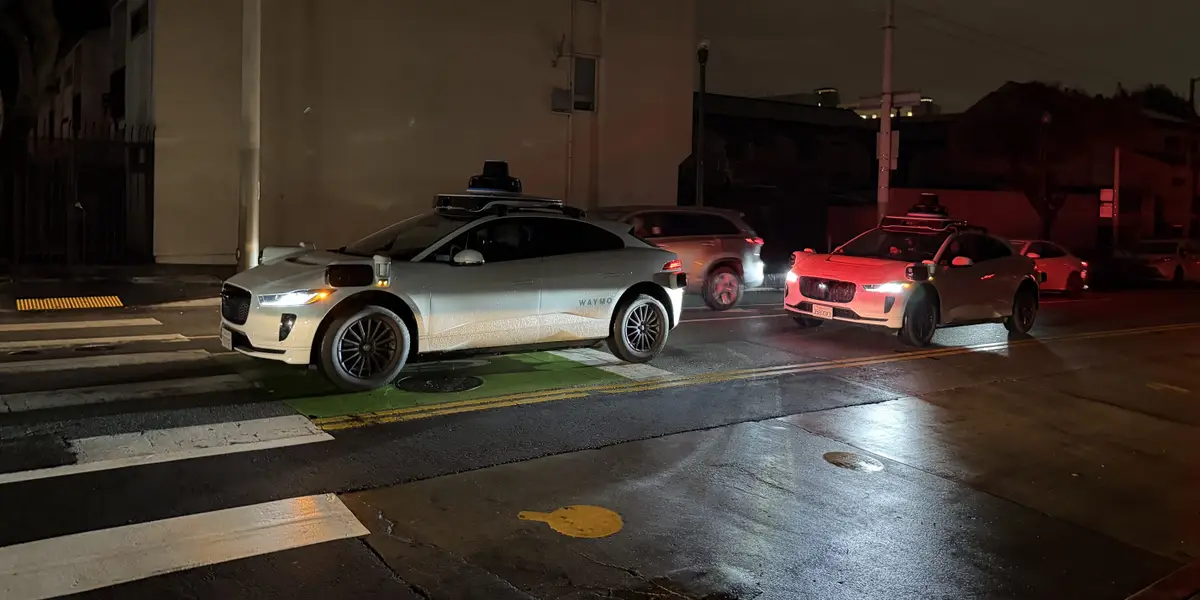
Waymo suspended its robotaxi service in San Francisco Saturday evening after a massive power outage left many of its autonomous vehicles stalled on city streets, blocking intersections and forcing human drivers to navigate around them.
Numerous photos and videos posted to social media captured Waymo robotaxis sitting motionless on roads and at intersections as human drivers either waited behind them or maneuvered around the disabled vehicles.
Waymo announced Saturday it had temporarily suspended service in the city due to the blackout. The company didn’t resume operations until late Sunday afternoon, when a Waymo spokesperson confirmed service was back online.
“Yesterday’s power outage was a widespread event that caused gridlock across San Francisco, with non-functioning traffic signals and transit disruptions,” the spokesperson said. “While the failure of the utility infrastructure was significant, we are committed to ensuring our technology adjusts to traffic flow during such events.”
The spokesperson added that the company is “focused on rapidly integrating the lessons learned from this event, and are committed to earning and maintaining the trust of the communities we serve every day.”
The blackout also knocked out many of the city’s traffic lights and affected Muni mass transit, with San Francisco Mayor Daniel Lurie warning residents to stay off the roads unless absolutely necessary.
Waymo explained that although its self-driving systems are designed to treat non-functioning traffic lights as four-way stops, the scale of Saturday’s blackout caused some robotaxis to remain stationary for longer than normal as they tried to assess the intersections. The company said the majority of active trips were completed successfully despite the challenges.
The blackout was caused by a fire at a Pacific Gas & Electric substation in the city. Approximately 120,000 PG&E customers lost power during the outage. While the majority had power restored by late Saturday, 35,000 customers remained without electricity Sunday morning. PG&E’s website showed thousands of San Francisco customers still affected at that time.
A letter from Tiger Global Management that surfaced earlier this month revealed Waymo is now providing 450,000 robotaxi rides per week, nearly double the amount the Alphabet-owned company disclosed in the spring.
The incident highlights vulnerabilities in autonomous vehicle technology when infrastructure failures occur. While Waymo’s vehicles are programmed to handle individual malfunctioning traffic signals, the widespread simultaneous failure of dozens or hundreds of signals across the city overwhelmed the decision-making systems.
The social media images showing Waymo vehicles blocking intersections raise questions about how autonomous systems should behave during citywide emergencies. A human driver stuck at a non-functioning light uses judgment about when it’s safe to proceed. Waymo’s cautious approach of waiting longer to assess intersections prioritizes safety but creates traffic flow problems.
The temporary suspension of service suggests Waymo’s remote operations team couldn’t manually control enough vehicles quickly enough to clear them from problematic locations. The company employs remote operators who can provide guidance to vehicles in unusual situations, but the scale of Saturday’s event exceeded that capacity.
Mayor Lurie’s warning for residents to stay off roads indicates officials recognized the traffic chaos the blackout created. Adding stalled robotaxis to already congested streets with non-functioning signals compounded an already dangerous situation.
The 35,000 customers still without power Sunday morning faced a second night without electricity. For those relying on medical equipment, refrigerated medications, or home oxygen systems, extended outages create serious health risks.
The PG&E substation fire that triggered the blackout represents a single point of failure affecting a large portion of the city. Urban electrical grids typically include redundancies to prevent widespread outages from single failures, suggesting either inadequate backup systems or damage severe enough to overwhelm them.