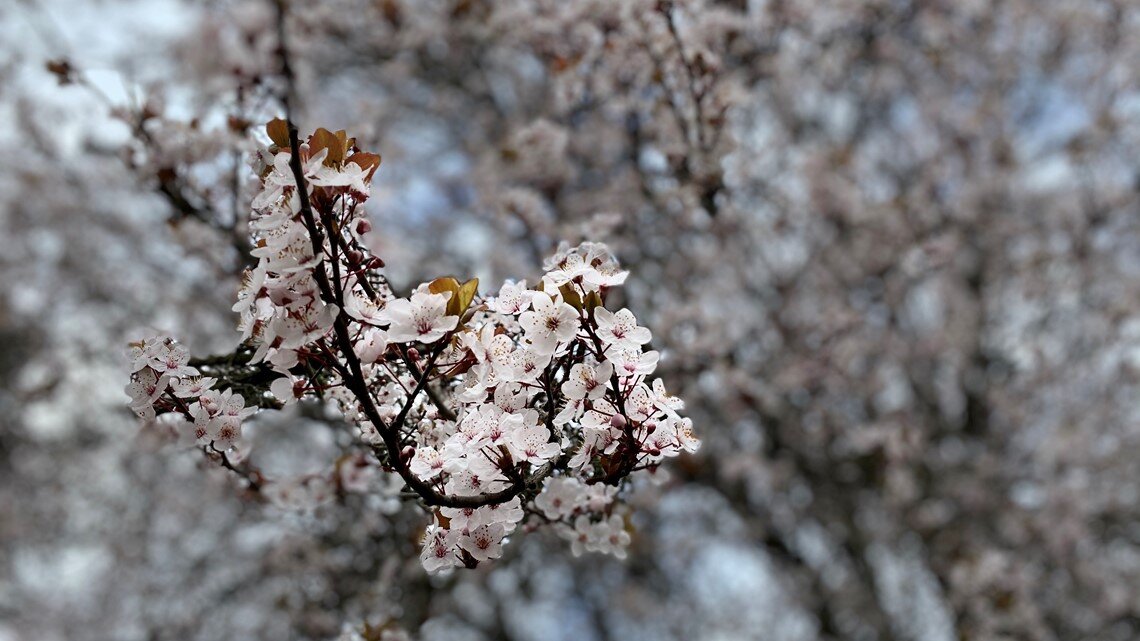
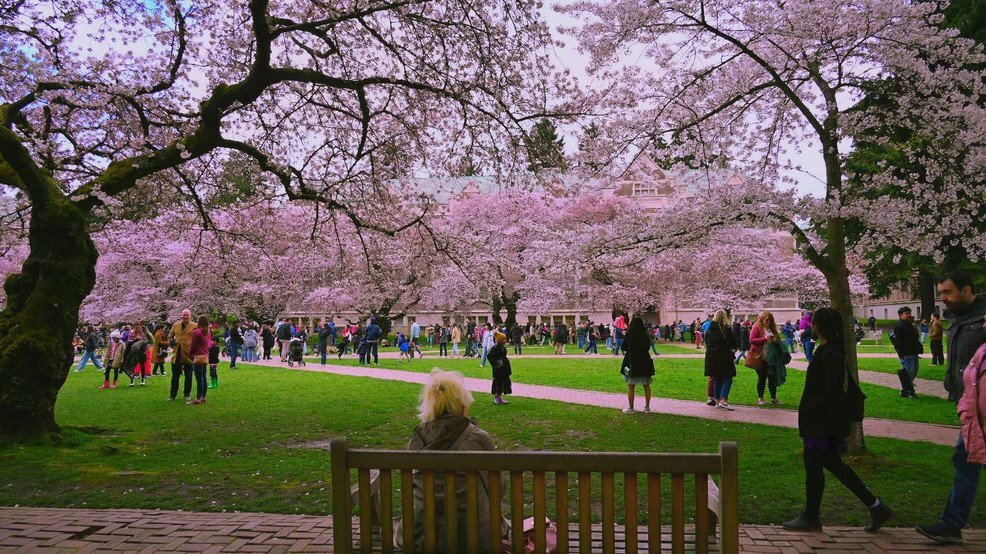
Sunshine and blooming flowers are giving parts of western Washington a springlike feel as February winds down, but the mild winter is raising concerns about impacts during the dry season ahead.
“It’s a beautiful day. The sun’s out and it’s not that cold,” said Jan Fitzpatrick, who lives in Seattle. “Usually you see a lot more snow on the mountains. It is kind of sad to see them without the snow that you would get this time of year.”
Washington’s mountain snowpack continues to struggle as February ends. Twelve of the 14 areas where snowpack is measured are below normal across the state. A healthy snowpack is essential for the region because when it melts in spring and summer, it provides drinking water and irrigation for farming. Adequate snowpack also helps reduce wildfire risk by maintaining soil moisture and preventing very dry conditions throughout the warmer months.
The low snowpack has residents concerned about the upcoming wildfire season. “The wildfire season, that’s a big concern,” said Anna Swenson, who lives in Lake City. The connection between winter snowpack and summer wildfire risk has become increasingly apparent in recent years as the Pacific Northwest has experienced more severe and prolonged fire seasons.
Water managers across the state are closely monitoring snowpack levels as they prepare for potential water supply challenges during the dry months. Agriculture, hydropower generation, and municipal water systems all depend heavily on snowmelt to maintain adequate water levels through summer and early fall.
Even with springlike conditions showing up across the region, some residents remain hopeful for a late-season shift that could boost snowpack levels before spring arrives. “I’m always hoping that there’s going to be more snow, but it was late and not that much,” Swenson said, looking ahead to March. March historically can bring significant snow to Washington’s mountains, though weather patterns this winter have not favored heavy precipitation.