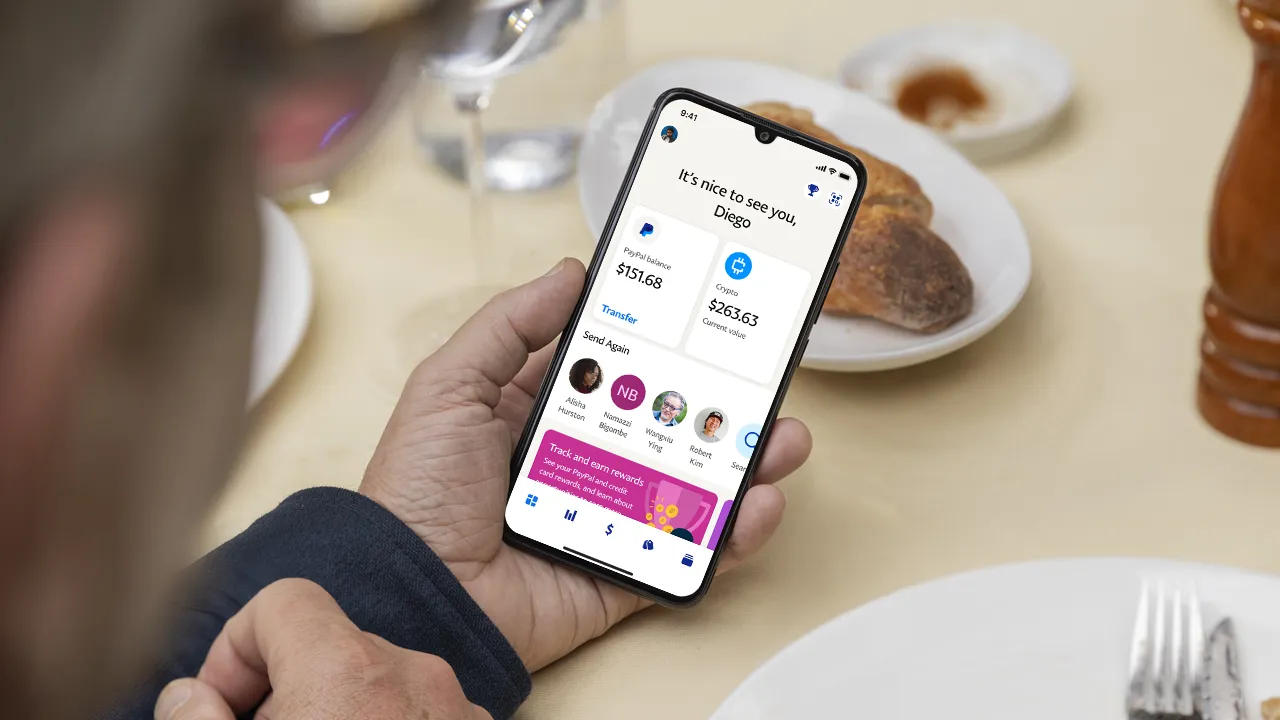
World, the biometric identity verification project co-founded by OpenAI CEO Sam Altman, released the newest version of its application today, introducing several new capabilities including encrypted chat integration and expanded cryptocurrency payment features similar to Venmo.
World was created by startup Tools for Humanity in 2019 and originally launched its application in 2023. The company states that in an era increasingly affected by AI-generated digital deception, it aims to create digital “proof of human” tools that can distinguish genuine people from automated bots.
During a gathering at World’s San Francisco headquarters Thursday, Altman and World co-founder and CEO Alex Blania briefly introduced the new version of the application, which developers have termed a “super app,” before the product team explained the enhanced features in detail.
During his remarks, Altman said the concept for World emerged from conversations he and Blania had about the need to create a new economic model. That model, based around web3 principles, is what World has been attempting to accomplish through its verification network.
“It’s really hard to both identify unique people and do that in a privacy-preserving way,” Altman said.
World Chat, the app’s new messaging feature, appears designed to address that challenge. The service uses end-to-end encryption to protect users’ conversations with security equivalent to Signal, the privacy-focused messenger, according to the company.
The messenger also employs color-coded speech bubbles to alert users whether the person they’re communicating with has been verified by World’s system. The design aims to incentivize verification, giving people the ability to confirm whether their conversation partner is who they claim to be. Chat was originally launched in beta testing in March.
The other major feature revealed Thursday was an expanded digital payment system allowing app users to send and receive cryptocurrency more easily. While World app has functioned as a digital wallet for some time, the newest version includes broader capabilities.
Using virtual accounts, users can receive paychecks directly into World App and make deposits from their bank accounts, both of which can then be converted into cryptocurrency. Users do not need to be verified by World’s authentication system to access these payment features.
Tiago Sada, World’s chief product officer, said part of the motivation for adding chat was to create a more interactive experience for users.
“What we kept hearing from people is that they wanted a more social World app,” Sada said. World Chat is designed to fulfill that need, creating what Sada describes as a secure communication method.
“It took a lot of work to make this feature-rich messenger that is similar to a WhatsApp or a Telegram, but with encryption and security of something that is a lot closer to Signal,” Sada explained.
World, originally called Worldcoin, deploys a unique authentication process. Interested individuals get their eyes scanned at one of the company’s offices, where the Orb, a large verification device, converts the person’s iris into a unique and encrypted digital code.
That code, the verified World ID, can then be used by the person to interact with World’s ecosystem of services, which are available through its application.
The addition of more social-friendly features is clearly intended to drive broader adoption of the app, which makes sense since scaling verification represents the company’s primary challenge. Altman has stated he would like the project to scan one billion people’s eyes, but Tools for Humanity claims to have scanned fewer than 20 million people.
Since standing in long queues at a corporate office to have eyeballs scanned by a giant metallic sphere may seem less than appealing to some users, the company has already sought to make its verification process less burdensome.
In April, Tools for Humanity announced Orb Minis, handheld phone-like devices that allow users to scan their own eyes from the comfort of their homes.
Blania previously said that eventually the company would like to turn the Orb Minis into a mobile point-of-sale device or sell its ID sensor technology to device manufacturers. If the company takes such steps, it would significantly reduce the barrier to verification, potentially inspiring much more widespread adoption.
The super app strategy reflects broader technology industry trends toward creating comprehensive platforms that handle multiple functions rather than single-purpose applications. Companies from Chinese tech giants to American startups have pursued this model with varying success.
The encrypted chat feature positions World Chat as a competitor to established secure messaging platforms. However, World Chat’s unique selling point, the verification status indicators, addresses a different problem than traditional encrypted messengers.
The color-coded bubbles create visual distinction between verified and unverified users. This system assumes users will prefer conversing with verified individuals, though the company has not released data on whether this assumption holds in practice.
The expanded cryptocurrency payment features transform World from purely an identity verification platform into a financial services application. This integration follows the company’s web3 philosophical foundation.
The ability to receive paychecks directly into the app positions World as potential competition to traditional banking and fintech payment applications. However, converting paychecks to cryptocurrency introduces volatility risks that stable fiat currency does not present.
The deposit feature from bank accounts creates a bridge between traditional finance and cryptocurrency, potentially easing adoption for users unfamiliar with crypto ecosystems.
The decision not to require verification for payment features separates the identity and financial aspects of the platform. Users can access financial services without submitting to iris scanning, potentially increasing adoption among privacy-conscious individuals.
The iris scanning process remains controversial. Privacy advocates have raised concerns about biometric data collection, storage, and potential misuse. The company maintains that iris scans are converted to encrypted codes rather than stored as images.
The Orb Minis represent significant evolution from the original verification model. Eliminating the need to visit physical locations removes a major adoption barrier, though it introduces questions about verification integrity when users self-scan.