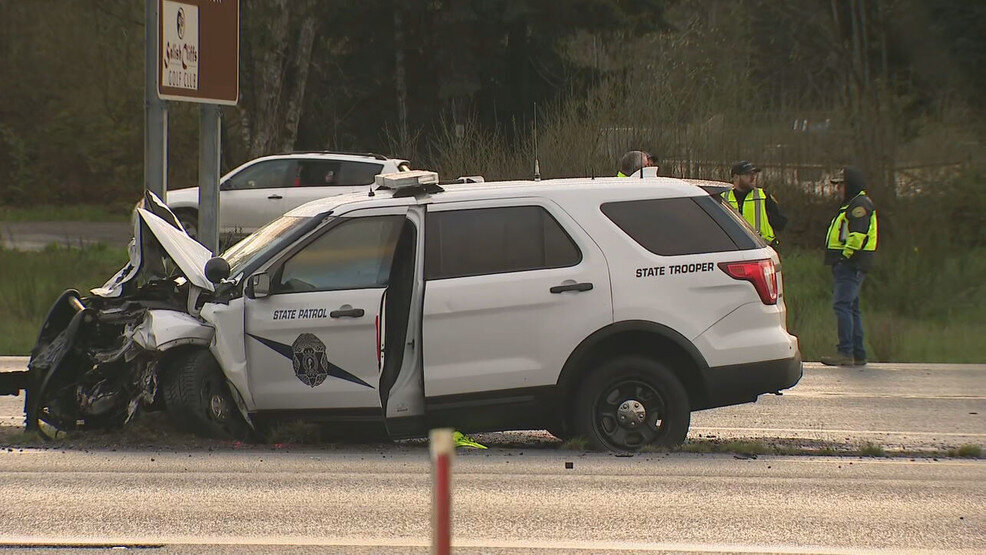
A Washington State Patrol sergeant sustained injuries Wednesday morning when a distracted driver who was texting crossed into his lane and collided with his patrol vehicle in Lakewood.
The crash occurred at 8:50 a.m. at the intersection of 112th Avenue and Steele Street. The WSP said a pickup truck collided with the trooper’s patrol vehicle, causing significant damage.
The sergeant became trapped inside his patrol car following the impact and required assistance from emergency responders to extricate him from the wreckage.
He was in stable condition when transported to a local hospital with injuries described as minor by authorities.
The Pierce County Sheriff’s Office investigated the incident and later determined the driver of the pickup truck was texting on her phone when she crossed over the center lane and struck the patrol car head-on.
The crash highlights the ongoing dangers of distracted driving, particularly texting while operating a vehicle. Washington law prohibits drivers from holding a phone or other electronic device while driving, with violations carrying fines and penalties.
The 8:50 a.m. timing places the crash during morning rush hour when traffic volumes are high and drivers are often hurried and distracted. Commute times create particular risks as people check messages, respond to work emails, or navigate using handheld devices.
The sergeant’s entrapment inside his patrol vehicle indicates the collision’s severity. Modern vehicles are designed with crumple zones and safety features that protect occupants, but these same features can make extraction difficult after major impacts.
Firefighters or specialized rescue teams typically use hydraulic tools commonly called “jaws of life” to cut through vehicle frames and pry open doors when occupants are trapped. The process takes precious minutes during which injured people remain immobilized.
The stable condition and minor injuries designation suggests the sergeant avoided life-threatening harm despite being trapped. However, “minor” injuries in crash terminology can still include fractures, lacerations requiring stitches, or soft tissue damage causing significant pain and requiring weeks or months of recovery.
The Pierce County Sheriff’s Office handling the investigation rather than WSP represents standard protocol when law enforcement officers are involved in crashes. Independent investigation by a separate agency prevents conflicts of interest and ensures objective assessment.
The determination that the pickup driver was texting required investigators to examine phone records, interview witnesses, or obtain statements from the driver herself. Proving distracted driving often involves subpoenaing cell phone data showing when messages were sent or received relative to crash time.
Crossing the center lane indicates the driver drifted completely out of her travel lane into oncoming traffic. This type of incursion typically results from significant inattention rather than momentary distraction, suggesting sustained focus on the phone rather than the road.
Head-on collisions or near-head-on impacts like this one cause disproportionate injury and death compared to other crash types. The combined speed of both vehicles at impact creates forces far exceeding those in rear-end or sideswipe collisions.
The pickup truck striking a patrol vehicle adds irony to the situation. Law enforcement spends considerable resources on distracted driving enforcement, conducting emphasis patrols specifically targeting phone use behind the wheel. For an officer to become a victim of the very behavior he likely cited others for represents a particular frustration.
Washington’s distracted driving law, which took effect in 2017, prohibits holding phones while driving. Hands-free use through Bluetooth or voice commands remains legal, but any handheld use violates the law. Penalties include a $136 fine for first violations and $234 for subsequent offenses within five years.
The pickup driver now faces potential criminal charges beyond simple traffic infractions. Causing injury while violating traffic laws can result in charges like reckless driving or vehicular assault depending on circumstances and injury severity.
Insurance implications for the at-fault driver will be substantial. Collision with a law enforcement vehicle during performance of duty, injuries requiring hospitalization, and clear liability will result in significant claims against her insurance policy.