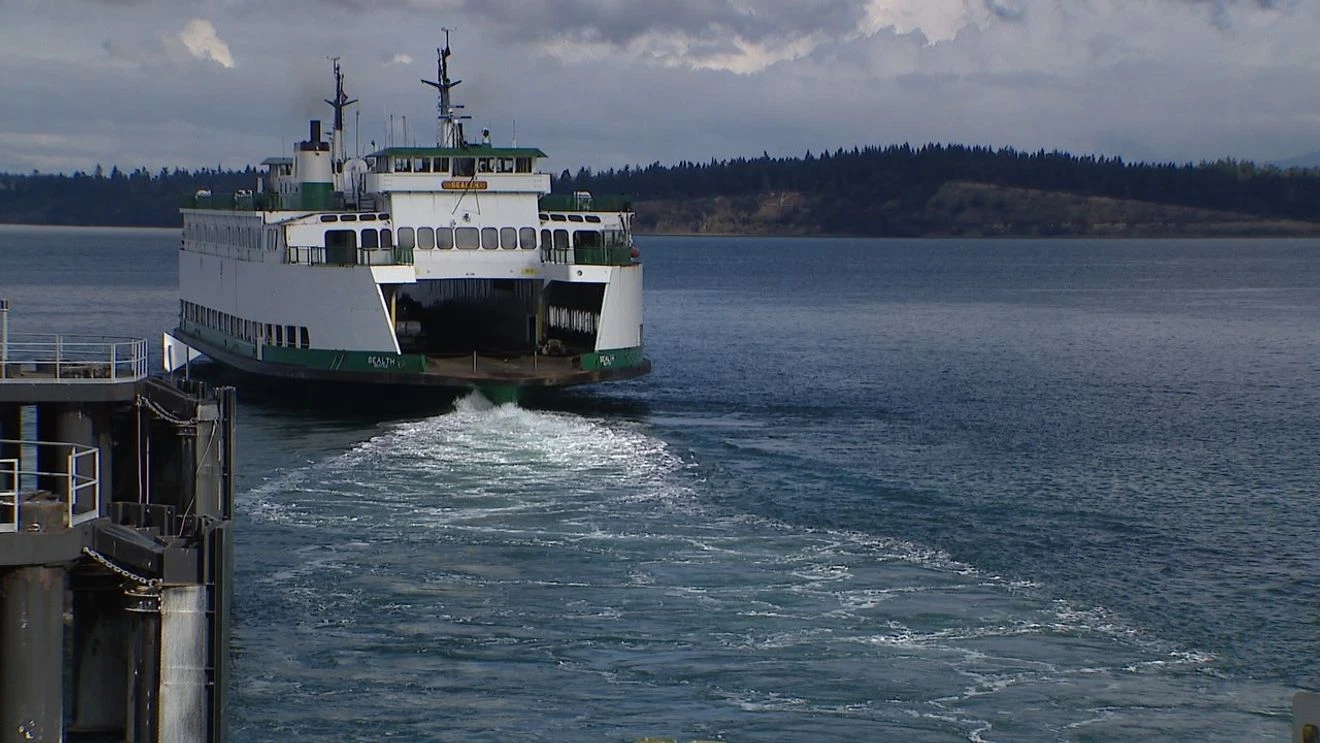
Washington State Ferries carried more than 20 million passengers in 2025 for the first time since before the COVID-19 pandemic, boosted by the return of full domestic service and sharp decline in canceled sailings, the Washington State Department of Transportation said. Ridership reached 20.1 million passengers in 2025, nearly 1 million more than the 19.1 million recorded in 2024. The increase of about 5% marks the system’s strongest annual total since 2019, when ferry travel was disrupted by pandemic-related service cuts that lingered for several years. Transportation officials credited the rebound largely to restored service on several major routes. In June, a second vessel returned to the Seattle-Bremerton route, while the Fauntleroy-Vashon-Southworth Triangle resumed its daily three-boat schedule. In July, WSF added a second boat to the Port Townsend-Coupeville route on Fridays through Mondays during peak summer travel season.
Improved reliability also played a key role, with canceled sailings dropping from 2,620 in 2024 to 2,222 in 2025, the lowest number since 2020. The biggest decline came from cancellations tied to crew shortages, reflecting recent investments in workforce recruitment and support, officials said. In total, WSF operated more than 150,000 trips in 2025, nearly 7,000 more than the previous year, and completed 98.6% of all scheduled sailings. Both vehicle and walk-on traffic increased, with the number of vehicles and foot passengers each growing by about 350,000, while passengers traveling in vehicles rose by roughly 250,000.
The 5% ridership increase from 19.1 million to 20.1 million passengers represents strong recovery momentum, though whether growth continues at similar pace, stabilizes at new higher level, or encounters constraints from capacity limits or operational challenges affects long-term system planning. The fact that 2025 ridership finally exceeded pre-pandemic levels suggests that demand has fully recovered and potentially grown beyond 2019 baseline, though whether that reflects population growth, increased tourism, changing commute patterns with hybrid work, or other factors affects interpretation of what the numbers mean for future demand.
The restoration of two-boat service on Seattle-Bremerton in June addresses what had been significant capacity constraint on major commuter and tourist route connecting Seattle with Kitsap Peninsula. The 31.9% ridership increase on that route, with vehicle traffic up 26.1% and foot passengers up 35.7%, demonstrates pent-up demand that existed when single-boat service created capacity limitations, long waits, and unreliable schedules. Whether the dramatic growth represents one-time catch-up from suppressed demand or sustainable new baseline depends on whether economic activity, employment patterns, and travel preferences continue supporting that level of ferry use.
The Triangle route between Fauntleroy, Vashon Island, and Southworth resuming daily three-boat schedule represents return to normal operations that had been suspended during pandemic when reduced demand and vessel availability led to cutbacks. The three-point route’s complexity, serving island community while connecting two mainland terminals, requires careful scheduling that three boats enable but two boats strain. Whether Vashon residents, who depend on ferries for mainland access, noticed quality of life improvements from restored service affects community satisfaction and political support for ferry system funding.
The Port Townsend-Coupeville route adding second boat on summer weekends reflects seasonal demand patterns where tourism and recreation drive significant traffic during peak months that doesn’t justify year-round two-boat service. Whether that Friday through Monday peak service adequately serves demand or whether additional capacity would be justified affects resource allocation and whether tourists face waits that discourage visits. The Olympic Peninsula and Whidbey Island destinations served by this route attract visitors exploring natural areas and historic towns.
The decline in canceled sailings from 2,620 in 2024 to 2,222 in 2025, a reduction of 398 sailings or about 15%, demonstrates operational improvement that directly affects rider experience and system reliability. The fact that crew shortage-related cancellations saw biggest decline validates workforce investments in recruitment and support that WSF implemented. Whether those improvements came from higher pay, better scheduling, improved training, increased hiring, or retention incentives affects sustainability and whether gains continue or whether crew challenges resurface.
The achievement of 98.6% completion rate for scheduled sailings means roughly 1.4% cancellation rate, or about one in 70 sailings canceled. While that represents improvement, it still means frequent ferry users likely experience occasional cancellations affecting their plans. Whether 98.6% represents near-optimal performance given mechanical issues, weather, and unavoidable disruptions, or whether further improvement to 99% or higher is realistic goal, affects whether riders should expect current reliability or hope for better.
The 150,000 trips operated in 2025, nearly 7,000 more than 2024, reflects both restored routes running more sailings and improved reliability reducing canceled trips. That averages roughly 411 trips per day across the entire system, though actual distribution varies dramatically by route with Seattle-Bainbridge running far more frequent service than occasional routes like Port Townsend-Coupeville. Whether trip frequency meets demand or whether riders still face capacity constraints during peak times affects whether service levels are adequate.
The balanced growth across vehicle traffic, foot passengers, and passengers in vehicles suggests broad recovery rather than one travel mode disproportionately driving increases. The 350,000 increase in vehicles and similar increase in foot passengers indicates both commuters driving aboard ferries and walk-on passengers using transit connections or being dropped off grew proportionally. The 250,000 increase in passengers in vehicles makes sense given vehicle increase, averaging roughly 2.4 total passengers per vehicle including driver.
Seattle-Bainbridge remaining the busiest route overall with 5.2 million riders reflects its role as primary ferry connection between Seattle and Kitsap Peninsula, serving commuters, tourists, and residents making frequent trips. The route’s 35-minute crossing and downtown Seattle terminal location make it convenient for both daily commuters and visitors. Whether Bainbridge Island’s wealthy community generates disproportionate ridership compared to other routes, and whether service levels reflect political influence versus pure demand metrics, affects equity questions about resource allocation across system.
Edmonds-Kingston carrying 3.9 million passengers as second-busiest route demonstrates its importance for central Puget Sound connections between Snohomish County and Kitsap Peninsula. The route serves commuters, shoppers, and travelers avoiding longer drives around Puget Sound. Whether traffic patterns on this route shifted with remote work trends or whether traditional commuting recovered to pre-pandemic levels affects interpretation of ridership.
Mukilteo-Clinton remaining busiest route for drivers despite not having highest overall ridership suggests vehicle-heavy traffic with fewer walk-on passengers compared to Seattle routes where foot passengers are more common. The route serves Whidbey Island access for residents, tourists visiting island destinations, and people traveling to Anacortes for San Juan Islands ferries or other North Sound destinations. Whether the vehicle-heavy character reflects limited transit options on Whidbey or simply the nature of island travel requiring personal vehicles affects transportation planning.
The steady increases on Anacortes-San Juan Islands and Port Townsend-Coupeville routes validate tourism recovery in popular recreational destinations. The San Juan Islands, accessible only by ferry or private boat/plane, depend on ferry service for tourist economy. Whether increased ridership translates to economic benefits for island businesses, whether growth is sustainable or represents post-pandemic tourism surge that might moderate, and whether increased traffic creates congestion or environmental concerns on islands affects how communities view ridership growth.
Point Defiance-Tahlequah showing nearly unchanged ridership suggests this route connecting Tacoma area to Vashon Island may face different dynamics than other routes, possibly including capacity constraints, schedule limitations, or local factors affecting demand. Whether flat ridership represents optimal service level meeting stable demand or whether latent demand exists that improved service could tap affects assessment of this route’s performance.
The workforce investments reducing crew shortage cancellations represent critical operational improvement for system that had been plagued by unpredictable service when employees called in sick, quit, or couldn’t be scheduled due to maritime licensing, rest requirements, or insufficient staff. Whether those investments included pay increases, hiring bonuses, improved benefits, better work-life balance through scheduling changes, or increased training program capacity affects what worked and whether model is sustainable or requires ongoing investment increases.
The comparison to 2020’s low cancellation numbers requires context that 2020 had reduced service due to pandemic, making fewer cancellations partly reflect fewer scheduled sailings rather than purely better reliability. The fact that 2025 achieved similar low cancellation rates while operating far more service than 2020 demonstrates genuine reliability improvement rather than just statistical artifact of reduced schedules.
For Washington State Ferries’ operational challenges including aging vessel fleet, deferred maintenance, recruiting and retaining crew in competitive labor market, and funding constraints from state budget, the 2025 ridership recovery and reliability improvement represent significant achievements that demonstrate progress despite systemic challenges. Whether success continues, whether new problems emerge, or whether funding and resources prove adequate for sustained operations affects whether 2025 represents turning point or temporary high point.
The political context includes ongoing debates about ferry system funding, whether user fees should increase to cover more costs versus relying on state general fund support, and how to balance service levels across routes serving communities with different needs and political influence. Whether 2025’s success generates goodwill and political support for continued investment or whether it creates complacency reducing urgency for addressing underlying challenges affects system’s long-term trajectory.
For Puget Sound region’s economy and quality of life, ferry system connecting island and peninsula communities to urban centers enables commuting, tourism, and commerce that wouldn’t exist without reliable marine transportation. Whether ferry system can continue supporting regional growth or whether capacity constraints eventually limit development and economic activity in ferry-dependent communities affects long-term regional planning and whether alternatives like more bridges or expanded transit are needed.
The 20 million passenger milestone in 2025, representing recovery to pre-pandemic ridership levels with improved reliability and expanded service, demonstrates Washington State Ferries’ resilience and successful navigation of pandemic disruption, crew shortages, and operational challenges. Whether the system can sustain and build on this success through continued workforce investment, vessel maintenance and replacement, service expansion where demand justifies, and adequate funding remains critical question for the nation’s largest ferry system serving communities that depend on marine highways for access to jobs, services, recreation, and connection to broader Puget Sound region.