
Health care has returned to the top of Americans’ domestic concerns for the first time in years, outranking the economy, inflation, crime, and illegal immigration in a new Gallup survey, even as sharp partisan divisions shape how different groups of voters prioritise the issue.
Sixty-one percent of Americans told Gallup in a March poll that they worry a great deal about the availability and affordability of health care, the highest share expressing that level of concern about any of the 16 domestic issues surveyed. Health care topped the list for both Democrats, at 80%, and independents, at 66%. Among Republicans, however, only 31% expressed a great deal of worry about health care, placing it in the middle of the pack. For Republican respondents, illegal immigration ranked first at 55%.
Experts said the result reflects long-standing realities rather than a dramatic shift. “Health care is getting more expensive. It’s harder to access,” said Simon Haeder, an associate professor of public health at Ohio State University. “These questions are going to linger for the future, and for probably the next presidential election, as well.” Haeder attributed health care’s return to the top of the rankings largely to a normalisation after years of other issues, particularly the economy and inflation, temporarily displacing it, though he noted that the loss of Obamacare subsidies and rising premiums and deductibles may also be contributing factors.
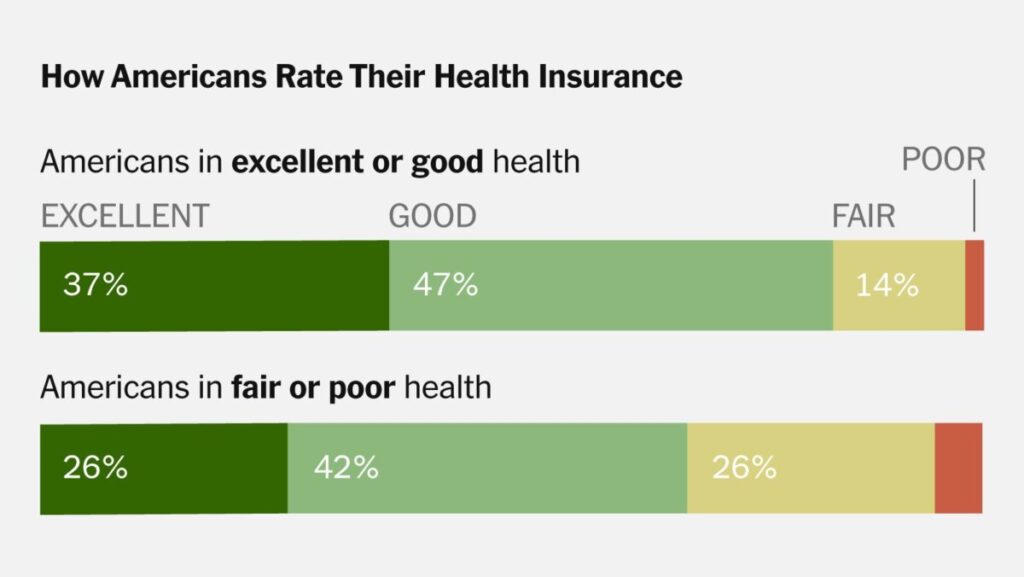
Gallup found that a combined 84% of Americans worried either a great deal or a fair amount about health care, while 85% expressed the same level of concern about the economy. The proximity of those figures prompted some methodological questions from analysts. Todd Belt, Political Management programme director at George Washington University, said the economy should arguably be considered the top concern, noting that health care availability and affordability were bundled into a single question while the economy and inflation were asked separately.
Despite health care’s broad salience with the public, experts expressed doubt that it would drive legislative action in the near term. Belt, Mark Jones of Rice University’s Baker Institute, and Haeder all said most lawmakers are more focused on satisfying their party’s primary voters than on addressing the concerns of the broader electorate. “For an overwhelming majority of members of Congress, their principal concern is that they don’t do anything that alienates primary voters,” Jones said, adding that this dynamic leads lawmakers to “habitually neglect the position of the average voter.”
Belt said health care represents a political opportunity for Democrats heading into the midterms, but only if the party develops a concrete platform around the issue. “This is a real opportunity if Democrats want to give voters something to vote for, rather than just against Donald Trump,” he said. “But they have to have a platform and a policy to say what they would do in order to do that, and that hasn’t been forthcoming.”
The sharpest partisan divides in the Gallup survey appeared on income and wealth distribution, where 77% of Democrats expressed great concern compared to 19% of Republicans, and on illegal immigration, where 55% of Republicans expressed a great deal of worry compared to just 17% of Democrats. Overall concern across the 16 issues surveyed averaged 43%, down from 46% in March 2025, with the largest drops recorded for Social Security and the economy.