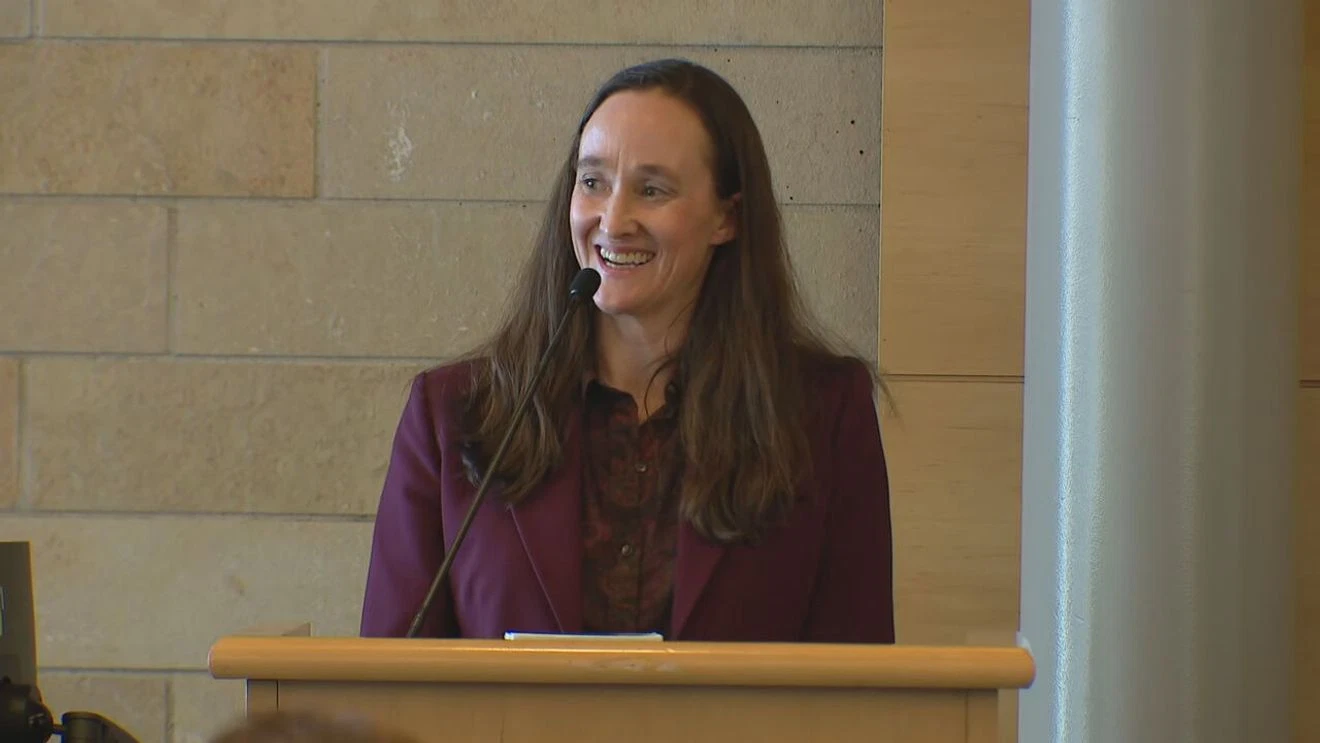
Seattle Mayor Katie Wilson hosted a community briefing on Wednesday to update residents on her plan to rapidly expand shelter and emergency housing across the city, announcing a new shelter site in Interbay and outlining progress toward her goal of opening 1,000 new units this year.
Wilson addressed members of the Shelter Expansion Community Action Team alongside a panel of neighbourhood representatives and service providers, taking questions from the public. She opened her remarks with a direct statement on the city’s approach to encampments. “We have to aspire to something higher than pushing an encampment around the corner so it’s a problem for a different block,” she said.
The mayor announced that a site on Armory Way in Interbay will become the city’s latest shelter location. Pallet Shelter has been selected to construct a micro-modular shelter facility that will serve more than 75 people with behavioural health needs, with wraparound services provided on site. Wilson also said her team has successfully shortened the typical timeline for constructing housing projects from nine to twelve months down to three to five, citing an RV safe lot in West Seattle with 72 spots and 20 tiny homes, as well as a 14-unit project in Brighton, as examples of fast-tracked developments. The city is also in active discussions with several property owners about master leasing buildings for emergency housing and additional micro-modular sites, with further announcements expected soon.
When asked about plans for shelter space after the FIFA World Cup concludes this summer, Wilson acknowledged the challenge, noting that federal funding guidelines for 2027 are creating uncertainty around permanent supportive housing. “We’re going to be doing everything that we can to expand the housing that is available coming out of the shelter system to make sure that people aren’t stuck in shelter forever,” she said. On the question of why the city is building new units when an estimated 10% of affordable housing in Seattle sits vacant, Wilson said the current market has narrowed the price gap between regular studio apartments and affordable units, and that affordable housing properties often lack the wraparound services needed by the people who require them most. She said the city may explore buying down rent in existing vacant units to make them accessible to lower-income residents.
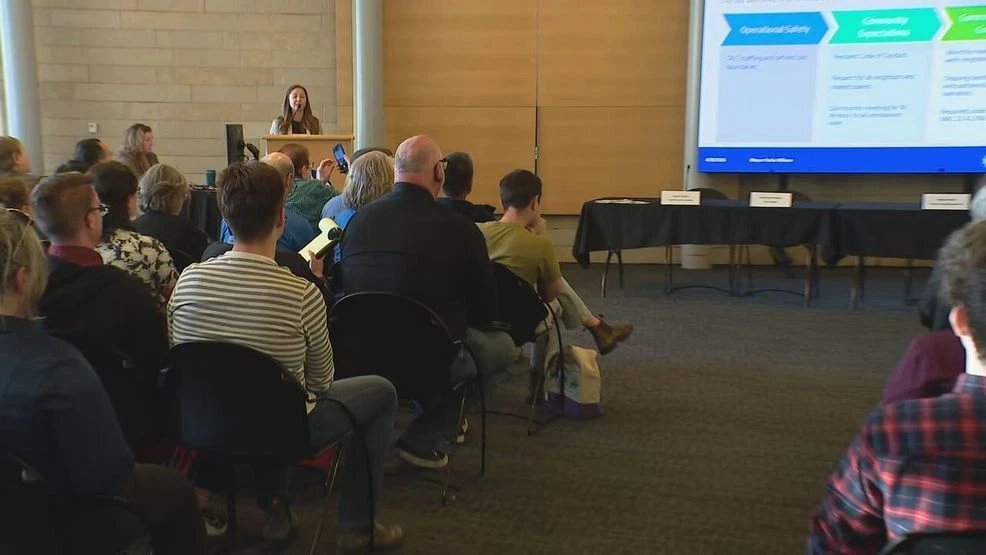
Community voices at the briefing offered a mixed assessment. Keith Hughes, president of the Westside Neighbors Network and operator of a warming and cooling shelter in West Seattle for nine years, said Wilson is the first mayor he has seen address homelessness “in a realistic manner.” But Hughes argued the focus on new construction overlooks faster and cheaper solutions. “I just believe that it’s a whole lot faster and a whole lot less expensive to take what exists and improve it than to start with bare ground,” he said. Hughes said four small shelters south of West Seattle have closed in the past year due to lack of funding, leaving his own facility overwhelmed. “I’m feeding 100 to 110 people every single morning, seven days a week,” he said, adding that more funding for existing operations would produce quicker results and reduce the visible encampments that generate neighbourhood complaints.
Concerns about oversight and accountability at existing facilities also surfaced. Andrea Suarez, founder of homeless outreach group We Heart Seattle, raised questions about drug use at tiny home villages. “Low barrier means that drugs are allowed, use them inside your house or maybe use them inside a smoking shack,” Suarez said. “There’s not enough incentive for people to reach self-sufficiency and get off of drugs.” At Tuesday’s City Council meeting, Councilmember Dan Strauss pressed the mayor’s team to enforce encampment laws once new tiny homes open. “If somebody is housed, then they cannot pitch a tent in public spaces,” Strauss said.
The King County Regional Homelessness Authority has found that good neighbour agreements, which are required of all shelter facilities and outline how they will manage community impacts, are not consistently being enforced. A review of the Bailey Boushay House shelter in Madison Valley found its agreement to be vague and largely unfollowed. Nearby business owner Annie Mauad said the situation around the facility has become untenable. “They come around, they litter, open drugs, they do drugs all over, even in their parking lot and there’s no accountability,” Mauad said. “Opening more shelters is totally what’s needed, but the approach of what they’re doing is not working.”
Wilson has framed the shelter expansion as an urgent response to a crisis that has long gone unaddressed. “For many years, and through multiple mayoral administrations, we have not treated this crisis with the urgency it demands,” she said when announcing the plan last month. “Our rates of unsheltered homelessness are off the charts, even in comparison with our peer cities.”