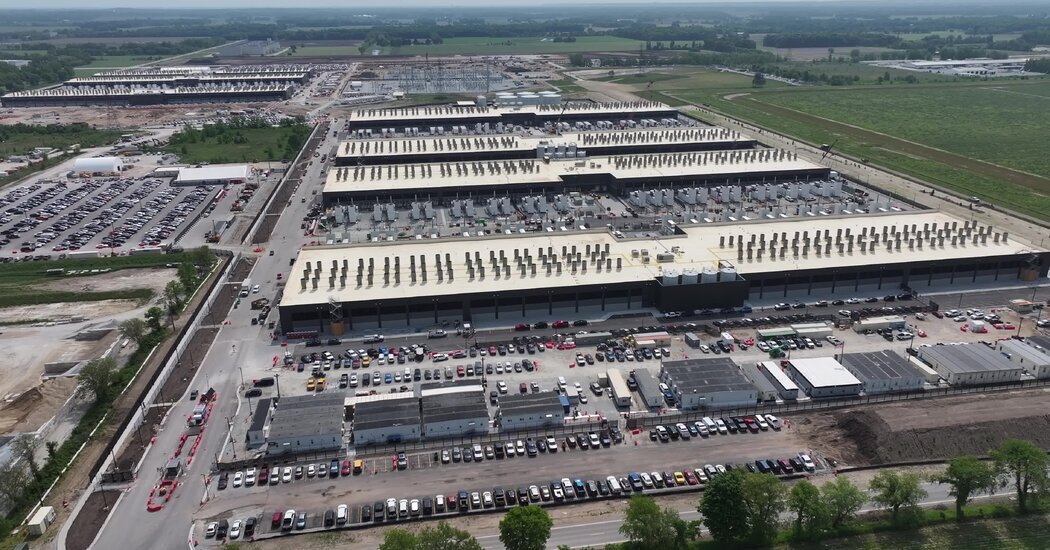
Amazon has purchased 1,300 acres of undeveloped land along the Oregon side of the Columbia River, with plans that could eventually yield one of the largest computing campuses in the country, featuring up to 20 data centre buildings at a total investment of up to $12 billion.
The Seattle-based company confirmed the land purchase in Boardman, Oregon on Monday but offered few details. “Development plans are not final, and Amazon is performing our normal due diligence process as we develop new locations based on customer demand,” a company spokesperson said. The land was previously owned by a large dairy operation that used it for grazing.
A land-use proposal submitted to Morrow County by Portland consulting firm Johnson Economics outlines a vision for what it describes as an “exascale” data centre, a category significantly larger than the better-known hyperscale facilities that have already transformed the Oregon landscape. The proposal calls for 16 to 20 buildings, each measuring 250,000 square feet, with a total power consumption of 1 gigawatt and a projected investment of between $8 billion and $12 billion.

Oregon has become the dominant data centre state in the Pacific Northwest. Amazon already operates 47 data centre sites there, more than any other company in the region, according to research firm Baxtel. Meta has 10 Oregon data centres and Google owns multiple campuses in the state. In January, Amazon also secured an $83 million contract to develop a large-scale solar and battery storage facility in Oregon capable of generating 1.2 gigawatts of solar power, beating out Puget Sound Energy in the bidding process.
The scale of Amazon’s latest acquisition is landing in the middle of a growing policy debate on both sides of the Columbia River. Oregon Governor Tina Kotek established a Data Centre Advisory Committee in January to develop recommendations for managing the rapid expansion of facilities that consume significant amounts of energy and water. In Washington state, a bill that would have required utilities and data centre companies to protect ratepayers from increased power costs and improve transparency around environmental impacts failed this year after Microsoft opposed the measure.
The legislative setbacks in both states reflect a broader national reckoning as communities and elected officials increasingly question the energy demands, water consumption, and long-term infrastructure costs of large-scale data centre development at a moment when artificial intelligence is driving demand to record levels.