Technology

Artemis II Crew Leaves Earth Orbit and Heads for the Moon in Historic First Since 1972

Favour Bitrus
April 4, 2026
Picture Credit: Kabar

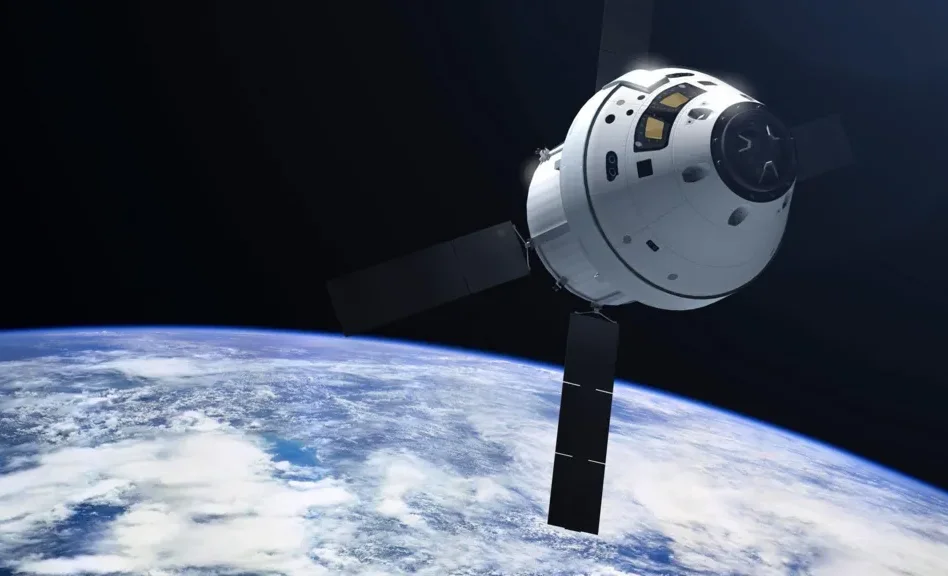
Four astronauts aboard NASA’s Artemis II mission are on their way to the Moon after the Orion capsule’s main engine fired successfully on Thursday, marking the first time humans have left Earth orbit since the Apollo 17 mission in 1972.

The engine burn, known as a translunar injection, lasted five minutes and 50 seconds and went “flawlessly,” according to NASA’s Dr Lori Glaze. The burn added thousands of kilometres per hour to Orion’s speed and set the spacecraft on a looping path that will carry the crew around the far side of the Moon and back to Earth. From inside the capsule, Canadian astronaut Jeremy Hansen told mission control the crew was “feeling pretty good up here on our way to the Moon.” Hansen is the first non-American to travel to the Moon.
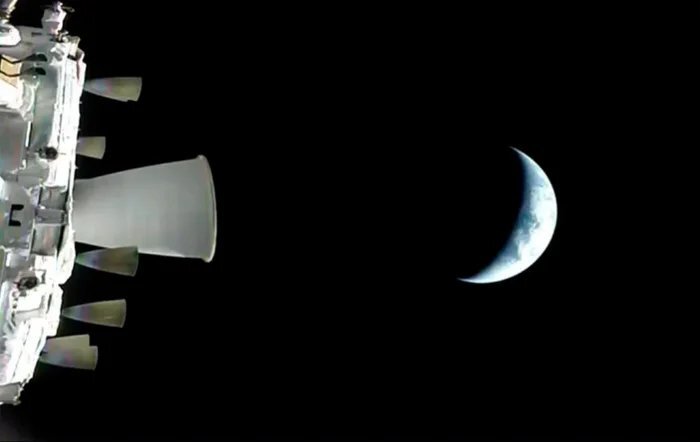
Commander Reid Wiseman described the view from the capsule as the spacecraft pulled away from Earth. “You can see the entire globe from pole to pole,” Wiseman said in the crew’s first public video conference since launch. “It was the most spectacular moment and it paused all four of us in our tracks.” The four astronauts said they had been “glued to the window” as Earth slowly shrank behind them.

Picture Credit: The Guardian

The mission is expected to carry the crew farther from Earth than any humans have ever been, more than 7,600 kilometres beyond the Moon, before gravity swings them back toward home. NASA estimates the trajectory could edge past the distance record set by Apollo 13 in 1970, depending on the precise timing and path of the flight. On approximately the sixth day of the mission, as Orion cruises beyond the Moon, the crew will witness a total solar eclipse from deep space, with the Moon sliding directly in front of the Sun while Earth hangs off to one side.

The translunar injection is not a point of no return. Mission controllers retain the ability to bring the crew back to Earth even after the burn if a serious emergency arises. Orion program manager Howard Hu said before the launch that the team has “run hundreds of thousands of simulations to ensure that we are able to get the crew home safely.” After the successful burn, he told reporters simply: “What a great couple of days.”

Hansen addressed the significance of the moment from aboard the capsule. “Humanity has once again shown what we are capable of,” he said. “It’s your hopes for the future that carry us now on this journey around the Moon.”

FB
More by Favour

Seattle Today

The Week in Seattle

Every Thursday, get the stories shaping Seattle, what’s changing, and what you need to know next.

By signing up, you agree to our Terms of Use and acknowledge that your information will be used as described in our Privacy Policy.

This story is free to read.

Enter your email to continue reading.

By continuing, you'll receive Seattle Today's newsletter with local news, business and stories shaping Seattle. You can unsubscribe anytime.