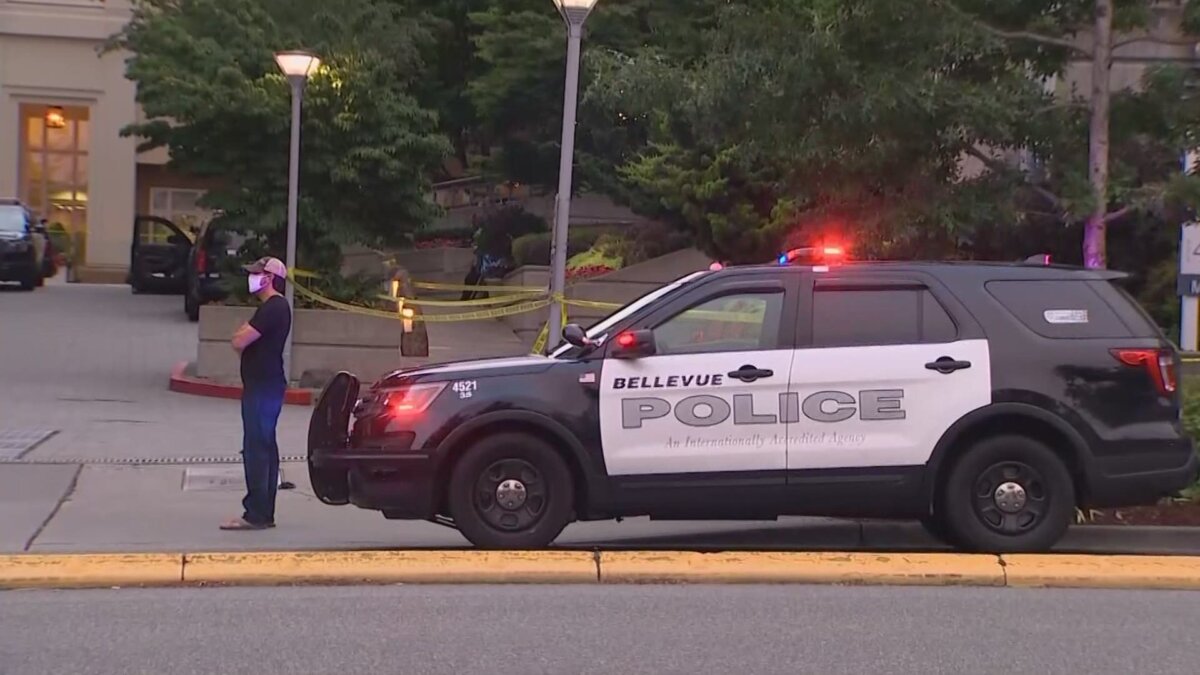
The Bellevue Police Department is cracking down on speeding drivers and street racers following 1,973 speeding-related fatal crashes in Washington State since 2015, including about 411 in King County and 42 speeding-related fatal and serious injury crashes in Bellevue from 2014 to 2023 according to the Washington Traffic Safety Commission. BPD will kick off its Safer Roads Initiative this weekend with officers targeting speeders and street racers, focusing on areas where those activities are likely to occur. “Whenever you’re traveling in an urban area, and you are choosing to street race, you are putting the lives of others at risk,” BPD Spokesperson Drew Anderson said. Bellevue drivers have asked the department for help, with Anderson saying “they have reached out to the Bellevue Police Department asking us to really tackle what’s been a concern, a growing concern, for them, and that’s speeding, and that is street racing.”
Patrol officers will implement zero-tolerance policy for drivers caught speeding or street racing, with citations guaranteed for violations. Citizens are encouraged to call police and provide locations where illegal activity is happening. “We want them to contact us so that we can go to those areas and hold those folks accountable, because we don’t want to tolerate individuals who want to put our community members’ safety at risk,” Anderson explained. BPD is asking community members to continue reporting speeding, reckless driving, street racing, or vehicles with modified mufflers by calling the non-emergency line at 425-577-5656 or emailing bellevuepd@bellevuewa.gov. Community members should provide make, model, color, and license plate number when reporting infractions.
The 42 speeding-related fatal and serious injury crashes in Bellevue from 2014 to 2023 represents roughly four to five such crashes annually over the decade, indicating consistent rather than escalating problem. Whether the number has increased in recent years prompting the crackdown, or whether consistent annual toll finally generated enough public pressure for enhanced enforcement, affects interpretation of whether this represents response to worsening crisis or proactive effort to reduce persistent problem. The distinction between fatal crashes and serious injury crashes matters because combining them in single statistic obscures whether deaths are increasing, stable, or declining even if total serious incidents remain elevated.
The timing of the Safer Roads Initiative launch this weekend, presumably a weekend in mid-January 2026, reflects strategic deployment when street racing and speeding are most likely to occur. Weekend nights traditionally see increased street racing activity as enthusiasts gather, roads are less congested allowing higher speeds, and social events involve more impaired driving. Whether BPD sustains enforcement beyond initial weekend launch or whether this represents limited-duration operation designed to generate publicity and temporary deterrence affects actual impact on driver behavior.
The focus on “areas where those types of activities are likely to occur” suggests BPD has identified specific locations, likely wide arterials, industrial areas with long straightaways, or highway onramps where street racers congregate. Bellevue’s geography includes corridors like Bel-Red Road, portions of 148th Avenue, and areas near I-405 and SR-520 that could attract illegal racing. Whether police publicize specific targeted locations to deter activity there, or keep enforcement locations unpredictable to prevent racers from simply moving to different areas, represents tactical decision affecting operational effectiveness.
Anderson’s statement that “whenever you’re traveling in an urban area, and you are choosing to street race, you are putting the lives of others at risk” emphasizes danger beyond just participants. Street racing kills and injures pedestrians, other drivers, and passengers who never chose to be involved in the activity. The urban context makes racing particularly dangerous compared to closed tracks or rural roads with minimal traffic, though any street racing on public roads poses unacceptable risks regardless of location. Whether participants recognize and accept those risks, or whether they rationalize that their skill makes racing safe, affects whether enforcement and education can change behavior.
The characterization of speeding and street racing as “growing concern” for residents suggests either actual increase in activity or increased awareness and frustration with existing problems. Social media allows residents to share experiences and organize complaints more effectively than in past decades, potentially making problems seem more widespread even if actual frequency remains stable. Whether data shows objective increase in speeding citations, crashes, or community complaints, or whether subjective perception of worsening problems drives the initiative, affects whether enforcement addresses measurable deterioration or responds to heightened public concern about persistent issue.
The zero-tolerance policy eliminating officer discretion means every violation results in citation regardless of circumstances. Traditional enforcement allows officers to issue warnings for minor violations or situations with mitigating factors, reserving citations for egregious cases. Zero tolerance removes that discretion, ensuring consistent enforcement but potentially generating backlash from drivers who receive citations for minor speeding in situations where warnings previously sufficed. Whether the policy applies to all speeding or specifically to excessive speeding and street racing affects how broadly it impacts drivers and whether it targets genuinely dangerous behavior or simply maximizes citation revenue.
The encouragement for citizens to report violations creates community policing model where residents become eyes and ears for enforcement. Providing make, model, color, and license plate enables police to identify and potentially contact vehicle owners even if officers don’t personally witness violations. Whether BPD follows up on community reports by contacting registered owners with warnings, targeting reported locations for enforcement, or simply collecting intelligence about problem areas affects whether community reporting produces tangible results or creates perception of futility if reports don’t lead to visible action.
The inclusion of vehicles with modified mufflers in enforcement priorities reflects connection between car culture modifications and street racing. Loud exhaust modifications serve no legitimate performance purpose for street vehicles but signal participation in racing culture and create noise pollution affecting residential quality of life. Whether enforcement of equipment violations alongside speeding and racing represents comprehensive approach to car culture problems or expansion beyond core safety mission depends on perspective about appropriate scope of traffic enforcement.
The 411 speeding-related fatal crashes in King County since 2015 represents roughly 37 such crashes annually across the county’s 2.2 million residents and dozens of jurisdictions. That toll, while representing tragedy for affected families, also indicates speeding crashes are relatively rare events compared to total crashes and vehicle miles traveled. Whether enhanced enforcement in Bellevue meaningfully reduces that county-wide toll or simply displaces speeding to neighboring jurisdictions depends on whether surrounding cities implement similar enforcement and whether deterrence effects extend beyond immediate enforcement areas.
The comparison of Bellevue’s 42 speeding-related fatal and serious injury crashes over nine years to King County’s 411 fatal crashes over ten years raises questions about data categorization. If Bellevue’s 42 includes both fatal and serious injury while county total is fatal only, they’re not directly comparable. Bellevue represents roughly 150,000 of King County’s 2.2 million residents, or about 7%, so its 42 incidents representing roughly 10% of county total suggests slightly elevated rate, though differences in reporting criteria complicate direct comparisons.
The request for community members to continue reporting violations suggests BPD already receives such reports but wants to increase volume and quality. Whether existing reporting mechanisms have produced actionable intelligence and enforcement results, or whether they’ve generated reports that don’t lead to citations due to difficulty verifying violations after the fact, affects whether expanded community reporting produces useful outcomes or simply creates more administrative work processing reports that can’t result in enforcement action.
The non-emergency phone number and email address for reporting create accessibility but also potential for abuse through false reports, personal grievances disguised as traffic complaints, or simply misidentification of vehicles. Whether BPD has processes to verify reports before acting on them, or whether reports could lead to contact with innocent drivers whose vehicles were misidentified or who weren’t actually violating laws, affects fairness and community trust in reporting system.
For Bellevue’s car enthusiast community, the crackdown represents increased enforcement risk that might deter street racing or simply push it to other jurisdictions with less aggressive enforcement. Whether racing participants respond to enhanced penalties by moving activity to private tracks, organizing events in other cities, or simply accepting higher citation risk as cost of continuing illegal activity depends on how much deterrent effect enforcement creates and whether alternative legal venues exist for people who enjoy high-performance driving.
The initiative’s success depends on sustained enforcement rather than temporary surge that generates publicity but doesn’t fundamentally change driver behavior. Many cities announce traffic safety operations that produce short-term citation increases but don’t alter long-term patterns. Whether Bellevue maintains enhanced enforcement for weeks or months, integrating it into ongoing operations, or whether it represents time-limited campaign that returns to previous enforcement levels after initial period affects whether speeding and racing problems actually decline or simply pause during enforcement surge.
The broader context includes statewide concerns about traffic safety and rising crash fatalities during and after the pandemic. Whether Washington’s 1,973 speeding-related fatal crashes since 2015 represent increasing, stable, or decreasing trend affects interpretation of whether Bellevue faces worsening local problem or participates in broader state and national patterns. Traffic fatalities nationwide increased during pandemic despite reduced traffic volume, attributed to factors including increased speeding on less-congested roads, impaired driving, and reduced enforcement during public health crisis.
For Bellevue residents concerned about traffic safety, the Safer Roads Initiative represents response to their requests for enforcement addressing quality of life and safety concerns. Whether the initiative produces measurable reductions in speeding-related crashes or primarily creates perception of enhanced safety through visible enforcement affects whether it achieves public safety goals beyond satisfying political demands for police action on community concerns.
The zero-tolerance policy, enhanced enforcement focus, and community reporting encouragement represent multi-pronged approach combining traditional patrol enforcement with technology, community engagement, and clear consequences for violations. Whether that comprehensive strategy proves more effective than previous approaches, and whether it can be sustained beyond initial launch period, determines whether Bellevue’s speeding and street racing problems actually decline or whether they persist despite enhanced enforcement efforts that ultimately prove insufficient to fundamentally change driver behavior on city streets.