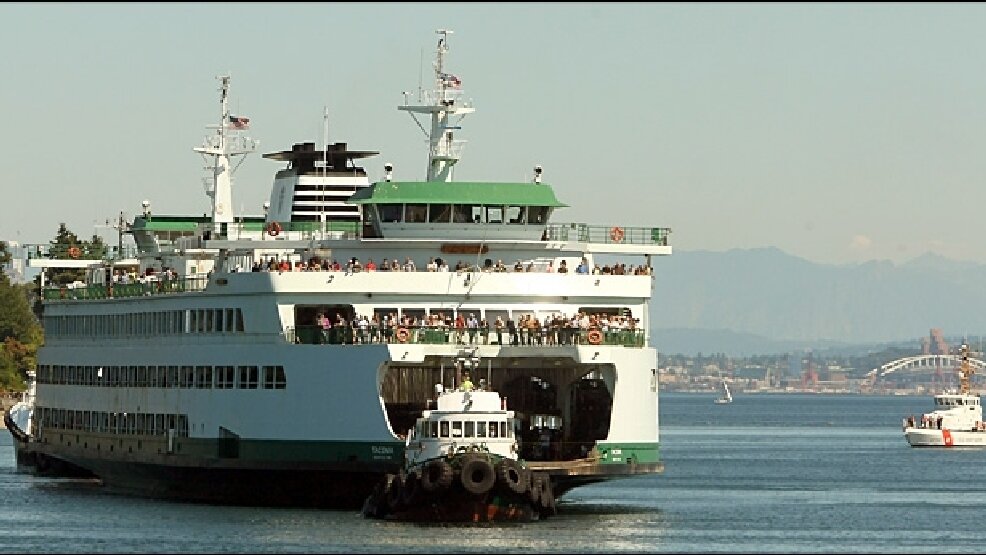
Washington State Ferries operated with a reduced fleet on Tuesday as three of its aging vessels underwent urgent repairs, disrupting service on routes serving Seattle, Bainbridge Island, Bremerton, and Vashon Island.
The Seattle-Bainbridge route operated on one boat for most of Tuesday whilst the Tacoma was out of service. Later Tuesday evening, WSF confirmed that two-boat service was restored on the Seattle-Bainbridge Island route with the 12:20 p.m. sailing out of Bainbridge.
Washington State Ferries said an oil tube issue was discovered on Saturday, which caused high temperatures in the shaft bearing.
Crews worked to restore two-boat service using the Kitsap on Tuesday afternoon. WSF said updates would be posted when more information became available.
In the meantime, riders were advised to use vessel number one times on the Seattle-Bainbridge Island schedule.
The Seattle-Bremerton route has been on one-boat service since January 1 after damage was discovered on the Walla Walla’s propellers. WSF said the route will stay on one-boat service for at least another week, through January 12, due to the urgent repairs.
The repairs require the ferry to be drydocked, and the vessel will remain out of service until early March to complete its previously scheduled maintenance.
WSF is working to restore two-boat service by the week of January 12, when another vessel is expected to be repaired and back in service.
Riders should use vessel number two times on the Seattle-Bremerton alternate service schedule.
The Fauntleroy-Vashon-Southworth route was also down to two boats because the Kittitas needed repairs.
“The ferry was repaired at Vashon terminal and returned to service on the Fauntleroy-Vashon-Southworth route on Tuesday, January 6,” WSF said. “The Sealth moved from the Fauntleroy-Vashon-Southworth route to Mukilteo-Clinton, which allowed us to move the Kitsap to Seattle-Bainbridge and restore two-boat service there.”
The Salish will start as the third, unscheduled vessel on the route on Wednesday.
Riders can refer to the two-boat schedules for Fauntleroy-Southworth, Fauntleroy-Vashon, and Southworth-Vashon routes on the schedules by route page.
The simultaneous breakdown of three vessels demonstrates the crisis facing Washington State Ferries’ aging fleet. The system has struggled for years with vessels reaching the end of their operational lifespans whilst replacement boats face delays and cost overruns.
The Tacoma’s oil tube issue causing high shaft bearing temperatures represents serious mechanical failure that could have catastrophic consequences if not addressed immediately. Shaft bearings support the propeller shaft, and overheating can cause seizure or failure whilst the ferry is underway with passengers aboard.
The Saturday discovery of the problem meant the vessel operated through the weekend before being taken out of service, suggesting crews monitored temperatures closely to determine whether immediate removal from service was necessary.
The Seattle-Bainbridge route operating on one boat instead of two essentially halves capacity, creating longer wait times and forcing some commuters to miss sailings during peak hours. The route serves thousands of daily commuters travelling between Bainbridge Island and downtown Seattle.
The restoration of two-boat service by Tuesday evening using the Kitsap demonstrates the shell game WSF plays, moving vessels between routes to maintain service where demand is highest.
The Walla Walla’s damaged propellers discovered on January 1 likely resulted from striking debris in Puget Sound or contact with the dock during maneuvering. Propeller damage severe enough to require drydocking suggests significant strikes that bent or cracked blades.
The ferry remaining out of service until early March for previously scheduled maintenance means WSF decided to combine the emergency propeller repairs with routine work rather than bringing the vessel back for weeks then drydocking it again.
The Seattle-Bremerton route staying on one-boat service through at least January 12 creates hardships for commuters and reduces the route’s effectiveness as a transportation option. The route serves people commuting to Seattle from Kitsap County.
The Kittitas repairs at Vashon terminal rather than a shipyard suggests relatively minor work that could be completed dockside. The ferry returning to service quickly indicates the problem wasn’t as serious as the issues affecting the Tacoma and Walla Walla.
The vessel shuffling, moving the Sealth from Fauntleroy-Vashon-Southworth to Mukilteo-Clinton to free up the Kitsap for Seattle-Bainbridge, demonstrates the limited flexibility WSF has with its fleet. Each route requires specific vessel sizes and capabilities, constraining which boats can substitute for others.
The Salish starting as a third, unscheduled vessel on Wednesday provides buffer capacity to handle the demand whilst the system operates with reduced overall fleet availability.
The aging fleet crisis has been building for years. Many WSF vessels were built in the 1950s through 1970s and have far exceeded their expected operational lifespans. Mechanical failures have become increasingly common as components wear out.