A major trade summit in Seattle on Monday brought together half of Washington’s congressional delegation, including Senator Maria Cantwell, as discussions centered on the potential consequences of escalating trade disputes.
The event, organized by the Washington Council on International Trade (WCIT), also featured industry leaders from key sectors, including the state’s wine and wheat commissions. Concerns over tariffs and their long-term impact on Washington’s export-driven economy took center stage.

Speaking at the summit, Sen. Cantwell urged Congress to step in before ongoing trade tensions spiral into a full-scale trade war. She pointed to the tariff dispute with India during former President Donald Trump’s administration, which significantly affected Washington’s lentil and apple industries.
Clete Willems, a former trade advisor under the Trump administration, commented on the current administration’s trade approach, stating, “The President just sees tariffs as a tool for American power,” and likened the strategy to “launching the rocket ship as they are building it.”
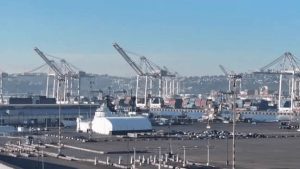
However, Cantwell and other officials cautioned that a prolonged tariff battle could have lasting economic consequences. The WCIT highlighted that Canada alone imports $18 billion worth of goods annually from Washington State, underscoring the region’s heavy reliance on international trade.
“Whether it’s aerospace, agriculture, or software, more than 50% of our sales in the Northwest are to overseas markets,” Cantwell noted. She also emphasized that Congress has a role to play in curbing excessive executive trade actions, stating, “There have been Presidents who have gone too far in the past, and Congress has reined them in.”
Representative Adam Smith of Bellevue echoed concerns over rising tensions with China, advocating for a more cooperative approach. “The government should focus on coexisting with China rather than trying to defeat them, given our deep economic ties,” Smith said.
The uncertainty surrounding trade policy is already influencing business decisions, he added. “Companies aren’t just thinking about today—they’re trying to anticipate what will happen next month and six months from now.”
Meanwhile, former President Trump has suggested that retaliatory tariffs could take effect as early as April 2, adding to the unease among Washington’s business leaders and policymakers.