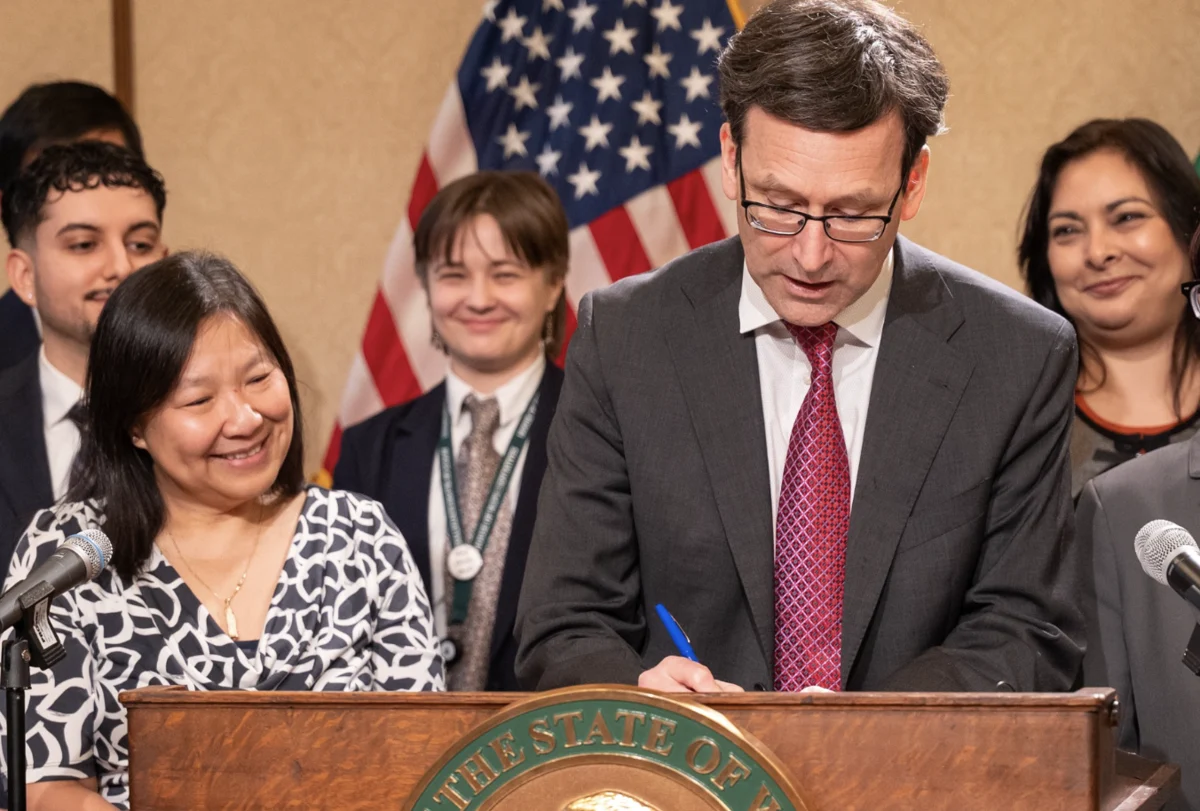
Washington will scrub the word “alien” from state laws and government documents when referring to immigrants, completing a West Coast shift toward what supporters call more precise and dignified legal language after Gov. Bob Ferguson signed legislation that takes effect this summer.
House Bill 2632 requires state and local agencies to use “noncitizen” or other context-appropriate terms instead of “alien” in all statutes and official documents created after July 1, 2026. The change puts Washington alongside California and Oregon, making the entire West Coast the only region in the country where states have systematically removed the term from their legal codes.
Rep. My-Linh Thai, who became the first refugee elected to the Washington House in 2019, has pushed the language change since arriving in the Legislature. For Thai, the issue goes beyond semantics to questions of how government treats people who lack citizenship but live, work, and raise families in Washington.
“As a refugee to this country, I know what it feels like to be labeled as ‘other’. The term ‘alien’ is outdated, dehumanizing, and does not reflect how we speak about people today,” Thai said. “Our laws should reflect who we are as a state. Washington stands for fairness, dignity and equal protection under the law and this bill is part of that ongoing work.”
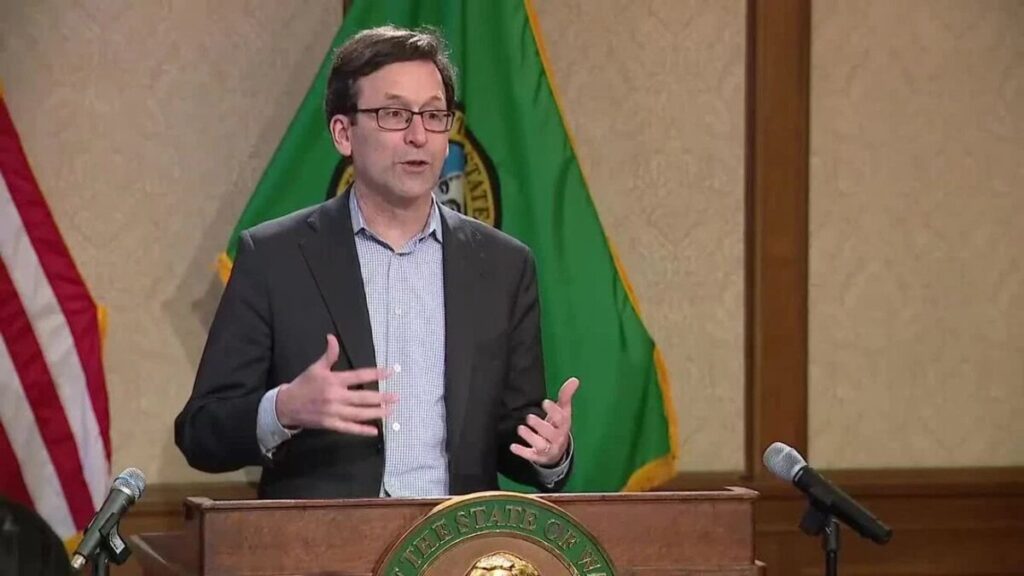
The Undocumented Communities Committee, which advises the Washington State Supreme Court-appointed Access to Justice Board on legal aid for immigrants, brought the proposal forward this session. Co-chairs Elizabeth Fitzgearld and Nicholas Mejía argued the change improves legal clarity rather than simply addressing sensitivities about language.
Fitzgearld pointed out that “alien” functions as an imprecise catch-all requiring modifiers to convey actual legal meaning. “The term ‘alien’ does not refer to any specific immigration status. When it carries legal meaning, it is always accompanied by a modifier, ‘alien offender,’ ‘legal resident alien,’ ‘nonimmigrant alien.’ This bill replaces a word that is, at best, an ambiguous synonym requiring constant context and, at worst, dehumanizing to Washingtonians without U.S. citizenship with its plain, objective equivalent: noncitizen,” Fitzgearld said.
Mejía framed the legislation as careful lawmaking that tightens statutory language without altering substantive law. “‘Noncitizen’ is not less precise than ‘alien’, it is more precise. It states exactly what the statute intends to describe, without implication, without metaphor, and without requiring interpretation. From a governance standpoint, this is careful, restrained lawmaking,” he said.
The law allows agencies to keep using “alien” where federal law or funding requirements mandate the term, acknowledging that Washington cannot unilaterally change how the federal government regulates immigration. It also creates an expedited rulemaking process so agencies can update existing regulations without going through lengthy administrative procedures when the only change involves swapping terminology.
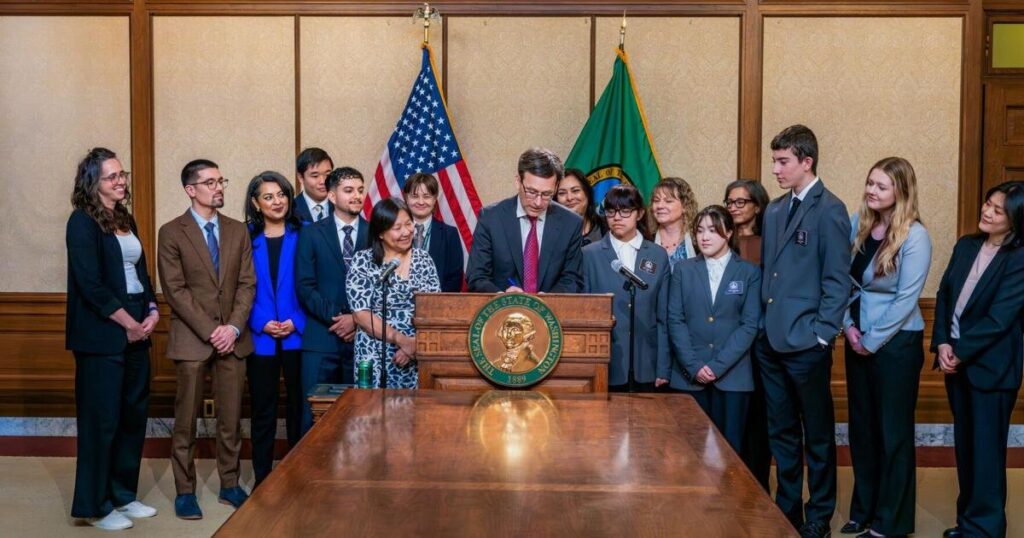
Supporters drew parallels to Washington’s 2001 decision to replace “oriental” with “asian” in state law, noting similar arguments then about whether terminology changes served practical purposes or simply accommodated hurt feelings. The Washington State Access to Justice Board, Association of Washington Assistant Attorneys General, Washington State Pro Bono Council, NAACP Vancouver, and legal experts backed the current effort.
The legislation passed despite opposition from lawmakers who questioned whether the change would create confusion or conflict with federal immigration law that continues using “alien” throughout statutes and regulations. The law addresses those concerns by explicitly permitting use of “alien” where federal compliance requires it.
Washington becomes the fourth state to make this change after California, Oregon, and one other state completed similar overhauls of their legal codes. The timing puts the entire West Coast on the same page regarding immigration terminology just as federal immigration enforcement has intensified under the Trump administration, creating potential tension between how states and the federal government refer to the same populations.