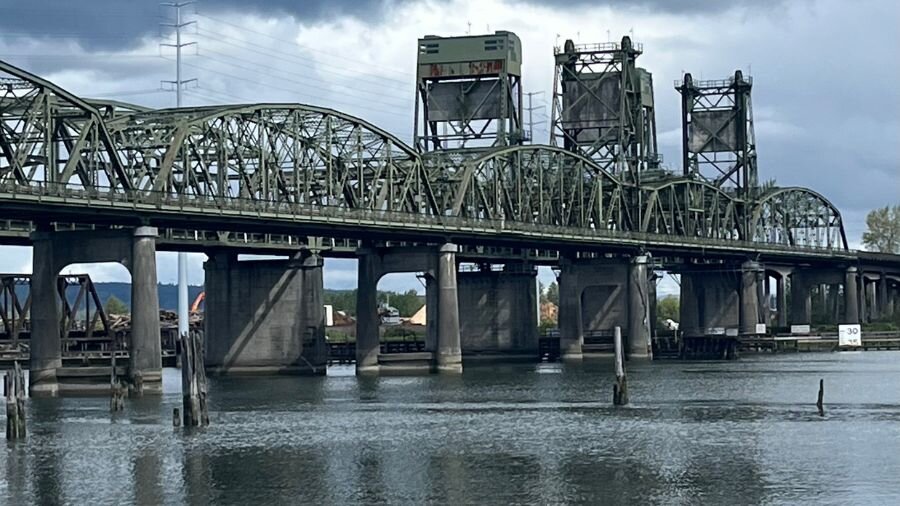
One of the region’s worst non-freeway traffic congestion points, northbound State Route 9 approaching Snohomish, is finally receiving infrastructure improvements after years of increasingly severe delays.
Work has commenced to widen SR 9 and construct a new Snohomish River Bridge just west of historic downtown Snohomish. Hundreds of thousands of people have relocated to the area over the past twenty years, overwhelming the highway’s capacity.
Northbound SR 9 loses a lane at Marsh Road, just west of the airport and adjacent to farms south of the town. The highway experiences backups every afternoon and becomes particularly congested on Fridays.
This project aims to resolve these issues.
“We’re going to build a new bridge just west of the current bridge, and widen State Route 9,” Washington Department of Transportation spokesperson Della Kostelnik Juarez stated. “We’re also going to put a bridge over an overflow area, and we’re going to repair and paint the old bridge.”
The improvements mean two lanes will continue northbound from Marsh Road, across the river, and up to the Snohomish exit to 2nd Street, where traffic will merge back to one lane. The existing bridge will handle northbound traffic. The new bridge over the river will accommodate southbound traffic. A new southbound lane will also be added from 2nd Street to Marsh Road.
Pile-driving for the new bridge is expected to begin shortly, and Kostelnik Juarez indicated it will significantly impact the community.
“It’s going to be loud,” she stated. “Progress is painful sometimes, and we acknowledge that this is going to be uncomfortable for some people because pile driving is going to take place for probably several months into early spring.”
The widening will commence next year. The new bridge should be completed in 2027. The old bridge will then be restored and repainted. The entire project should conclude in 2028.
The project also includes new on and off ramps at 2nd Street. The ramp to southbound SR 9 currently presents safety concerns with very limited space and poor visibility.
“When I went out there to look at the area, it was my first time taking that on-ramp, I don’t mind telling you, my hairs went up a little bit on my arms,” Juarez stated. “Both of the ramps are going to be redone. It’s going to be a lot safer, a lot easier for people.”
Construction should have limited impact on SR 9 traffic. The new bridge is positioned west of the existing one, and WSDOT’s Marcus Hamberg indicated they plan to keep lanes open as much as possible.
“The goal is to establish a work zone, and it’s just going to shift traffic,” he explained. “The two lanes in each direction will move a little bit over to establish that work zone, and then most of the widening work will happen behind barriers.”
A full schedule of lane and ramp closures is still being developed. Preliminary work and pile-driving will be visible and audible to those heading to Snohomish County Christmas tree farms over the next couple of weeks.
The project carries a $142 million price tag.
The SR 9 bottleneck exemplifies how regional population growth can overwhelm transportation infrastructure designed for previous demographic realities. The hundreds of thousands of new residents settling in areas north of Snohomish over two decades represent a massive influx that fundamentally altered traffic patterns while highway capacity remained static.
The afternoon congestion pattern, becoming particularly severe on Fridays, reflects commuter behavior where workers living in northern Snohomish County or beyond travel southward for employment, then return home during evening peak hours. Friday congestion intensifies as weekend travel compounds regular commuter traffic.
The loss of a northbound lane at Marsh Road creates the classic bottleneck scenario where traffic flow exceeding the reduced capacity creates queuing that propagates backwards, often for miles during peak periods. This lane reduction, located near the airport and farm areas south of Snohomish, forces merging that disrupts traffic flow and creates stop-and-go conditions.
The $142 million investment represents substantial public expenditure justified by the economic costs of congestion including lost productivity, increased fuel consumption, vehicle wear, and reduced quality of life for thousands of daily commuters. Cost-benefit analyzes for such projects typically calculate that congestion relief generates economic returns through time savings and reduced vehicle operating costs.
The project’s phased approach, with widening beginning next year, new bridge completion in 2027, old bridge restoration following, and full project wrap-up in 2028, reflects the complexity and duration required for major infrastructure improvements. The multi-year timeline allows work sequencing that maintains traffic flow while construction proceeds.
Joy Ale
Joy Ale has served as Seattle Today’s Copy Editor since the publication’s inception, helping maintain the newsroom’s editorial standards and commitment to accurate, clear and engaging journalism.
She plays a key role in reviewing and refining stories across the publication, ensuring consistency, readability and editorial quality. Her work supports Seattle Today’s mission to deliver credible, informative and compelling coverage of Seattle and the surrounding metropolitan area.