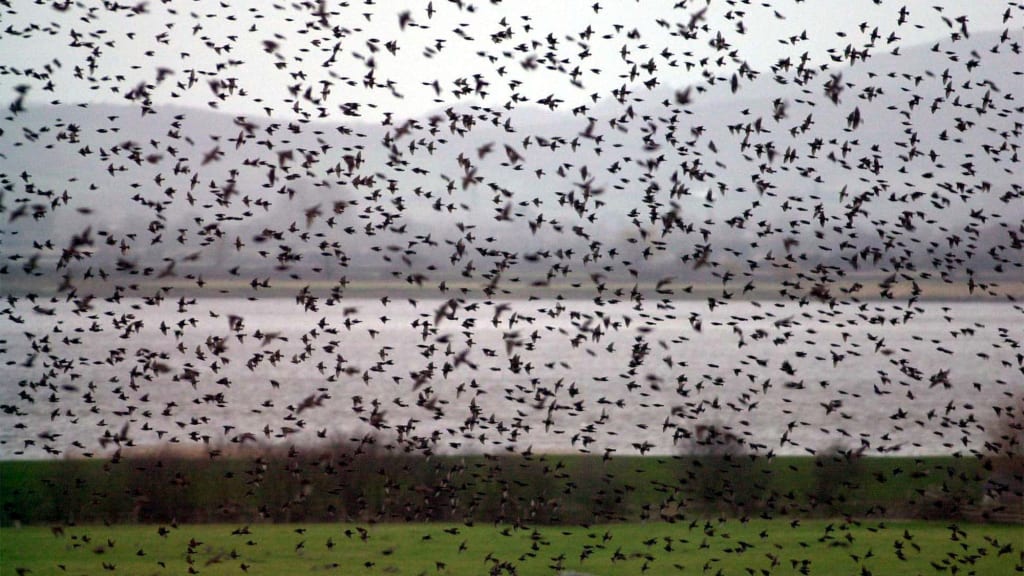
Over 16 Million Birds Migrated Across Washington State During Peak October Weekend
Seattle Today Newsroom
October 6, 2025
More than 16 million birds flew across Washington state during the nights of October 3 and 4, with approximately 4.4 million passing through King County alone, according to real-time tracking data from BirdCast.
Autumn bird migration season is peaking between September 19 and October 11 in western Washington, with researchers at Purdue University’s AeroEco Lab reporting continued high volumes of nocturnal bird movement.
Birds primarily migrate at night using stars for navigation. Artificial lighting from urban areas and residential properties can disorient them, potentially leading to exhaustion, building collisions, and death, according to scientists.
The “Lights Out” movement encourages reducing light pollution during peak migration periods by turning off or dimming unnecessary outdoor lights between 11 p.m. and 6 a.m. Scientists also recommend bird-safe window treatments to prevent collisions.
BirdCast suggests turning off non-essential exterior building lighting, closing curtains or blinds to reduce interior light escape, and avoiding illumination of lobbies, plants, or fountains that may attract birds.
Migration forecasts from AeroEco Lab predict:
Sunday night (October 5): 259 million birds across the continental U.S., with 3.8 million over Washington and 7,000 over Seattle. Lights Out Alert: Medium to High.
Monday night (October 6): 246 million birds nationally, 2.5 million over Washington, and 4,600 over Seattle. Lights Out Alert: Low to Medium.
Tuesday night (October 7): 359 million birds nationally, 1.6 million over Washington, and 2,900 over Seattle. Lights Out Alert: Low to Medium.
Real-time migration tracking is available through BirdCast.Info and Purdue’s AeroEco Lab, allowing residents to monitor bird movement over their areas.
New tracking tools and data are helping researchers understand migration patterns, resting locations, and protective measures that can support bird populations during their seasonal journeys.