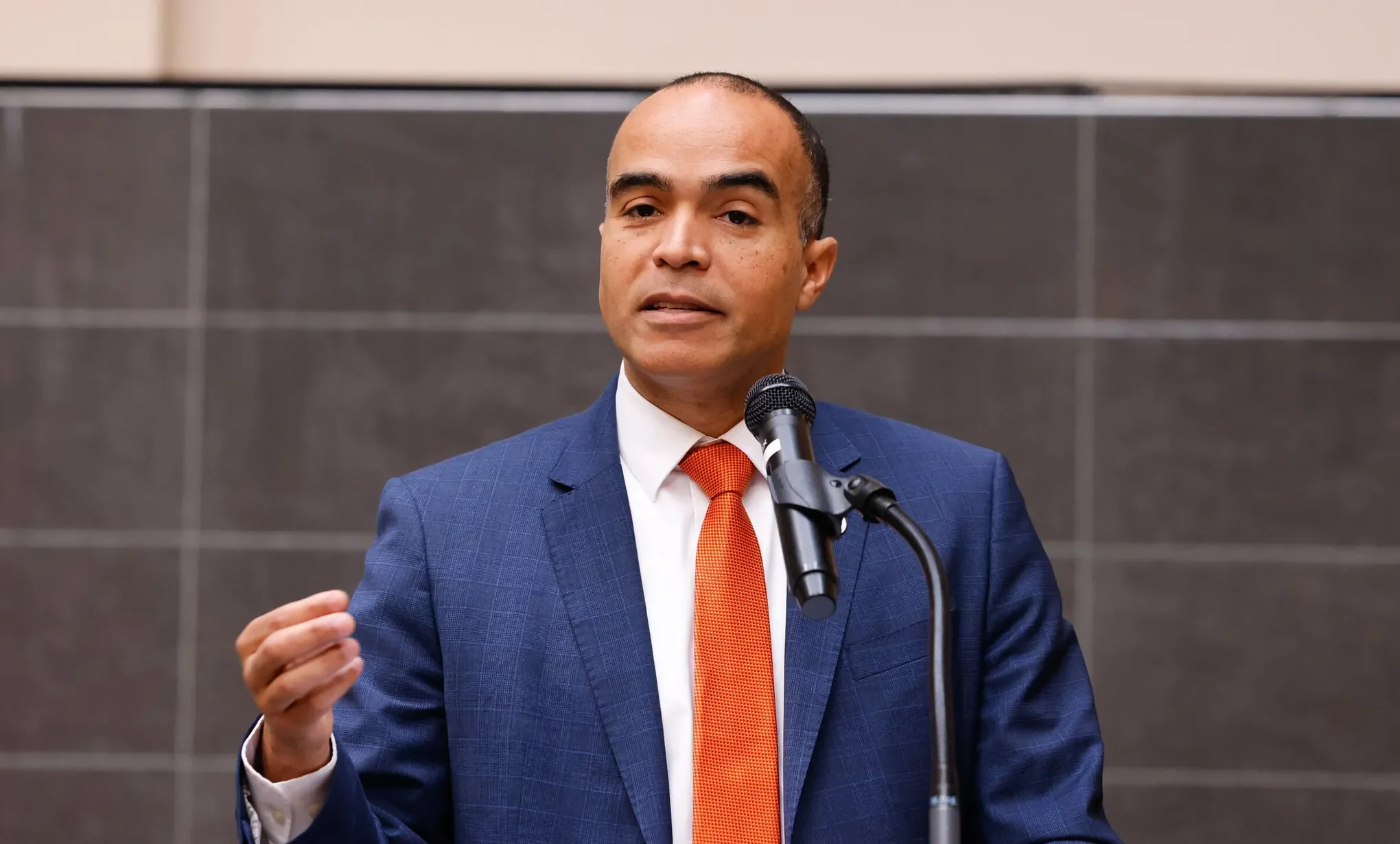
A coalition of 19 state attorneys general led by Washington’s Nick Brown has filed a federal lawsuit challenging the Trump administration’s Department of Housing and Urban Development over sweeping policy changes to homelessness funding that state officials argue will increase housing instability and violate congressional intent for a programme serving tens of thousands of vulnerable Americans.
The lawsuit, filed in federal District Court in Rhode Island, targets abrupt alterations the Trump administration’s HUD made to the Continuum of Care grant programme, a critical funding stream that provides resources to local organisations working to prevent and end homelessness through emergency shelter, transitional housing, permanent supportive housing, and rapid rehousing programmes.
The policy changes being challenged include reducing available funding for permanent housing solutions that help people transition from homelessness into stable long-term housing, and imposing new restrictive conditions on organisations’ ability to access federal grants, modifications that state leaders contend undermine the programme’s core purpose and will force thousands back into homelessness.
“Congress designed this programme in recognition that homelessness is a crisis that requires immediate stabilisation and continuing support to reverse,” Attorney General Brown stated. “These changes are designed to trap people in poverty and then punish them for being poor,” he added, framing the policy shifts as ideologically motivated rather than evidence-based improvements to programme effectiveness or fiscal responsibility.
The stakes for Washington are substantial, as approximately $120 million in Continuum of Care grants flows to the state annually, making it one of the largest recipients nationally due to its significant homeless populations in urban centres. The majority of these federal funds are allocated to the five counties experiencing the greatest need for housing services: King County, home to Seattle and the state’s largest homeless population; Pierce County, containing Tacoma; Snohomish County north of Seattle; Spokane County in eastern Washington; and Clark County near Portland. These five counties contain the state’s major metropolitan areas where homelessness is most visible and service infrastructure most developed.
The remaining $25 million in annual federal Continuum of Care funding is distributed by the state government to Washington’s other 34 counties, predominantly rural communities with smaller homeless populations but often fewer local resources, less developed service infrastructure, and more limited capacity to absorb federal funding cuts compared to urban areas with diversified funding sources.
Governor Bob Ferguson issued a strongly worded statement criticising the Trump administration’s actions, declaring, “Ripping away this critical funding is yet another cruel attack by the Trump administration on our most vulnerable Washingtonians.” Ferguson emphasised that the $120 million in annual federal funding supports data-driven programmes that help stabilise individuals experiencing homelessness through case management, mental health services, substance abuse treatment, job training, and other wraparound services, whilst also securing permanent housing placements that prevent people from cycling repeatedly through expensive emergency shelters and hospital emergency departments.
State Representative Nicole Macri, a Seattle Democrat who chairs the House Housing Committee and has been a leading voice on homelessness policy, expressed support for the legal challenge. “People’s homes are not political experiments. The Trump administration’s actions undermine federal law, jeopardise the safety and stability of Washington residents, and will increase homelessness,” Macri stated, arguing the policy changes prioritise ideological positions over evidence-based approaches that have demonstrated success in reducing chronic homelessness.
The lawsuit filed by the state coalition details specific policy changes that attorneys general argue exceed HUD’s statutory authority and violate administrative procedures. The new policies include recognising only two genders for programme eligibility and service provision purposes, a change that advocates warn will exclude transgender and non-binary individuals from accessing housing assistance and force service providers to choose between complying with federal requirements or maintaining inclusive practices consistent with state and local non-discrimination laws.
Additionally, the contested policies mandate that individuals accept all offered services as a precondition for receiving housing assistance, fundamentally altering the “housing first” model that research has shown effectively reduces chronic homelessness by providing stable housing without requiring sobriety, mental health treatment, or other service participation as prerequisites. Critics argue this change reintroduces barriers that evidence demonstrates prevent the most vulnerable individuals from accessing housing.
The complaint alleges these new requirements contradict previous HUD guidance developed under both Republican and Democratic administrations, as well as congressional approval of the Continuum of Care programme structure established through bipartisan legislation. The lawsuit contends that Congress never authorised HUD to impose service mandates or gender restrictions as conditions for receiving housing assistance, meaning the agency exceeded its delegated authority.
The multistate coalition also alleges HUD violated federal Administrative Procedure Act requirements by failing to engage in formal notice-and-comment rulemaking before implementing the significant policy changes. This process, required for major regulatory modifications, allows affected organisations, advocacy groups, and individuals to submit comments identifying potential problems, providing evidence about likely impacts, and proposing alternative approaches, with agencies required to respond substantively to significant concerns raised during the comment period.